
By Siddharth Gupta
After the amazing Mara safari, Ol Pejeta Conservancy offers a magnificent journey into the quieter, more profound side of Kenya’s wilderness, where wildlife encounters and the stories of survival leave a lasting impression on the future of conservation.
The journey to Laikipia began on the road, and for once, I was glad we weren’t flying.
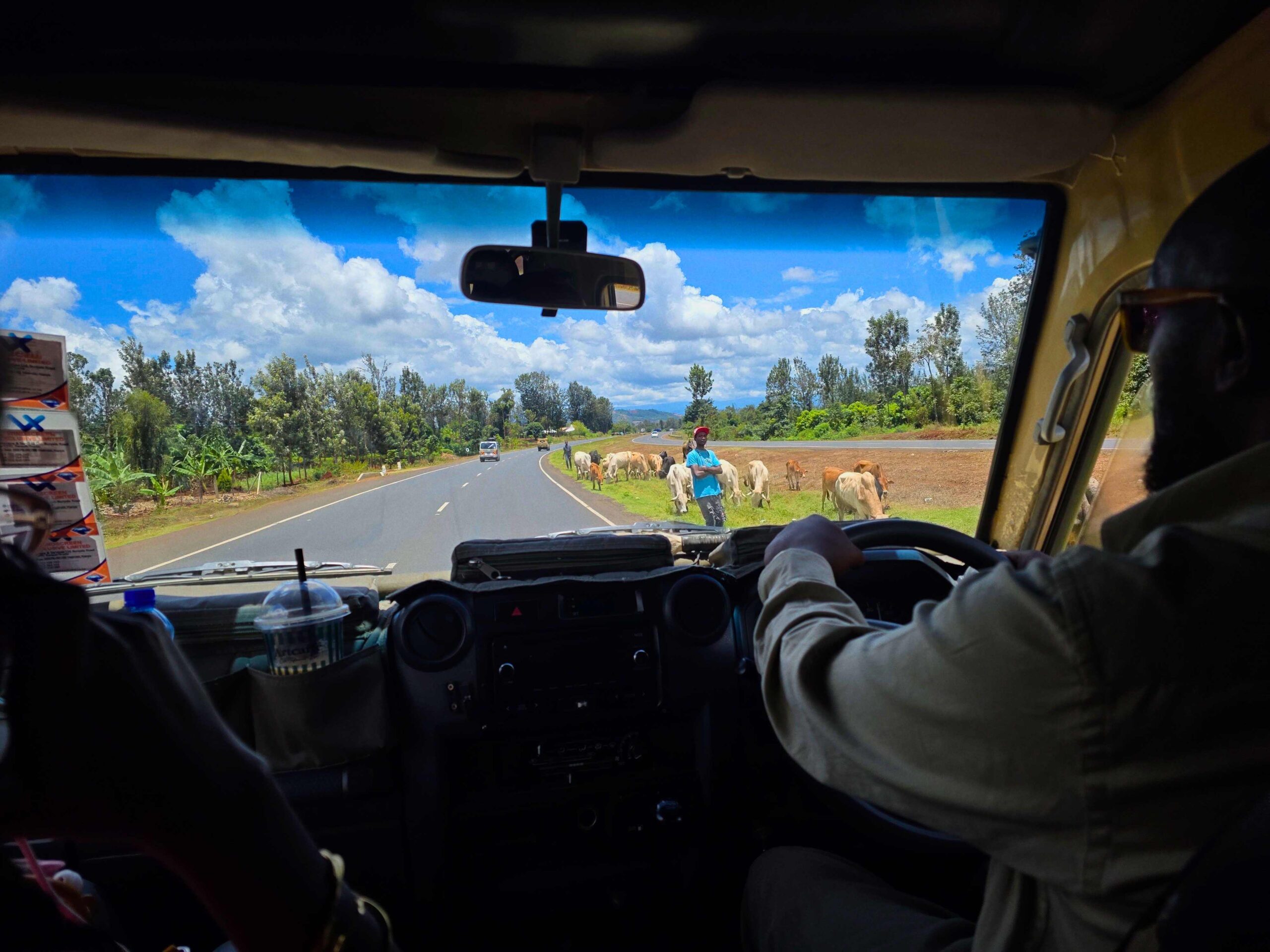
After days of travelling across Kenya by air, getting into a four-wheel drive and settling into a four-hour drive towards Nanyuki felt like another new adventure. The landscape gradually changed, revealing coffee plantations, avocado estates and tea-growing areas. Colourful roadside shops, hand-painted signs, children running through villages, and churches with names that made us smile lined the road.
It reminded us that Kenya’s story doesn’t begin and end inside its national parks. There is a life unfolding everywhere. One that is best experienced when you slow down and look outside the window. We stopped for a quick coffee along the way before continuing towards Ol Pejeta Conservancy, located in the heart of Laikipia.
A DIFFERENT WILDERNESS
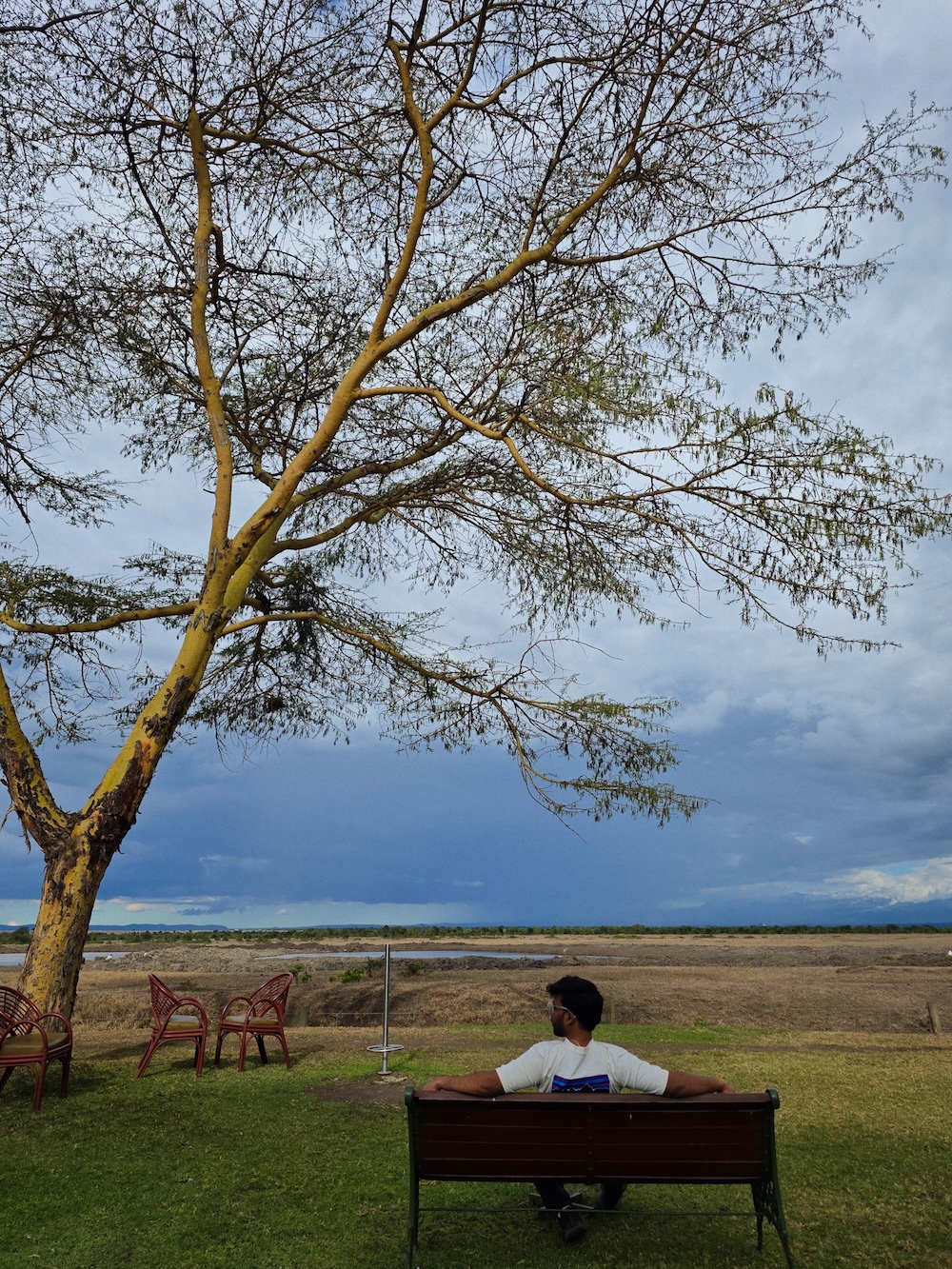
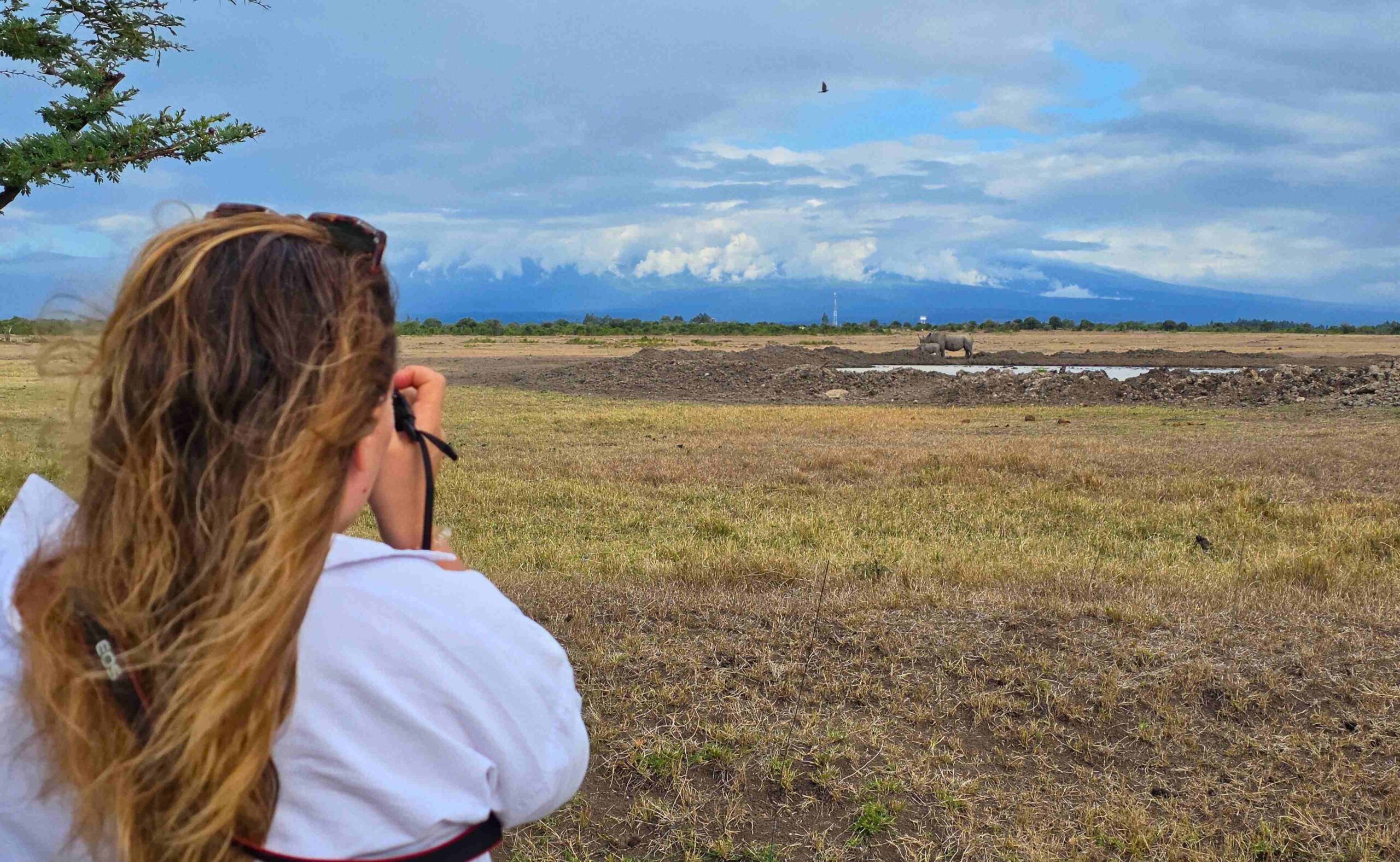
Our home for the next couple of days was Sweetwaters Serena Camp, and the scenes changed from the landscapes we had experienced in the Maasai Mara. Here, the surroundings were greener, the skies seemed to stretch endlessly, and clouds moved across the horizon, occasionally hiding Mount Kenya from view. The camp overlooked a beautiful landscape with uninterrupted grasslands, trees and distant hills disappearing into the clouds.
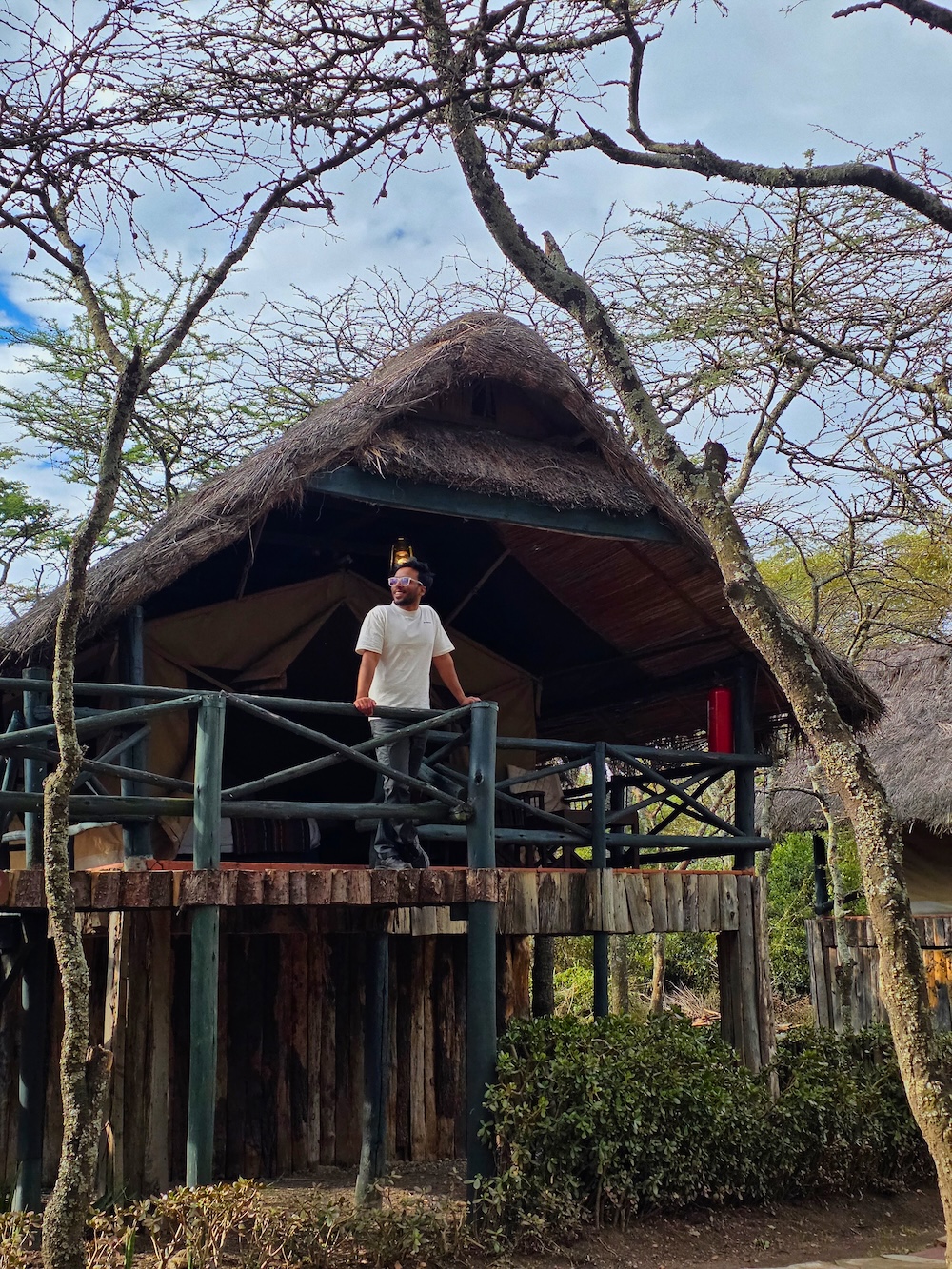
Sitting at the camp, you don’t know what might surprise you. Wildlife isn’t something that necessarily requires a vehicle or a planned excursion. Sometimes, all you need is a little patience and the willingness to look. And then, almost as if the landscape wanted to remind us that we were indeed in the wilderness, a mother rhinoceros appeared with her calf, walking towards the water.
I watched them approach, almost unable to believe what I was seeing. There was no dramatic chase and no need for a guide to point them out. Just the two beautiful animals, moving quietly through their surroundings. The mother and her young stopped to drink, and for a few moments, everything else seemed to disappear.
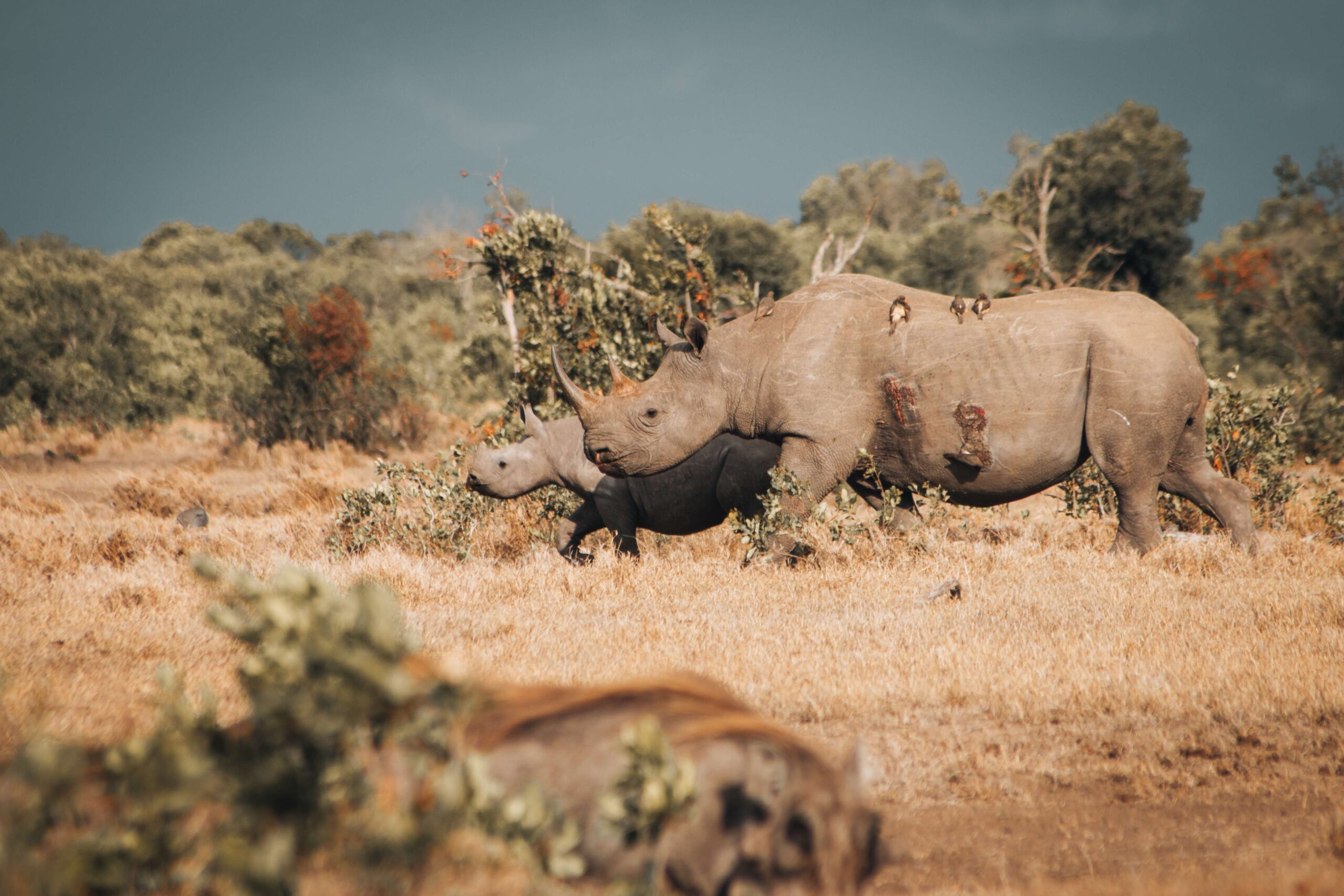
It was one of those encounters that makes you realise how little control you have over a safari. You can plan an itinerary, book a vehicle and wake up before sunrise, but nature has its own schedule. Sometimes, the most extraordinary moments arrive when you aren’t expecting them at all.
THE WILDERNESS IN THE DARK
That evening, we headed out for the night safari, which turned out to be one of the most memorable of the journey. The temperature had dropped, the wind was sharp, the air chilly, and darkness all over the conservancy. With no city lights, no familiar landmarks and very little to see, only the narrow beam of a torch sweeping across the grass. Our guide moved the light from left to right, searching patiently.
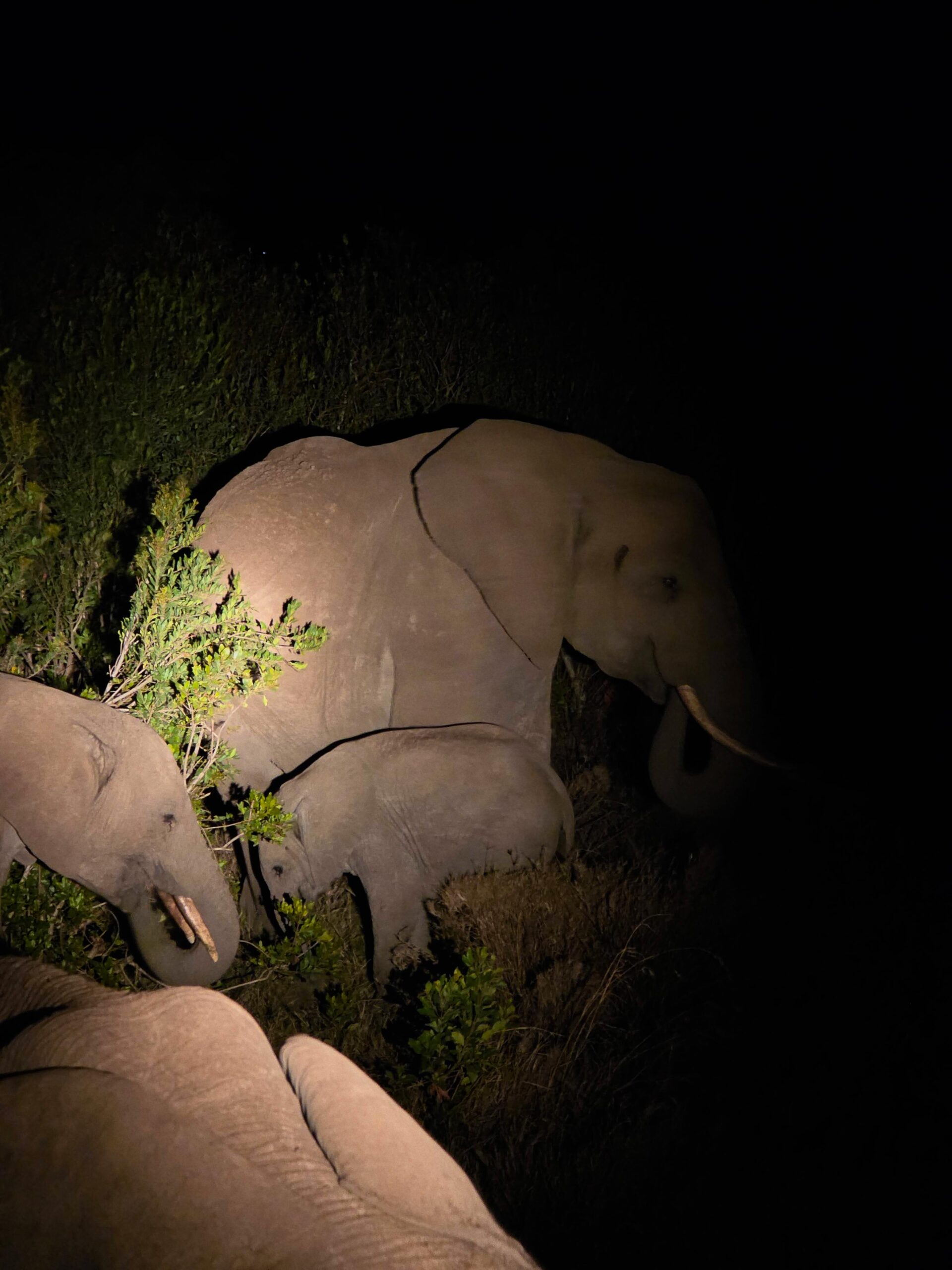
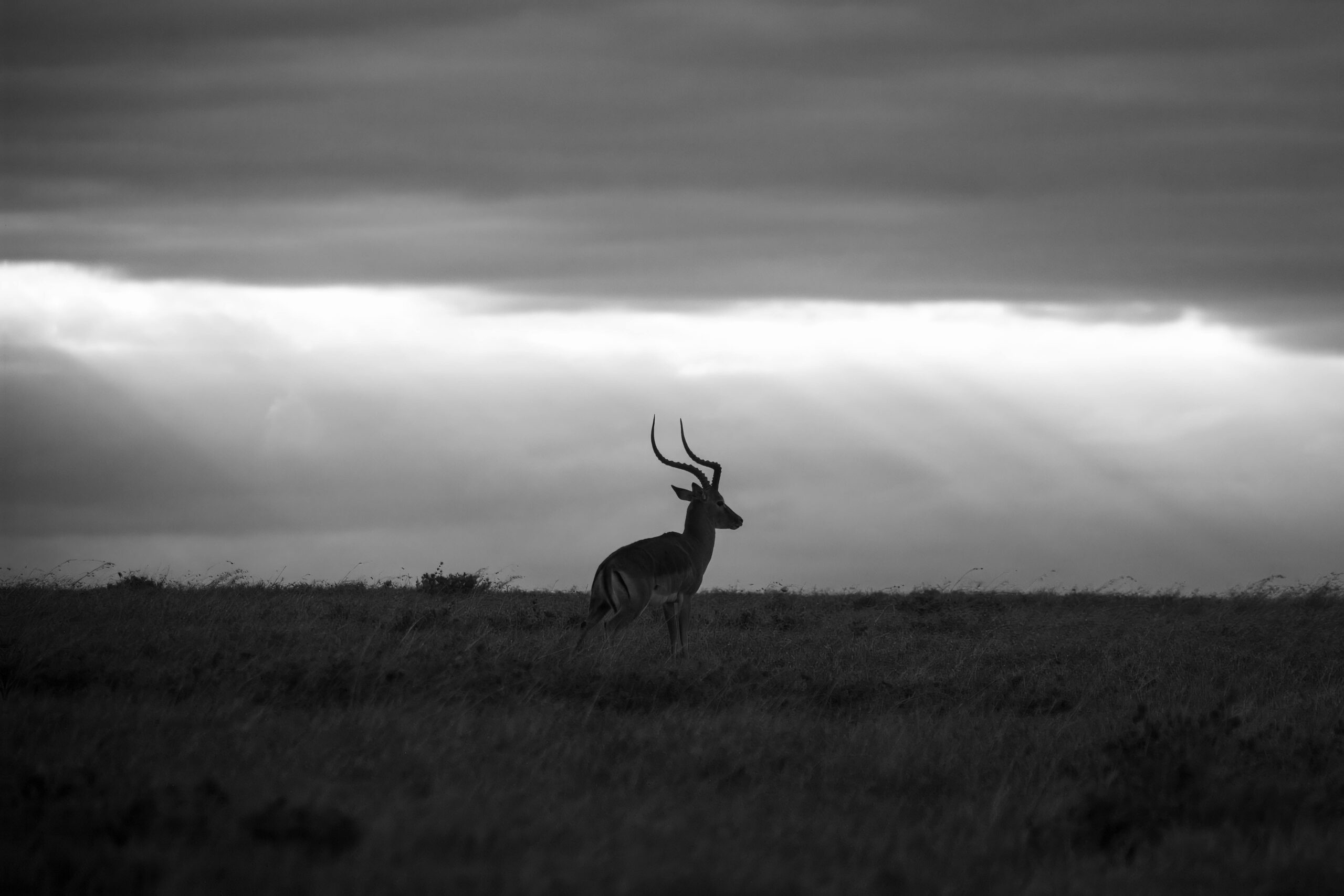
Unlike a daytime safari, where you can scan the horizon and spot movement from a distance, here your world was reduced to a small circle of light. Everything beyond it was a mystery. We spotted gazelles, mongooses, impalas and even a young rhino moving alone. The sightings came slowly, sometimes after long stretches of searching, but that was precisely what made them exciting.
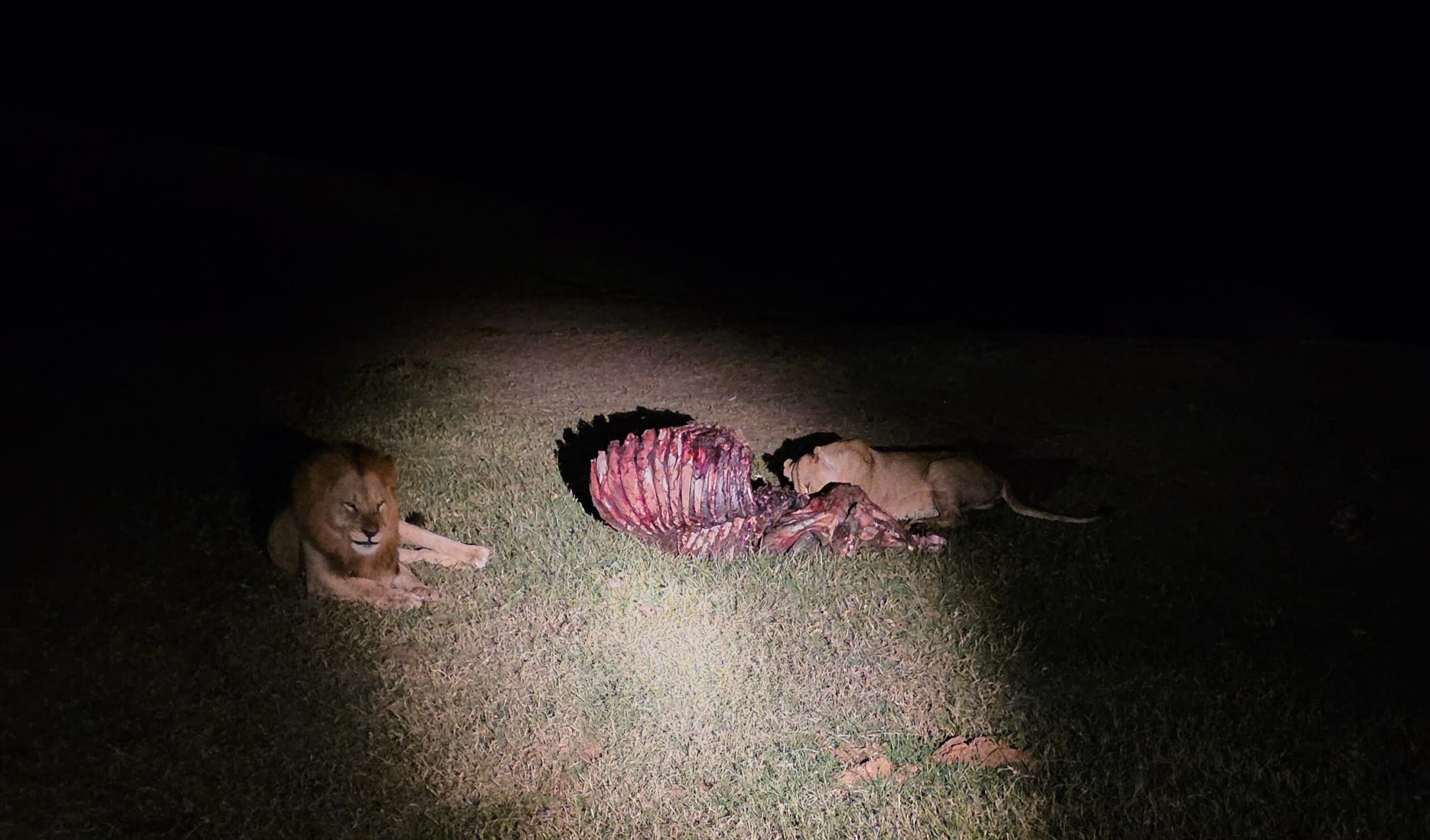
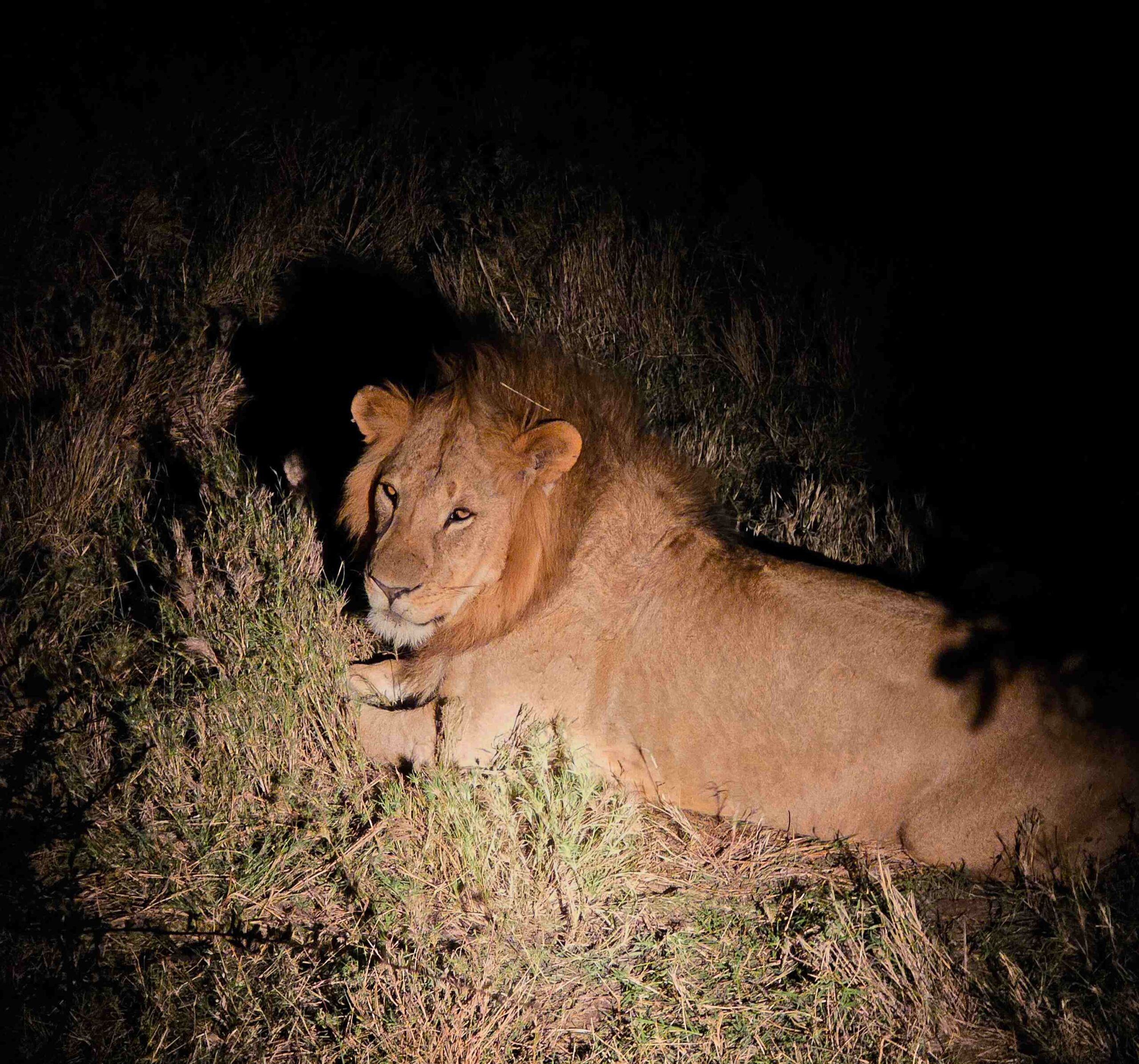
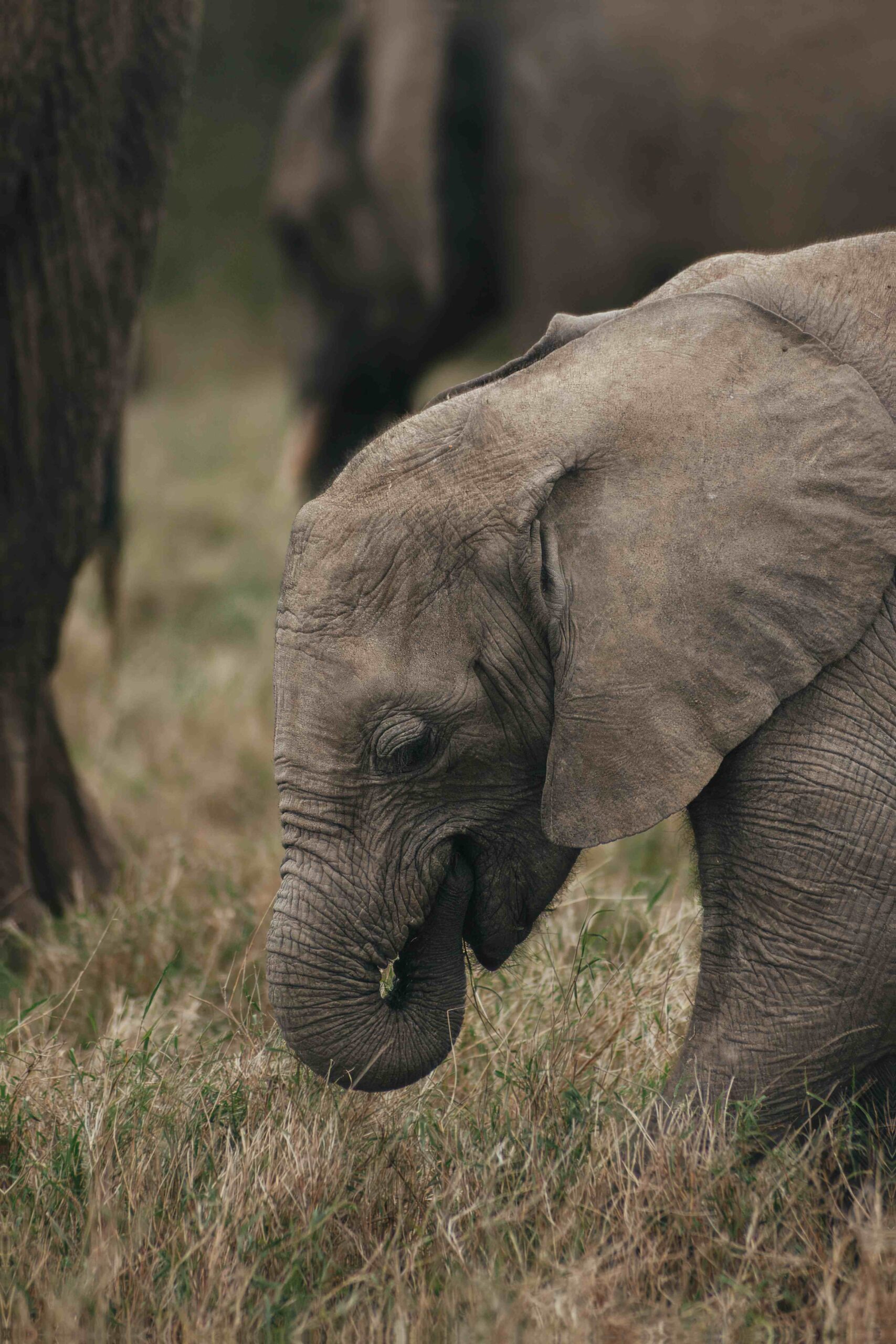
With that came elephants. We found them feeding in the darkness. As we stood quietly watching, we could hear the grass and leaves being pulled, the animals chewing, their movements and their breathing. It was an experience far more intimate than watching them in daylight. We saw white rhinos, too, and later, hyenas moved in packs to chase buffalo. But the encounter that truly changed the atmosphere came when our guide found two lions, a male and a female, which were feeding on the remains of a buffalo.
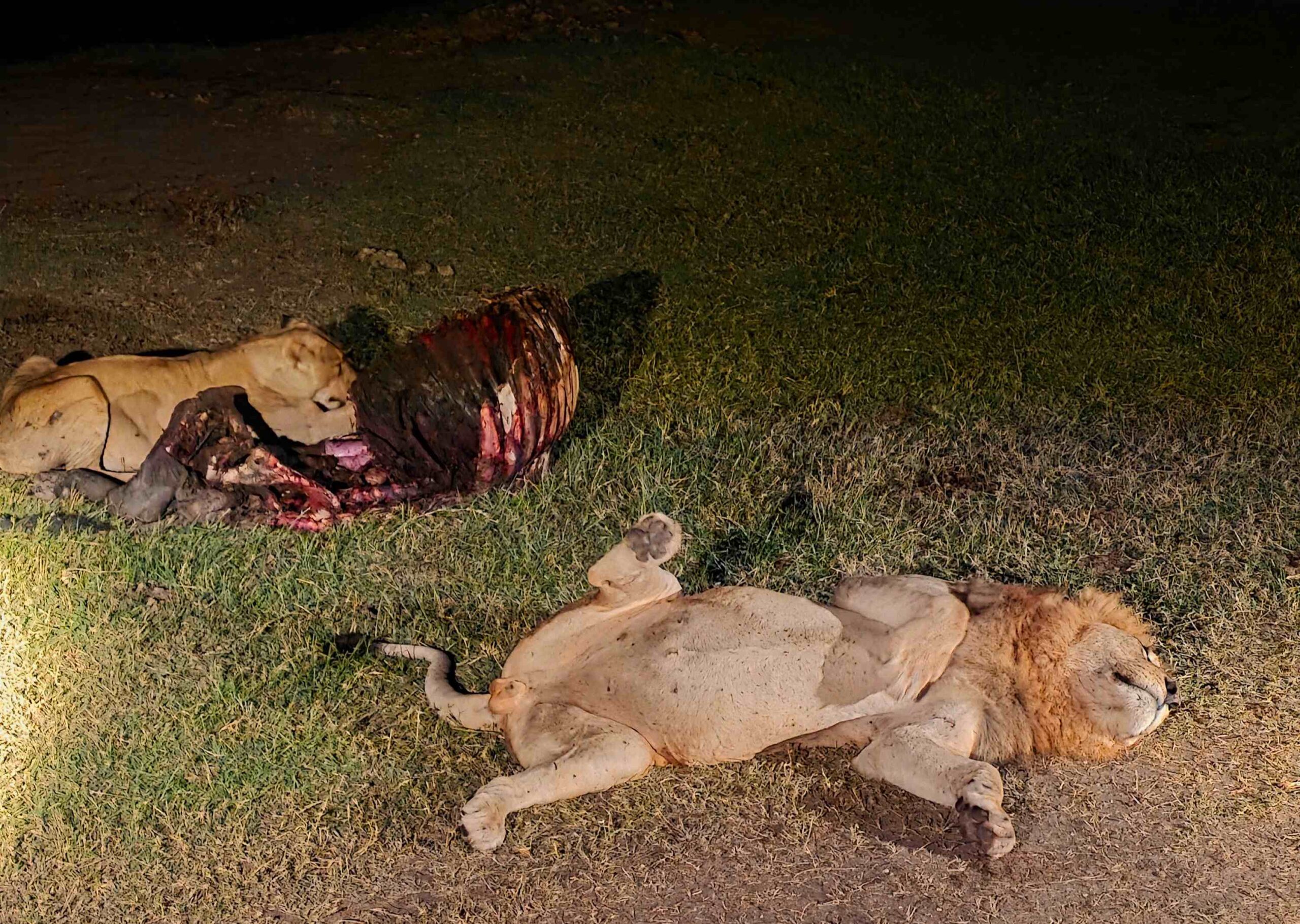
The male lay almost lazily, belly exposed, one leg raised, while the female fed. The scene was fascinating and slightly unsettling. In darkness, the sounds, the movement and the occasional glint of eyes caught by the torch made it all a raw experience. The cold was relentless. My hands were freezing, and I was so grateful for the blanket, but nobody seemed particularly interested in returning to camp.
That is the beauty of a safari. You might spend hours looking for something, but the anticipation itself becomes part of the experience. When you finally find it, the excitement is impossible to explain. As we drove back, the sky above us was filled with stars. We were cold, tired and completely content.
MEETING THE CHIMPANZEES
The next morning took us to the Sweetwaters Chimpanzee Sanctuary, where the stories behind the animals were far more powerful.
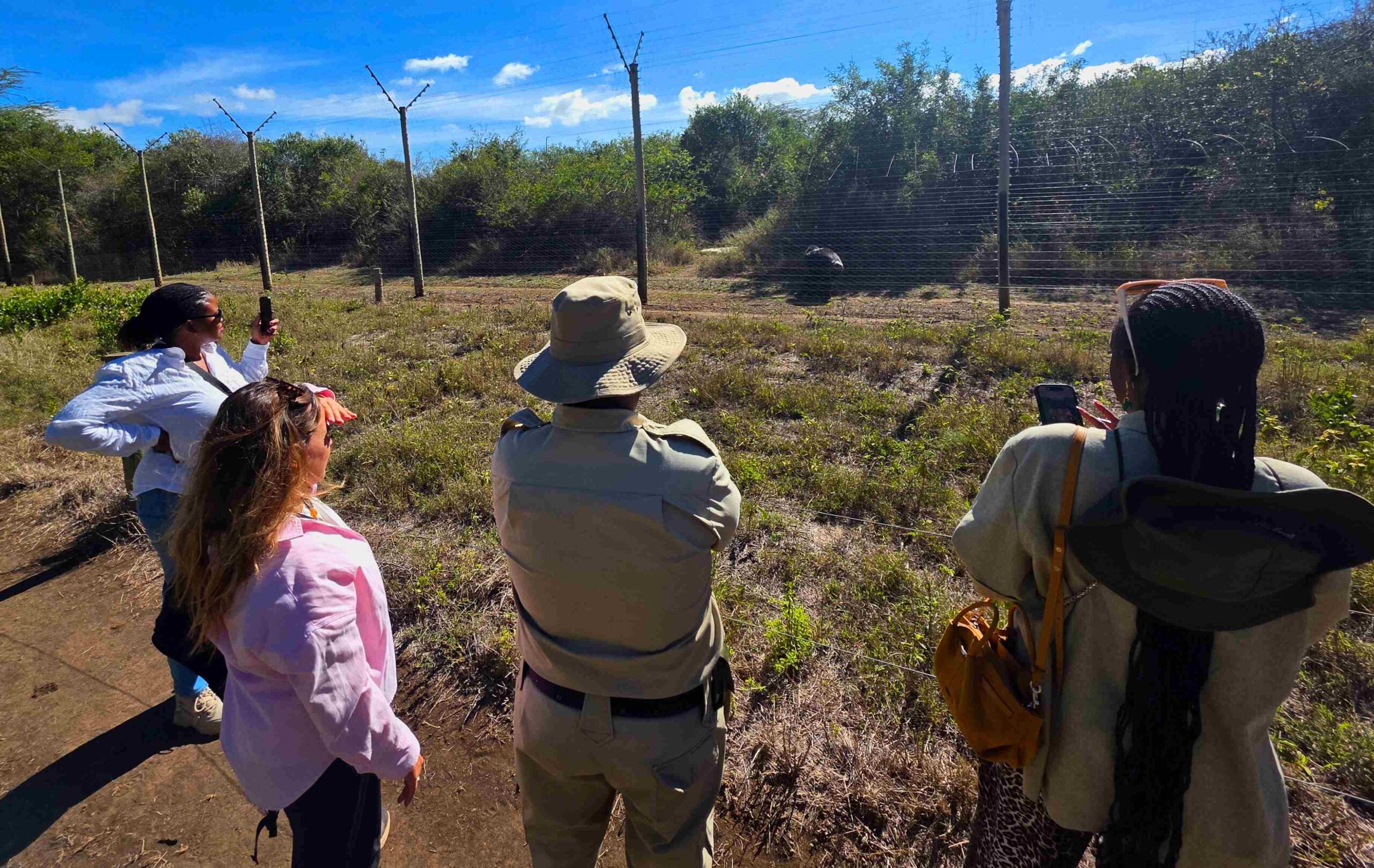
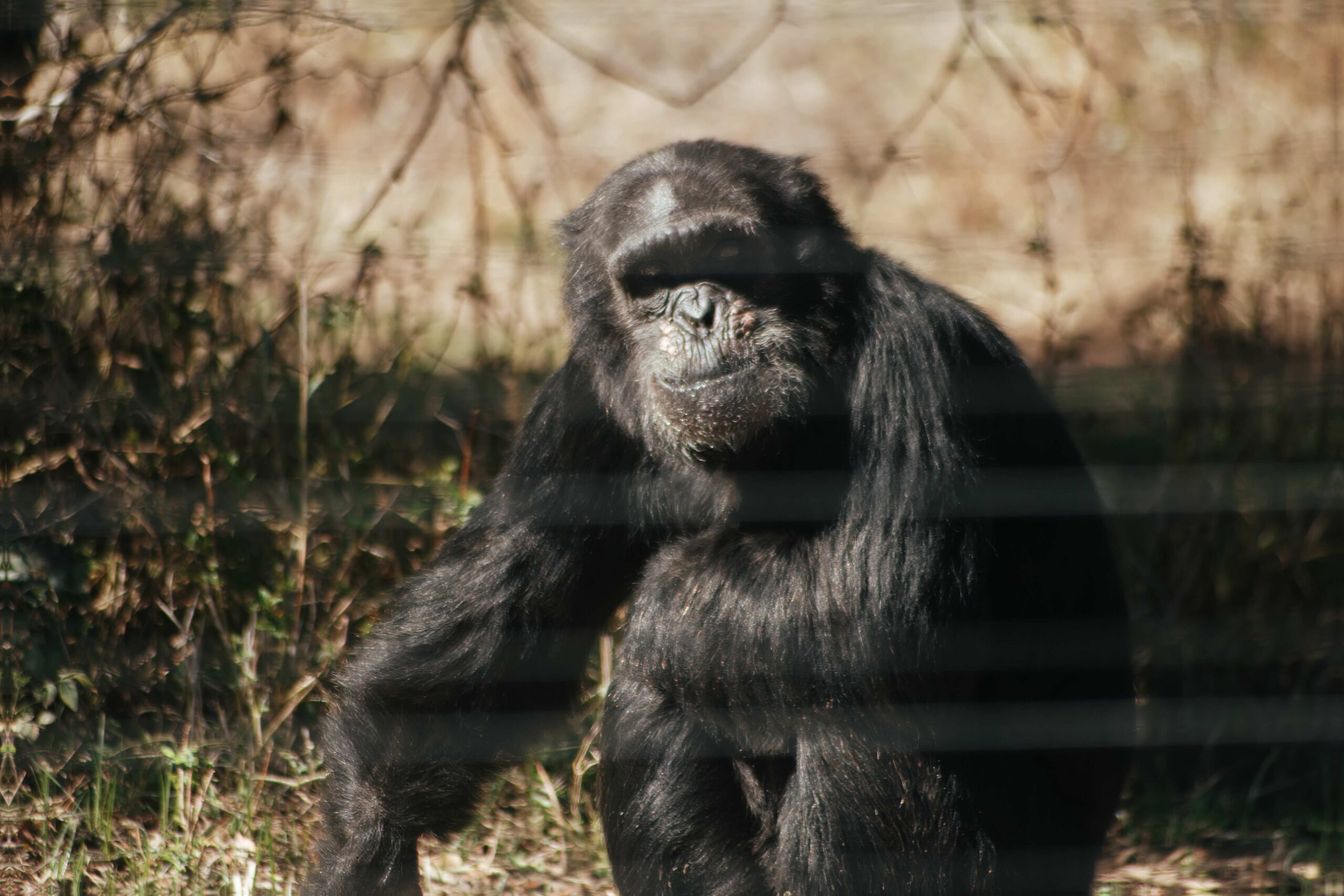
The sanctuary was established in 1993 after a chimpanzee rescue centre in Burundi was forced to close during the country’s political unrest. Many of the chimpanzees here have come from difficult circumstances. Some were orphaned after their parents were killed and subsequently taken into homes as pets. Others had been rescued from captivity in different parts of the world. Our guide explained how chimpanzees had been brought from places including Burundi, Rwanda, Iraq, Guinea, South Sudan and Dubai.
Each had a story, and not all of them were easy to hear. One chimpanzee, Poco, had reportedly spent nine years inside a crate before being rescued. Others had been kept in circuses, private homes or situations where they had suffered trauma and neglect.
The sanctuary is not simply about providing food and shelter. The team works to encourage natural behaviours through enrichment activities, climbing structures, ropes, platforms and opportunities to forage. We learnt that chimpanzees are incredibly intelligent, capable of using tools and solving problems. Our guide demonstrated how they are encouraged to use objects to retrieve food, stimulating their minds and helping them develop behaviours they might otherwise never have learnt.
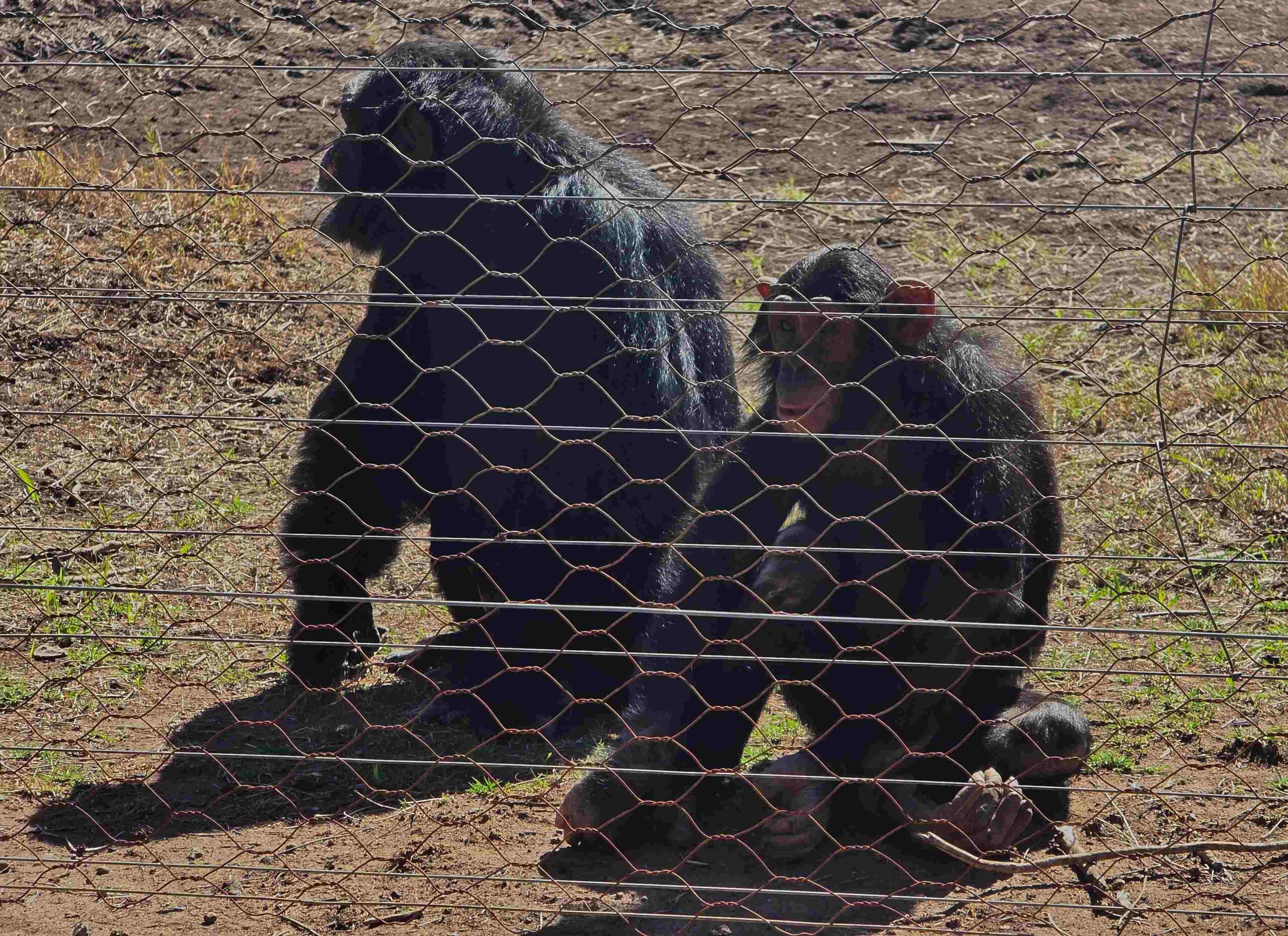
Watching them interact was fascinating. They have personalities, relationships, hierarchies and moods of their own. Some were playful, others more reserved, while a few seemed perfectly happy observing everything from a distance. But the visit also left us thinking about the consequences of treating wild animals as pets. A chimpanzee may appear entertaining when young, but as it grows, its strength, intelligence and instincts make it impossible to provide an appropriate life in a domestic setting.
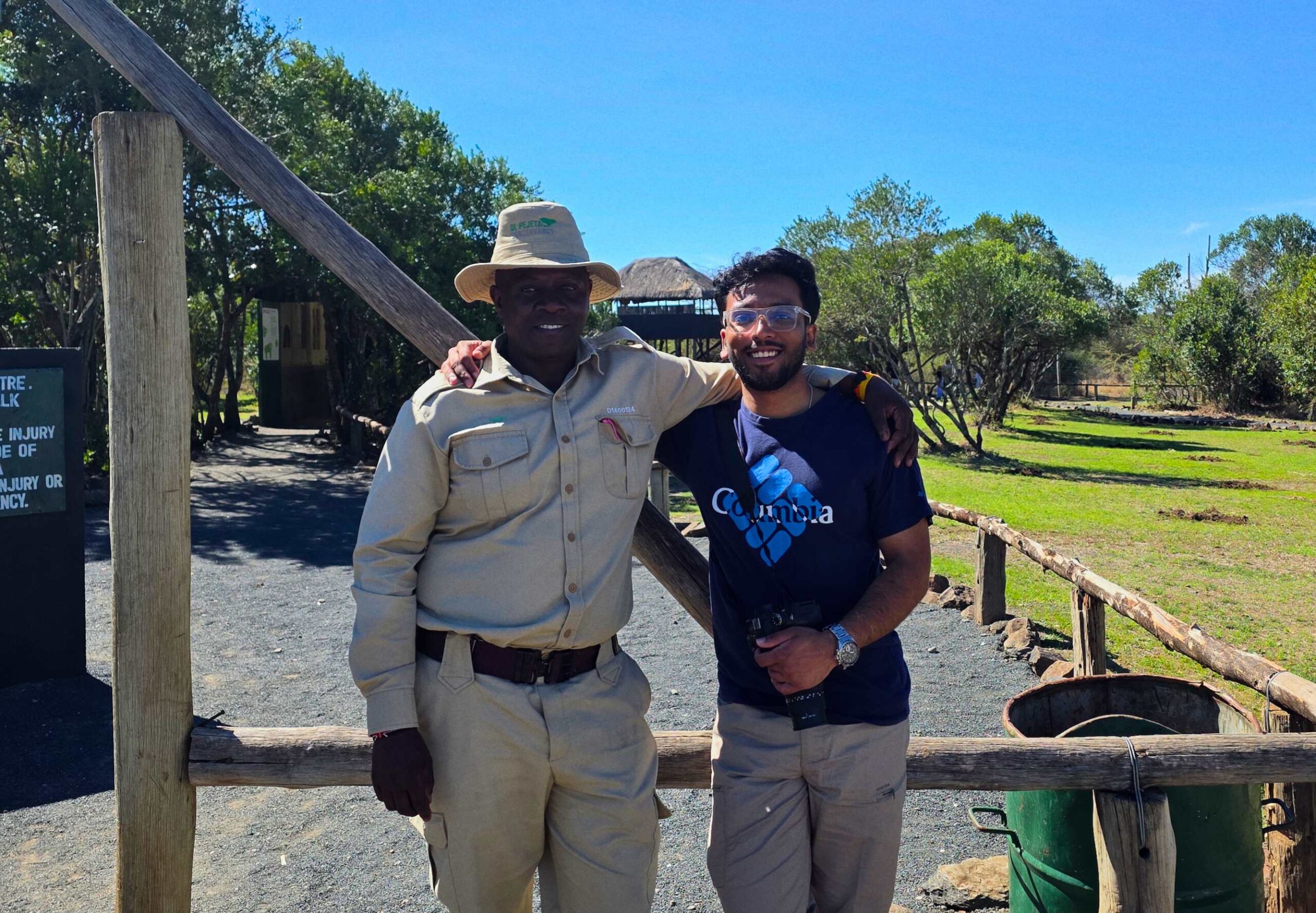
The sanctuary wasn’t a place to see them but a place that asked us to understand why they were there in the first place.
REMEMBERING WHAT WAS LOST
Our next stop was the rhino memorial, a quiet reminder of rhinos that lost their lives to poaching and the pressure placed on wildlife. Standing among the memorials, the stories of individual rhinos showed a different perspective on conservation. A safari often celebrates what we are fortunate enough to see: elephants, lions, rhinos and other animals that continue to survive.
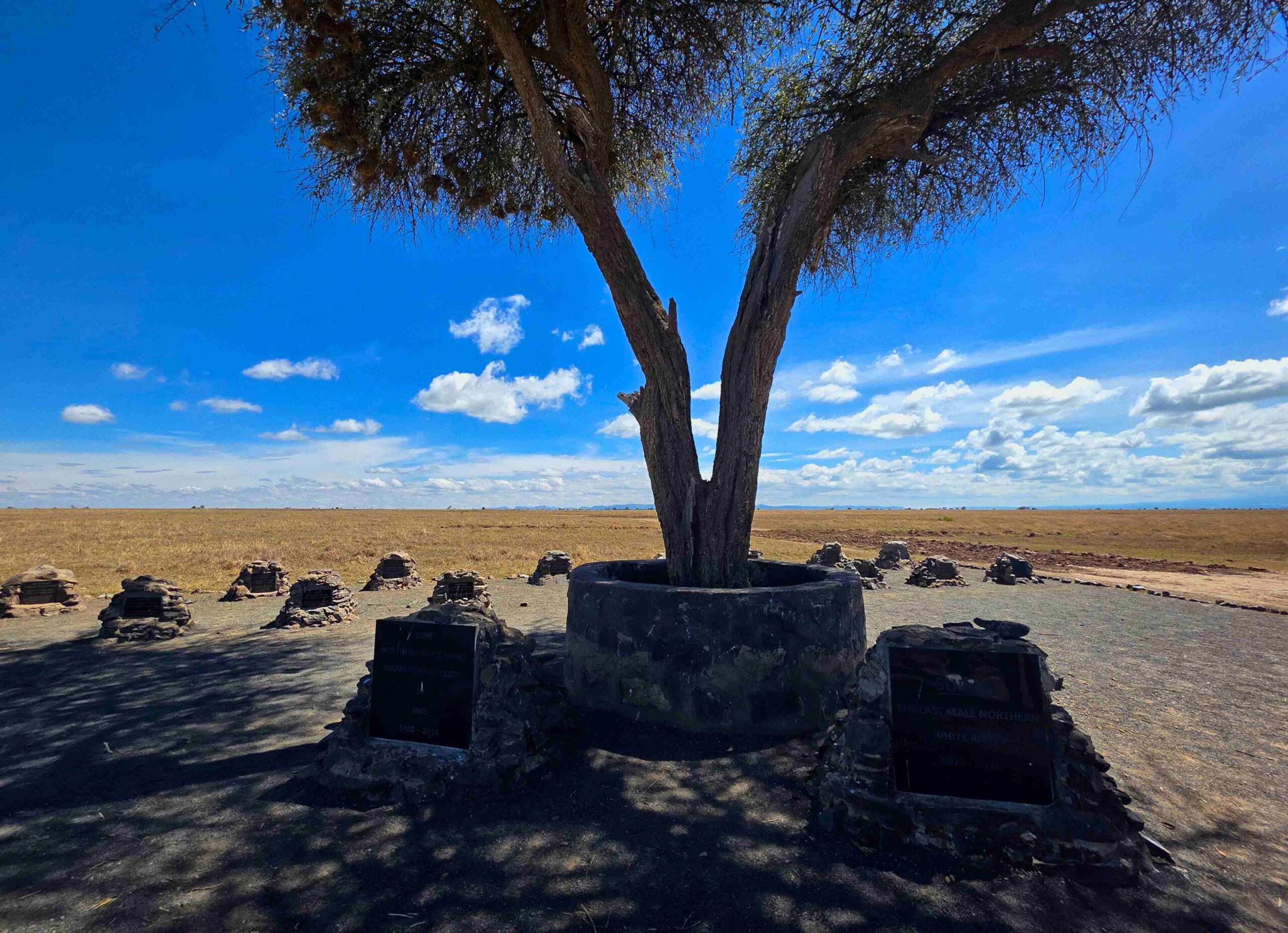
But places like this remind us that these animals are no longer here, and of the human decisions that led to their deaths. It was a sad moment. Each animal represents a life that should have continued in the wild. With that came the experience we had travelled to Ol Pejeta specifically to witness.
THE LAST TWO NORTHERN WHITE RHINOS
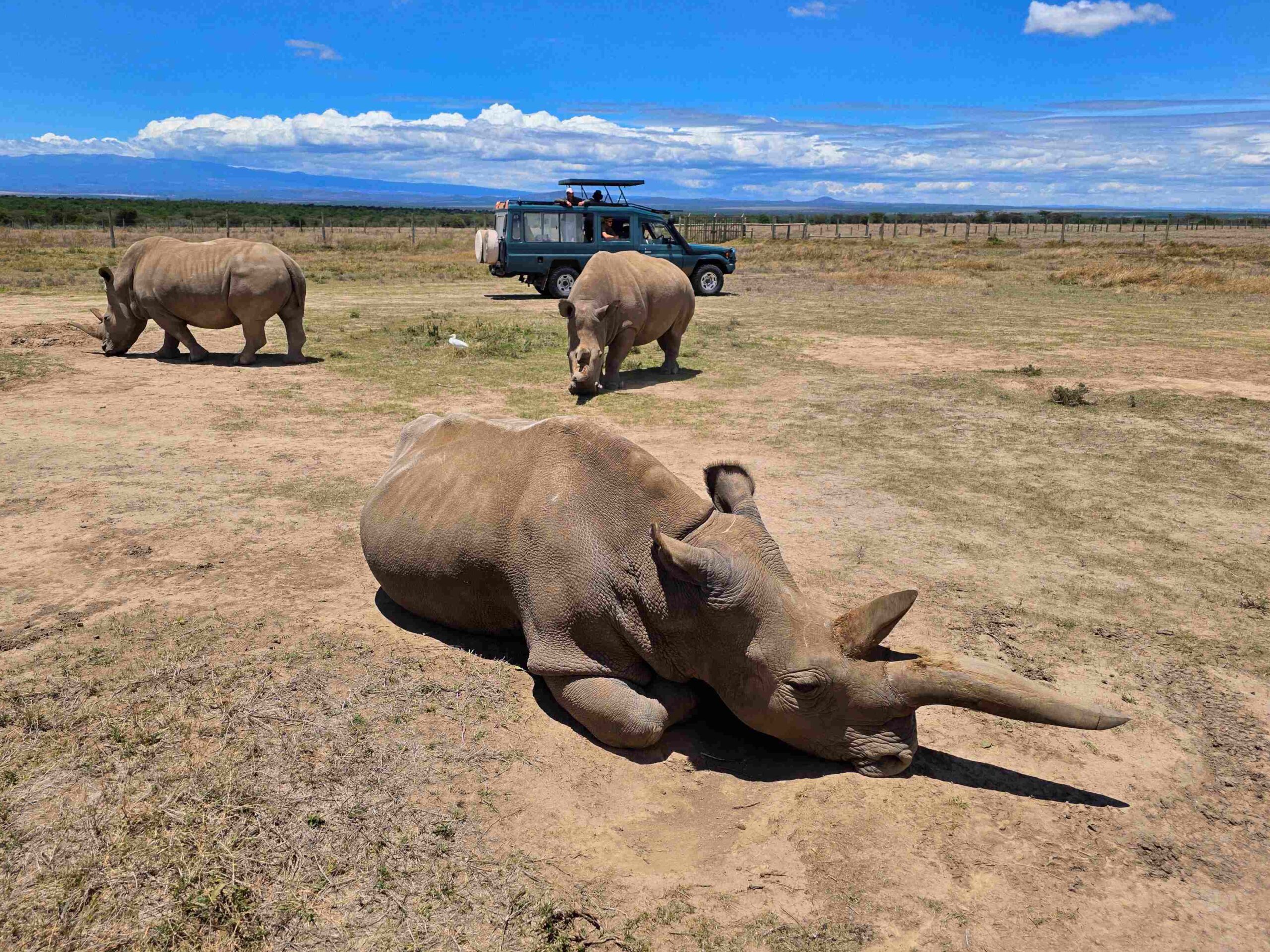
On a journey, you might feel the anticipation building up inside you without even realising it. We were about to meet Najin and Fatu: the last two northern white rhinos alive in the world. Gideon, our guide, started the tour with a briefing, detailing their history and the conservation initiatives that brought them to Kenya.
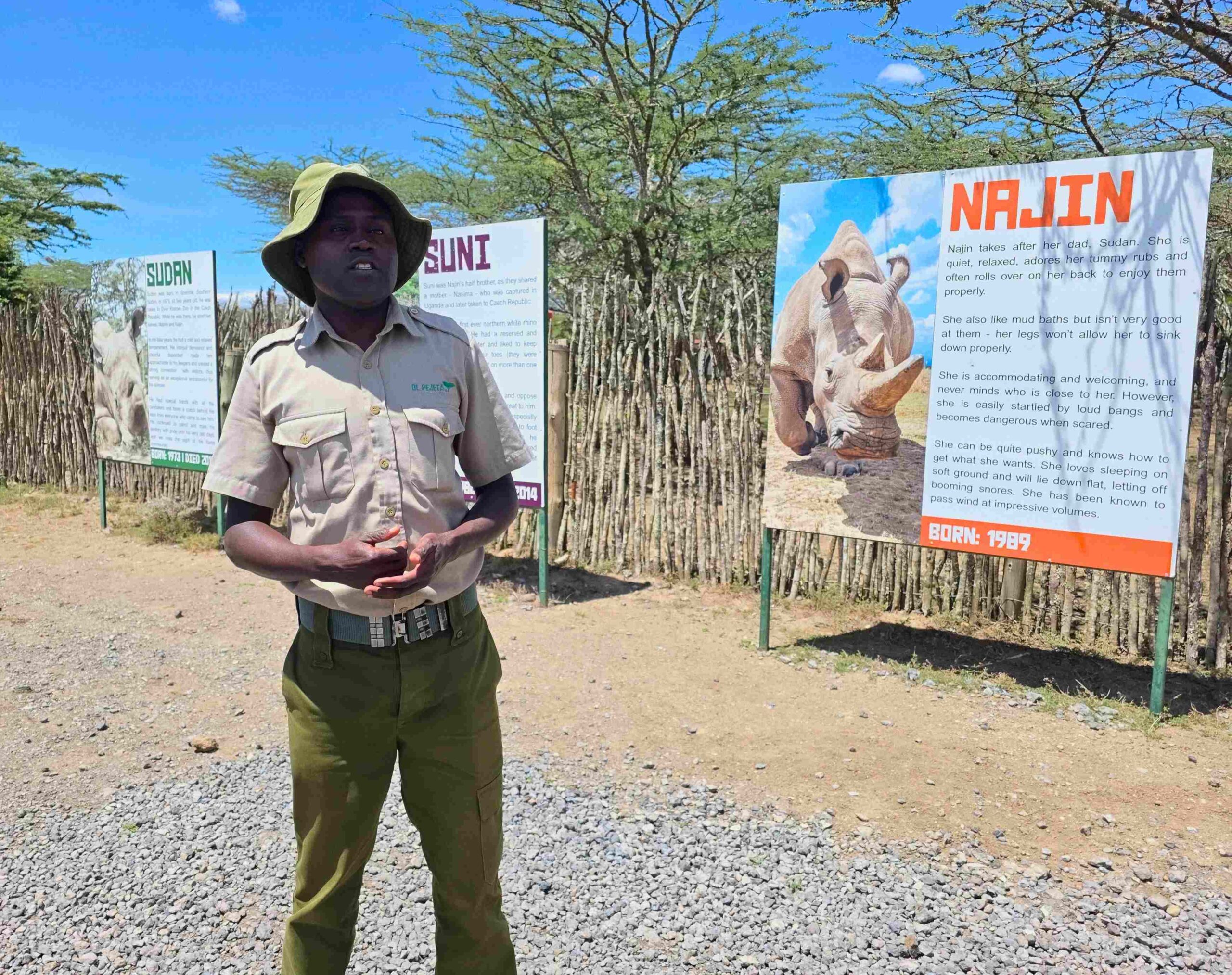
The northern white rhino once inhabited parts of northern and central Africa. Political instability, conflict and poaching caused its population to collapse. Four northern white rhinos: Najin, Fatu, Sudan and Suni were brought to Ol Pejeta from the Czech Republic in 2009 in the hope that a more natural environment might offer the subspecies a better chance of survival.
Suni died in 2014. Sudan, the last male northern white rhino, died in 2018. Najin, his daughter, and Fatu, his granddaughter, remain. The reality of what we were about to see slowly sank in. These weren’t simply two rare animals. They represented the final living members of a subspecies that once walked freely across a vast landscape.
The conservation effort now rests heavily on science. Since neither Najin nor Fatu can carry a pregnancy, researchers are working with assisted reproductive technologies, collecting eggs from Fatu and fertilising them using frozen sperm from deceased northern white rhino males. The resulting embryos are being preserved, with southern white rhinos identified as potential surrogate mothers.
In April 2026, the BioRescue consortium announced that another embryo had been successfully created following an egg collection from Fatu, bringing the total number of pure northern white rhino embryos to 39. While the programme has made some progress, successfully producing embryos is only one part of the challenge. Establishing and sustaining a pregnancy remains the next major hurdle.
The science is complex, the timeline uncertain, and the stakes extraordinary. Yet the work continues, where conservation is not always about immediate victories, but about not giving up on the possibility of a future. We then drove into the enclosure. There were three rhinos in front of us: Najin, Fatu and Tauwa, a southern white rhino who lives alongside them.
Initially, the two northern white rhinos were resting. Then they began to move towards the vehicles. The excitement inside our car was immediate. Everyone wanted to get closer, to feed them, to experience this moment for themselves.
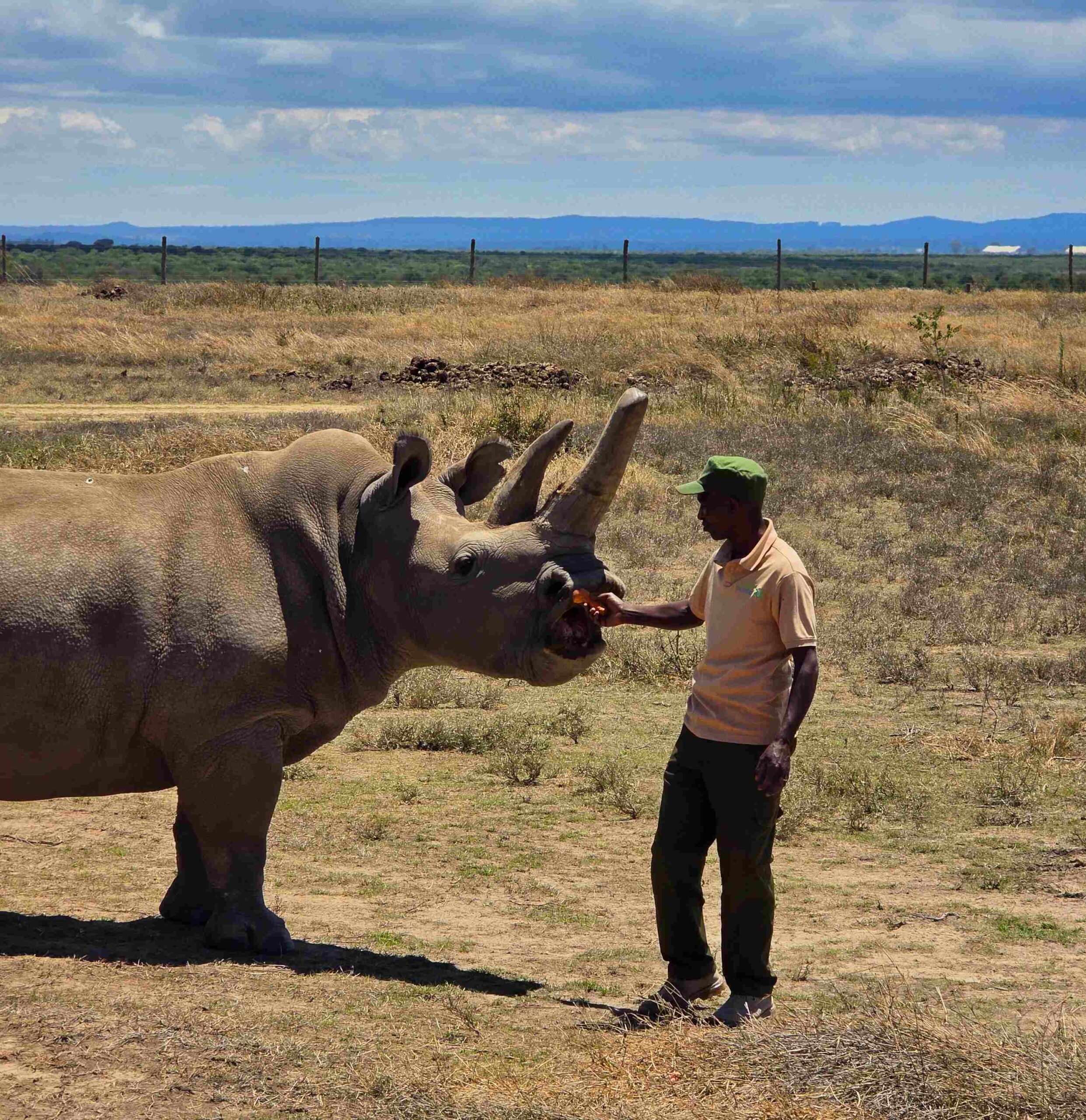
We were given carrots, and soon the rhinos were close enough for us to get close and feed them. I remember looking at their enormous bodies, their thick, rough skin and the unmistakable presence of these animals. I was standing there, feeding a rhino, knowing that the two animals in front of me were the last of their kind.
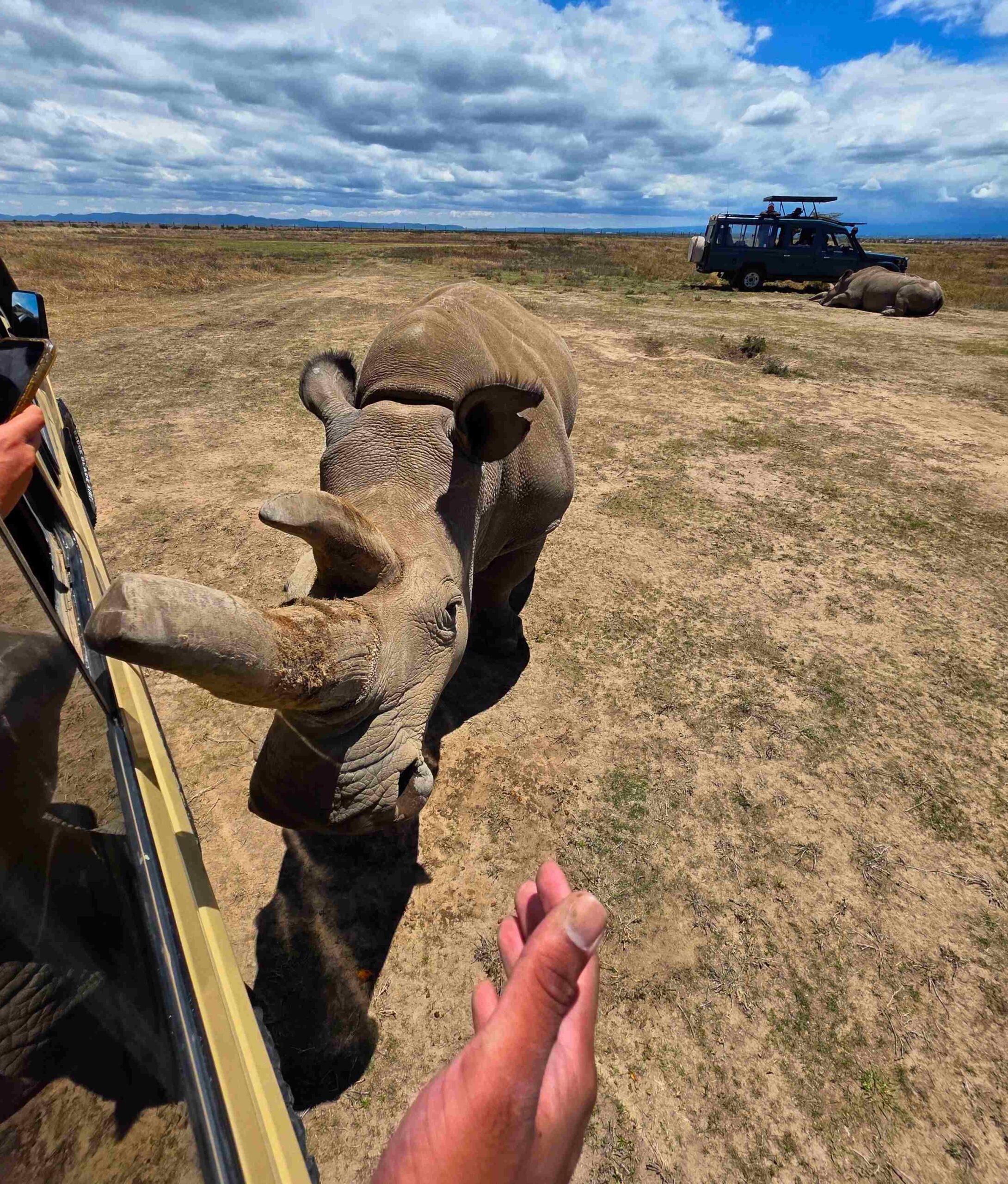
It was an amazing moment. It is difficult to put into words being physically close to them, someone who exists on the edge of extinction. The experience was joyful; we were laughing, feeding them, taking photographs and completely caught up in the moment. Yet underneath all that excitement was a thought that kept returning.
What happens next?
What happens when the last two are gone?
I didn’t want to leave. We kept watching them, hoping for another moment, another interaction, another photograph. Our guide spoke about the ongoing efforts and the hope that the work being done could one day give the northern white rhino another chance. As we drove away, I found myself thinking about how conservation is sometimes measured in years, sometimes decades, and how much patience it demands. The people working to save the animals may never see the outcome of their efforts. Yet they continue.
That, perhaps, is one of the most remarkable things about conservation.
CONSERVATION BEYOND THE WILDLIFE
Ol Pejeta is not simply a wildlife sanctuary. Its conservation model brings together tourism, wildlife protection, agriculture and community development, recognising that protecting a landscape also means creating opportunities for the people who live alongside it. Tourism and agricultural activities help support conservation, while community programmes focus on livelihoods, education and development.
It is a model that makes the experience here feel different. The wildlife is at the centre, but the story is more than animals: the people, the land and the effort to make conservation sustainable for generations to come.
A STOP AT THE EQUATOR
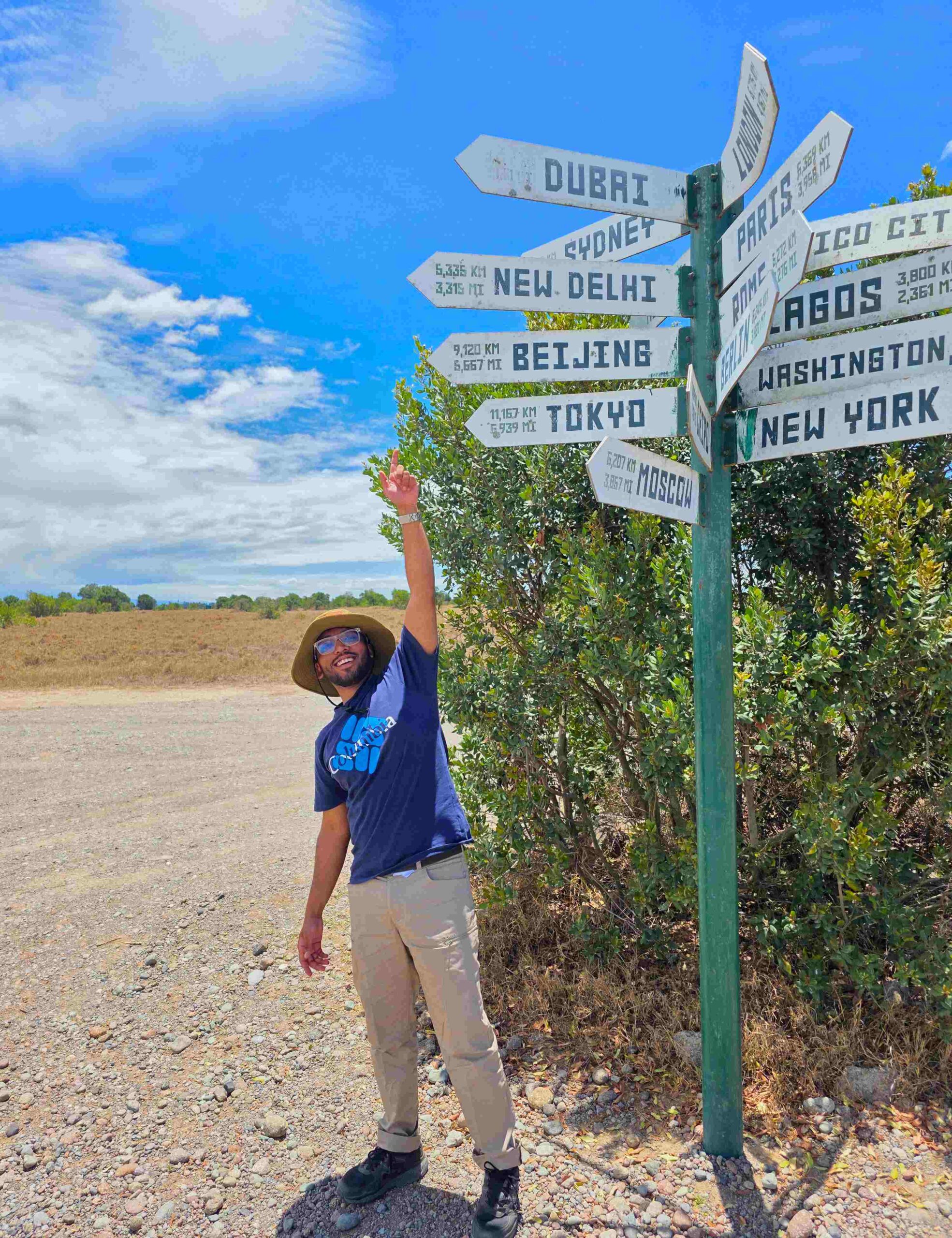
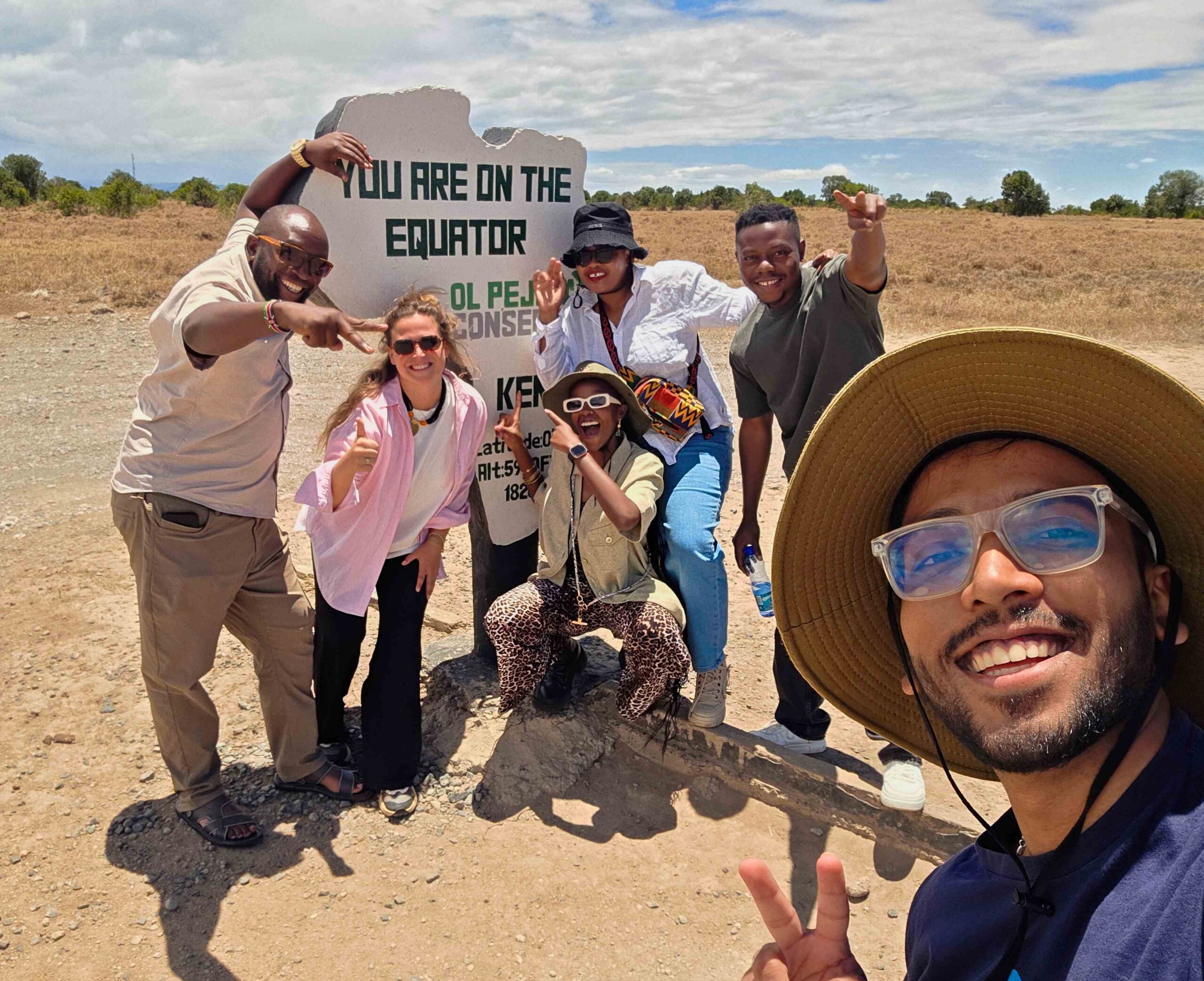
Before returning to camp, we made a quick stop at the Equator. There was the familiar sign, information boards explaining the geographical significance of the line, and the opportunity to stand with one foot in each hemisphere. I couldn’t resist looking towards India on the map. New Delhi suddenly seemed a little closer than usual.
It was a lighthearted stop after an emotionally intense morning, but a small moment that naturally finds its way into the memory of a road trip. On the way back, we spotted a giraffe with several birds perched on its body. Our driver explained how these birds help alert giraffes to potential danger, acting almost like an additional set of eyes.
Back at Sweetwaters, the evening was beautifully simple: dinner, music and the company of fellow travellers, with the wilderness equally in them.
THE MISSING PIECE
There was still one thing I hadn’t seen. Mount Kenya. Throughout our stay, clouds had hidden the mountain from view. I had kept looking towards the horizon, hoping to see it, but the weather had other plans.
The next morning, before leaving for Nairobi, I was up early and heading towards breakfast around 6:30. And then it was right there. The sun was beginning to rise. The air was cool, the sprinklers were watering the grass, and the clouds were slowly turning orange. Behind them, Mount Kenya appeared.
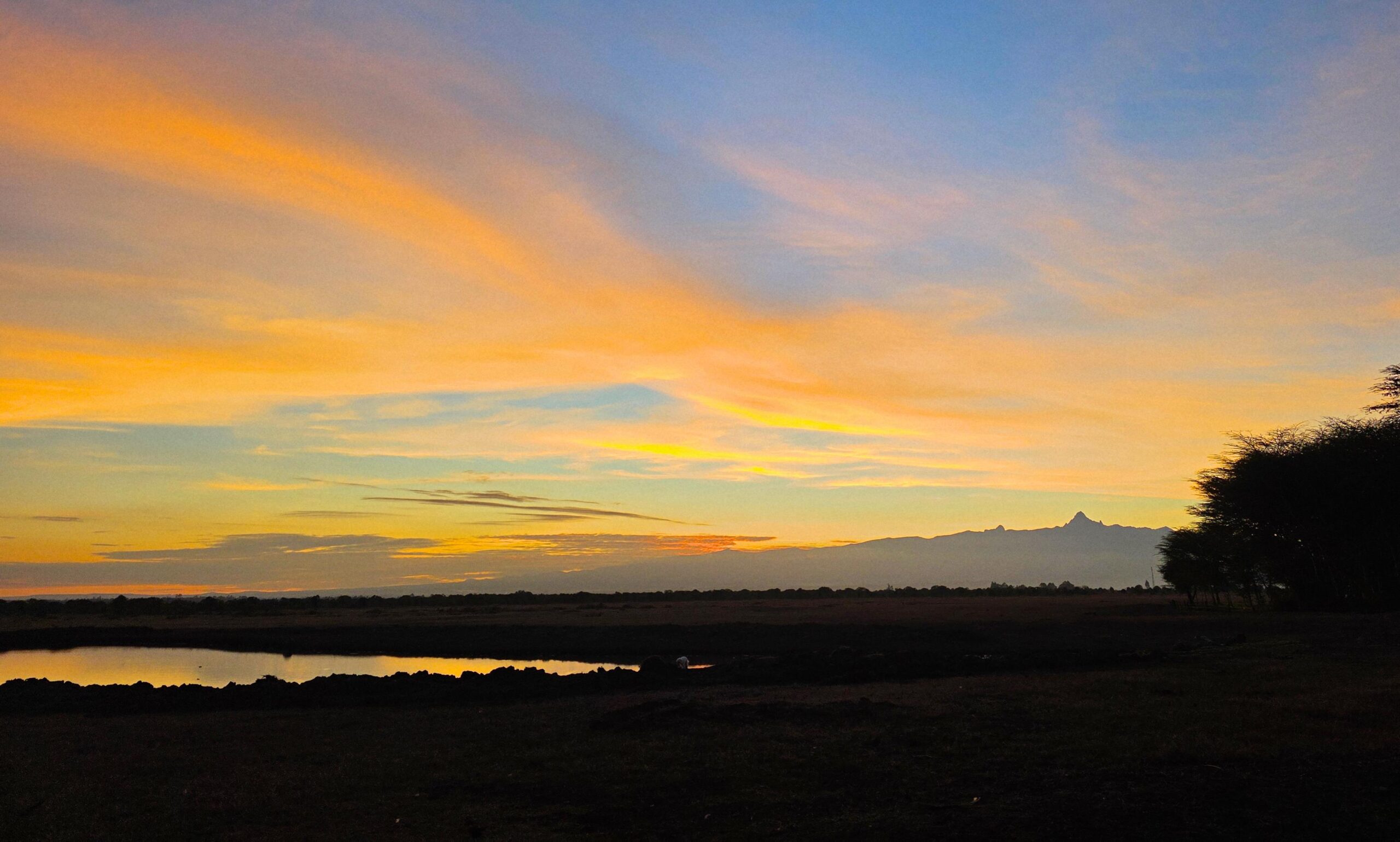
For a moment, I simply stood there. After the night safari, the chimpanzees, the memorials and meeting Najin and Fatu, this felt like the missing piece of the journey. The mountain stood quietly in the distance, its presence transforming the entire landscape. I remember thinking how fortunate I was to have seen it, especially after spending the previous days hoping for exactly this moment.
It was the perfect ending. The drive back to Nairobi took several hours, but I didn’t mind. My mind was still somewhere in Laikipia among the grasslands, the night sky, the rhinos, the chimpanzees and that final morning view.
Ol Pejeta had given me something more than just a safari. It had given us a picture into the realities of conservation: the victories, the challenges, the losses and the hope that remains.
And perhaps that is what made Laikipia so memorable. The wildlife wasn’t simply there for us to admire, and it was a reminder that we are just the visitors in their world, and that the future of that world depends, in many ways, on what we choose to do after we leave.
Read more at TravelMail | Follow us on Facebook | Twitter | and Instagram for on-the-go news.

