
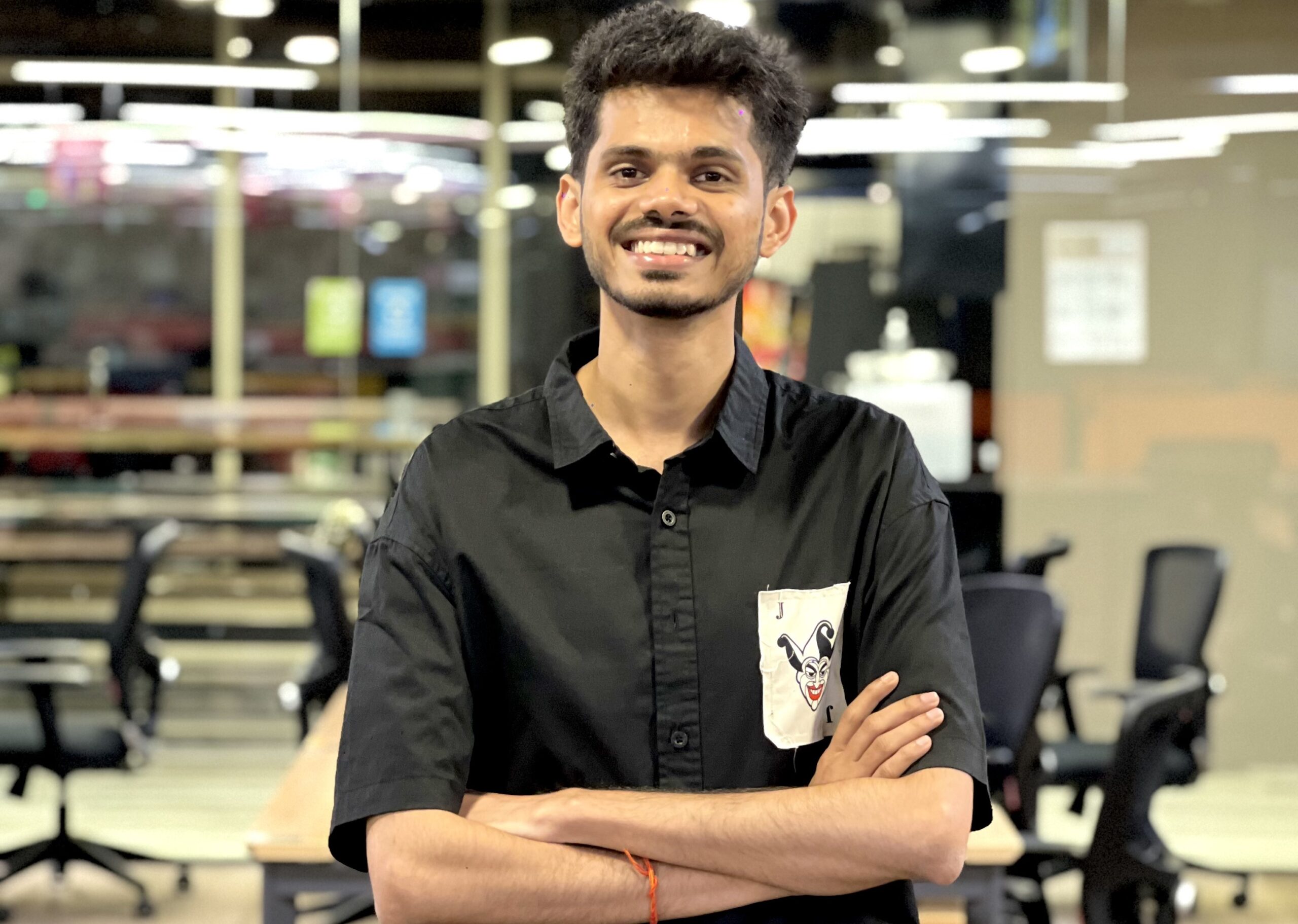
What began as India’s first backpacker hostel in Jodhpur has today evolved into one of the country’s most influential travel-led lifestyle ecosystems. In this exclusive interaction, Mr. Aviral Gupta, CEO of Zostel and Zo World, reflects on his entrepreneurial journey with Zostel, the vision behind building community-driven travel experiences, and how the brand has transformed the way young Indians explore the world. From unlocking remote destinations and championing safe solo travel for women to expanding across Southeast Asia with Zo World, Aviral shares insights into the evolving preferences of modern travellers, the rise of alternative accommodation, and why India is poised to become a global backpacking powerhouse.
Could you share your entrepreneurial journey and what inspired you to join Zostel early on? What have been some defining moments along the way?
I joined Zostel in 2014 as the company’s very first employee, and honestly, it was never a calculated decision. Seven young graduates had launched India’s first backpacker hostel on August 15, 2013, in Jodhpur, betting that Indian travellers were ready for something entirely new. No blueprints, no comparable models, plenty of scepticism. But what drew me in was the mission itself: to help people discover themselves while meeting others, exploring new cultures and perspectives, and to genuinely change the way India travels.
We realised early on that we were never really building a hostel chain. The hostel was the entry point, not the destination. The bigger ambition was always a community-led ecosystem where accommodation, experiences, and discovery live together on one platform. I learned entrepreneurship by doing, moving through nearly every vertical along the way, operations, marketing, product, tech, HR, and more, building it all alongside college friends who were young, passionate, and just stubborn enough to do things differently.
Staying true to that original vision through a decade of growth, pivots, and a global pandemic has been the thread that holds everything together, but if you ask what really keeps us going, it is not the numbers. It is the stories. People who found their closest friends at a Zostel, Couples who met in a dorm and got married years later. Solo travellers who arrived unsure of themselves and left with a renewed sense of who they are.
What I am most proud of is when we started, people told us Zostel would never work in India because solo female travellers would never feel safe sharing a space with strangers. That criticism pushed us. Today, Zostel has hosted more solo female travellers and made them feel genuinely safe than any other brand in the youth travel space. That shift in how India travels, that is what this has always been about and honestly, it still feels like we are just getting started.
How would you describe Zostel’s core philosophy, and how has the brand evolved since its inception?
Zostel was never just about a bed for the night, but rather the philosophy from day one has been to make travel a way of life, to create spaces where strangers become friends, and the journey is as meaningful as the destination. We were building communities long before community-led became a buzzword. We started with one hostel in Jodhpur. Today, Zo World spans Zostel, Zostel Plus, Zostel Homes, Zo Trips, Zo Villas, Zo Houses, and beyond, growing from India’s backpacking pioneer into what I genuinely believe is the country’s first travel-rooted lifestyle ecosystem. And the results speak for themselves. The community is no longer just consuming the experience; it is actively building it, driving demand, uncovering new destinations, and creating new Zostels themselves. That network effect was always the vision. The last decade was just the foundation. We are more driven than ever to shape how India travels over the next ten years and to build something that truly stands the test of time.
What factors guide your choice of locations, and which regions are seeing the strongest growth?
Two things guide every location decision above all else: traveller intent and destination potential. We have always had a strong instinct for going where the soul of travel truly is: remote mountains, cultural heritage towns, coastal escapes. We opened in Spiti, Ladakh, and the Northeast long before these became mainstream, but beneath that instinct is a deeper belief: every destination has a story to tell and a culture to share. For us, the question was never whether a location is suitable. It has always been a question of when and how to unlock it.
India, with over 5000 years of history, philosophy, and lived culture, holds some of the most immense and untapped travel potential in the world. As more travellers seek depth over convenience and meaning over comfort, we genuinely believe India is on its way to becoming one of the leading backpacking markets globally. For us, that is not just an ambition. It is an inevitability.
Right now, the Himalayan corridor, Himachal, Uttarakhand, and Ladakh, continues to see strong demand, and the Northeast is growing fast. Internationally, Southeast Asia is our next big frontier. We have already launched Zostel Phuket in Thailand, and are on track to open across Bangkok, Bali, Colombo, Mirissa, Vietnam, Japan, and beyond. With Zo Trips already building communities and driving demand across Vietnam, Japan, Georgia, Bhutan, and Sri Lanka, the infrastructure is in place, and the momentum is real.
How do you ensure consistency in guest experience across such varied properties while still retaining local character?
Consistency in hospitality is one of the hardest things to get right, and it has been central to our thinking for over a decade. The answer for us has never been uniformity. It lives in the intangibles, the warmth, the sense of community, the quality of human interaction. Over the last ten years, we have invested heavily in building our own proprietary tech and operational systems, SOPs and frameworks that ensure baseline standards across every property. But local character remains non-negotiable. Every Zostel is encouraged to reflect its geography in its design, its menus, and its programming. Our Zo Trips are built with local hosts and itineraries crafted by people from the region. The goal is simple: when you walk into a Zostel in Jaisalmer versus one in Meghalaya, you feel the same Zo warmth but experience an entirely different world.
How do you see the hostel and homestay segment evolving in India?
India is at an inflexion point, and now the traveller is fundamentally different, more intentional, more experiential, and far less fixated on luxury as the default measure of a good trip. Young India wants meaning and connection from travel, not just comfort. The hostel and homestay segment is a direct beneficiary of this shift. We are seeing travellers in their 30s and even families now exploring the format, something that would have been unthinkable five years ago.
We introduced Zostel Plus in 2022 to serve this premium experiential demand, and the uptake has been strong, with 20% of our FY25 travellers choosing Plus properties. The segment will continue to premiumize, but the soul of community travel will stay intact.
What key trends are you observing in how people travel today, and how is Zostel adapting?
What stands out most is how travel preferences are evolving. More travellers today are embracing slow travel, choosing to spend longer in fewer destinations and seeking deeper, more meaningful experiences instead of ticking places off a checklist. Community-led travel is gaining momentum, with people increasingly drawn to journeys shared with like-minded individuals, even if they begin as strangers. There is also a growing preference for private, nature-immersed experiences, particularly among families and groups seeking seclusion without compromising on quality.
What excites us equally is the next generation of travellers, more experimental, more spontaneous, and far more willing to show up without a plan and simply trust the experience. They want to live like a local, to have their own Zo friend at every destination who takes care of everything, so they can be fully present in the moment.
Zo World is adapting across all of this. Zo Trips delivers curated, immersive group experiences with local hosts embedded in every itinerary. Zo Houses is being designed for founders, artists, and digital nomads seeking long-stay co-living, and Zo Villas addresses the demand for premium private escapes, eco-friendly, prefabricated vacation homes in remote, scenic locations that traditional hospitality simply hasn’t reached.
What is your outlook for the backpacking and alternative accommodation segment over the next few years?
India’s domestic travel market is growing at a pace the industry has never seen before. India’s domestic travel market is growing at a pace the industry has never seen before. Young Indians are travelling more, earlier, and more boldly and yet, backpacking as a segment is still less than five percent of its true potential. Hundreds of destinations, each with its own history and culture, are waiting to be discovered.
What has been fascinating to watch is how Zostel has become a recommendation engine. Since 2019, people have come to us not just to book a bed, but to find out where to go next. When a Zostel opens somewhere new, the pattern is consistent: visitors follow, the local economy shifts, and a destination is born. Bir is a case study in exactly that, and Poombarai is the next one. The appetite for authentic, affordable, experience-rich travel is massive and still largely underpenetrated. We are expanding into Southeast Asia, building out our digital ecosystem, and the next three to five years are about hyperscale, while keeping the soul entirely the same.
Read more at TravelMail | Follow us on Facebook | Twitter | and Instagram for on-the-go news

