

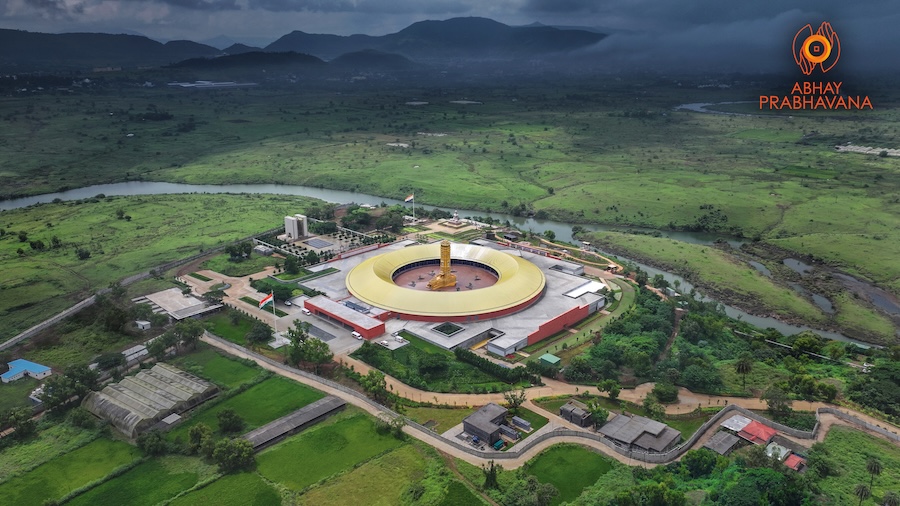
The moment I entered Abhay Prabhavana Museum, located along the banks of the Indrayani River, a profound sense of wonder embraced me. Its majestic entrance, sophisticated yet inviting, immediately set the stage for an entrance to the kingdom of knowledge we were going to have without any idea. Leaving our phones behind at the entrance is a deliberate step to foster genuine immersion. We were welcomed by calming aromas and, a luxurious atmosphere with promising deep reflection and cultural insight we would get. We entered the grand hall where we got the first glimpses of 8 large paintings along with the 100-foot Manstambh we can curiously see from there as well.

Abhay Prabhavana Museum is a visionary initiative.
The museum Abhay Prabhavana is conceived and meticulously created under the visionary leadership of Dr. Abhay Firodia, whom we have yet to meet. The museum is uniquely positioned as a “Museum of Ideas.” As Dr. Firodia explained a day later in the interaction, “Museum derives from the Latin for a place of thoughts, not just relics. Here, we aim to rationally and practically showcase the evolution of India’s timeless values, emphasizing their enduring significance.” Dr. Firodia and his grand team specifically chose this location near Pune due to its historical and spiritual significance, proximity to ancient Jain caves, and its natural serenity, which complements the museum’s philosophical purpose.

Chairman, Amar Prerana Trust
Founder, Abhay Prabhavana
Jaw dropping Architectural Grandeur and Collaborative Effort
Spanning an impressive 3.5 lakh square feet area, the museum thoughtfully organizes its extensive content into five clearly defined sections: Timeless Wisdom, Evolution of Culture and History, Path to Happiness, Eternal Stream of Indic Values, and Open Air Heritage Walk. Each section brilliantly blends ancient wisdom with modern interactive technology. The building itself, inspired by modern architecture infused with subtle traditional Indian elements, was completed in approximately twelve years.
The behind-the-scenes effort involved extensive teamwork and the best people because of whom it is what it is today. Dr. Firodia shared insights into the enormous collaboration involving hundreds of scholars, architects, artists, engineers, and technologists from India and abroad. “Each gallery required careful scripting, exhaustive research, and meticulous crafting” he explained, highlighting the collaborative dedication across diverse disciplines with an ambitious project, funded entirely by the trusts, which was brought to life at an estimated cost exceeding ₹400 crores, reflecting extraordinary dedication and meticulous attention to detail.
Parts, Where the Knowledge Lives: Timeless Wisdom and Evolution of Culture
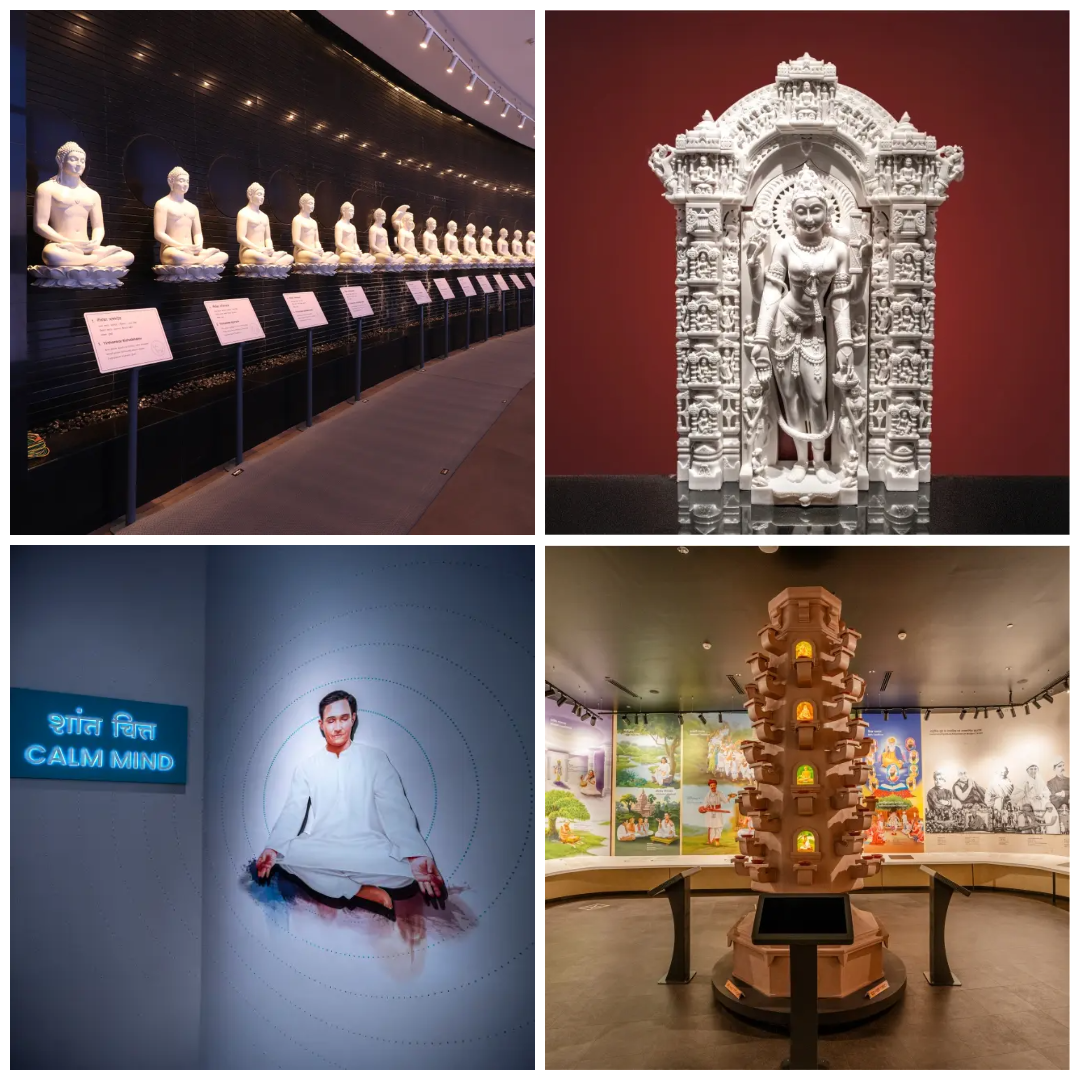
Although the amount of information is so vast and concise it is an achievement in itself. The first section, “Timeless Wisdom,” employs immersive displays to illuminate complex Jain concepts such as Atma (soul) and Karma. Religion fundamentally enhances faith in human and social values, not merely rituals. Here, ancient principles become relevant to contemporary life. Interactive kiosks, audio-visual animations, films, and virtual reality experiences creatively demystify these profound philosophical principles which makes it even easier to understand the depth of the knowledge.
The second section, “Evolution of Culture and History,” beautifully illustrates Jainism’s significant contributions to Indian societal development, architecture, literature, and the arts. Interactive exhibits and murals portray influential historical figures, fostering pride and awareness of India’s rich cultural heritage and Jainism’s global impact, spanning mathematics, cosmology, and medical sciences.
Path to Happiness and Indic Values
In the third section, “Path to Happiness,” I discovered insightful examples demonstrating how Jain principles like non-violence (Ahimsa), compassion, detachment, and ethical living tangibly contribute to personal well-being and societal harmony. From what to eat, and what food is the best for our body to meditation, it was clearly giving a message here. Dr. Firodia thoughtfully highlighted, “Dharma in Indian tradition is directional, guiding towards happiness, compassion, and fulfilment.”
The fourth section, “Eternal Stream of Indic Values” gallery compellingly demonstrates the unified ethical core within India’s diverse spiritual traditions—Jain, Buddhist, Vedic, and Sikh. Dr. Firodia notably remarked, “Indian civilization is like a stranded wire, multiple strands yet carrying the same ethical current.” This powerful analogy underscores unity within diversity as the hallmark of Indian philosophy.
A Long Heritage Walk and Artistic Marvels
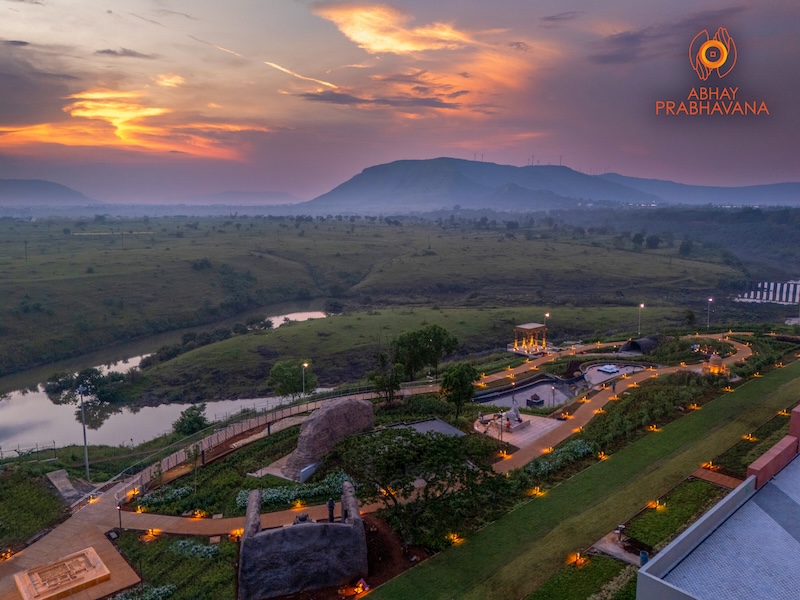
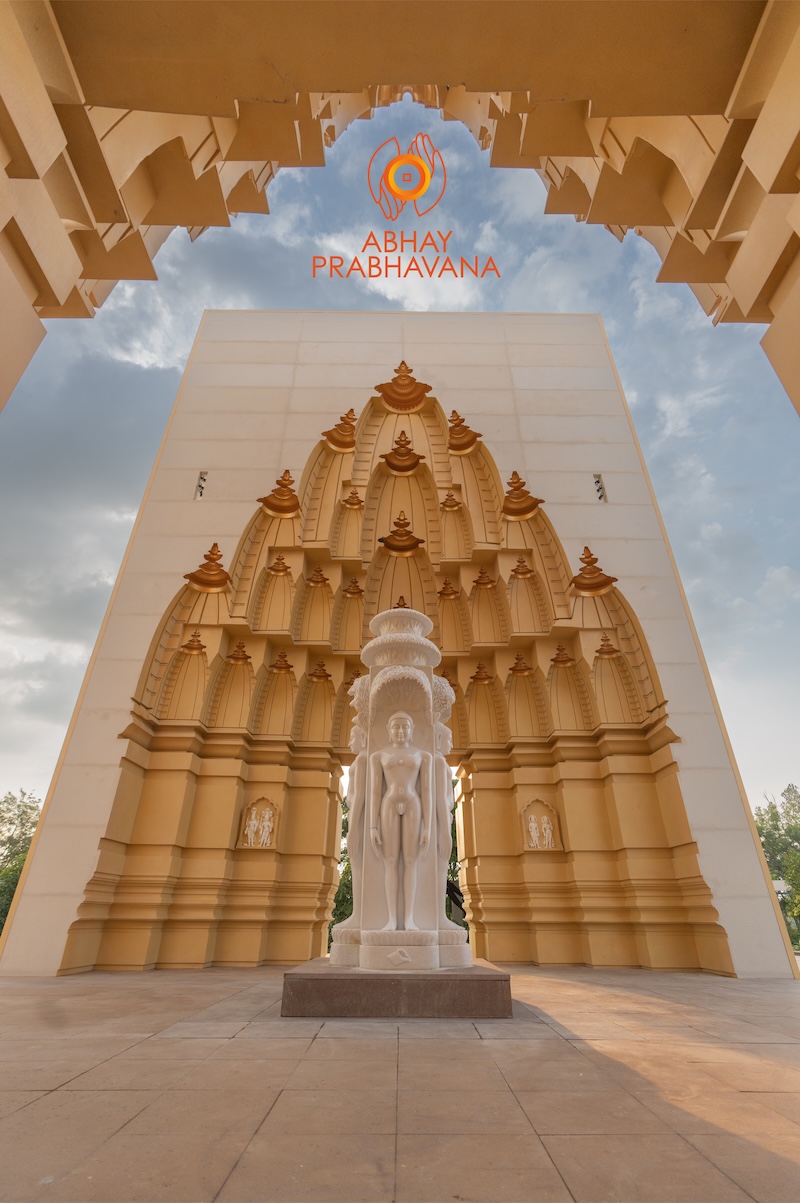
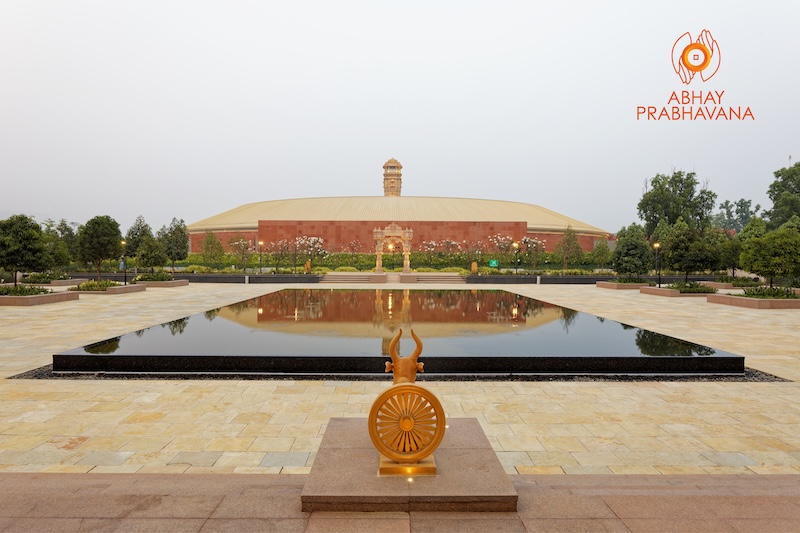
Stepping outside during the evening for the walk when we were already tired it felt so surreal that we got our energy back by looking at the views. The “Open Air Heritage Walk” offers a peaceful and beautiful essence of nature and spirituality as it’s designed along the Indrayani River, the nature trail showcases impressively recreated miniatures of ancient Jain monuments which displays the glorious cultural and historical legacy of Jain heritage spread across India. The Plaza of Equanimity, a magnificent 56.5-foot tall temple with a striking Sarvatobhadra statue standing elegantly within, surrounded by lush gardens and a beautiful reflective pool, offers an ideal space for contemplation and tranquillity.
Equally awe-inspiring was the dynamic modern styled marble statue of Rishabhdev, towering impressively at 43 feet which can be looked from far away as well, it’s situated prominently at the end of the Festival Walk, the statue is uniquely depicted in a meditative pose, surrounded by vivid murals illustrating his teachings and the inspiring narratives of his children daughters Brahmi and Sundari, and sons Bharat and Bahubali along with the bilingual audio guide where you get more knowledge of it.
Looking back at the intricately carved 100-foot-tall Manstambh vividly portrays Jain’s ethical narratives and the seven tiers represent key aspects of Jainism and stages of spiritual elevation. The viewing gallery atop offers panoramic views, symbolizing the pursuit of truth that exists between worldly reality and spiritual aspiration that’s what I felt and believed.

Educational taking with Food Experience
Educational and cultural enrichment thrives with facilities like the Kundanmal Firodia Auditorium, Taxila Library, and galleries dedicated to scholarly research. Future initiatives would also include the Children’s Museum and parks, thoughtfully designed to impart ethical values through interactive storytelling, games, and creative play. Extensive scholarly research and collaborative efforts ensure children meaningfully connect with India’s rich heritage in an engaging manner.
My food experience at “Sattva,” the huge and spacious vegetarian food court seating over 500 visitors, complemented my journey with a wow factor. Everything served at Sattva is prepared fresh, served quickly, and exceptionally flavourful. I had the chance to enjoy coffee along with a traditional thali, which was both light and delicious, perfectly embodying the holistic, balanced lifestyle promoted by Abhay Prabhavana.

Guide for Visitors and Amenities
The museum sits between Pune (approx. 45 km, about one hour by road) and Mumbai (approx. 115 km, about two hours by road) making Abhay Prabhavana conveniently accessible to reach with family. On Wednesday through Friday, the museum is open from 9:15 am to 5:30 pm; on weekends, it is open from 9:15 am until 9 pm. Mondays and Tuesdays will also be closed at the museum. The Manstambh viewing gallery is open only from Wednesday to Sunday from 10:00 am to 4:30 pm with a little extra cost of 100 rupees. Children below 8 years are not allowed inside the Museum Building. Also the Photography is not allowed inside the galleries of the Museum and can taken during the Open Air Heritage Walk.
Parking facilities are conveniently provided outside the campus, with shuttle services for visitors. Restrooms are clean and easily accessible. Visitors should ideally allocate a full day, as the museum experience, including lunch at Sattva, comfortably takes around five hours. An evening walk around the heritage path is highly recommended to enjoy spectacular sunsets, views and photo ops.
My Reflections with a Souvenir
As I concluded my visit, I received a beautifully crafted miniature statue of Rishabhdev, a meaningful memento embodying the museum’s spirit of sharing wisdom. Thoughts and inspirations from the museum continued to resonate deeply within me even after my departure. Dr Firodia’s words echoed profoundly: “Our aim is not merely preservation of history but inspiring personal journeys toward inner peace, happiness, and purposeful living.” I walked over 22,000 steps that day so it was worth it to believe that every visitor takes home unique reflections and insights that are deeply personal, transforming a museum visit into a lifelong journey of personal growth and profound contemplation.
Read more at TravelMail | Follow us on Facebook | Twitter | and Instagram for on-the-go news