
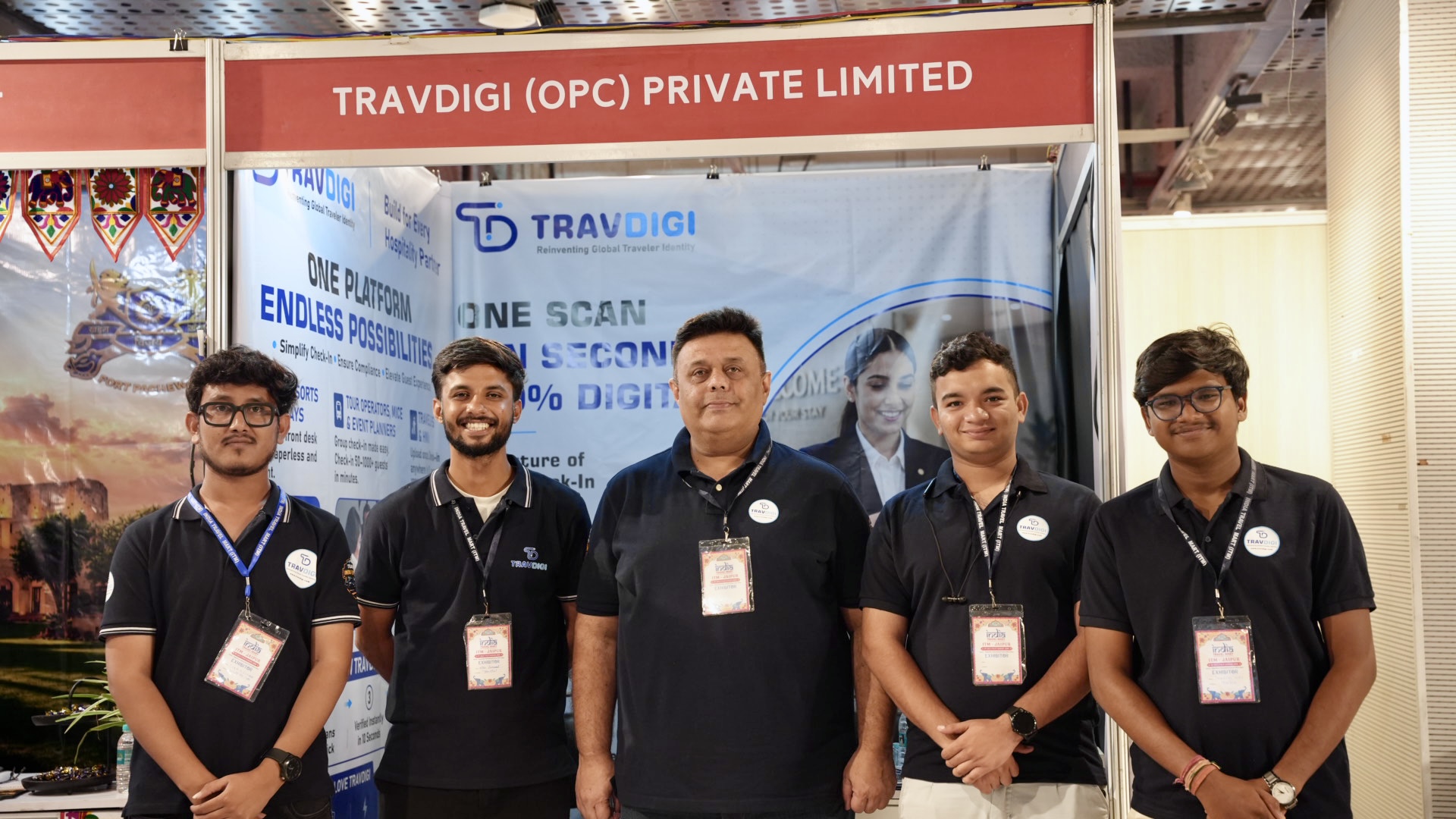
By Bharath Keshava, Founder & CEO, TravDigi
Walk into almost any hotel in the world after a long journey, and the first thing you are asked to do is work. Fill this form. Hand over your passport. Wait while it is photocopied. Sign here. For an industry whose entire purpose is to serve the traveller, we have built a front desk that does the opposite — it puts the guest to work the moment they arrive.
I have spent a long time thinking about that contradiction, and it is the reason TravDigi exists.
Here is the uncomfortable truth most hotels have never questioned: the hotel does not actually need your identity documents. The authority does. Guest registration is a legal requirement owed to the government, not to the property. Yet the hotel ends up in the middle of it — collecting your ID, copying it, storing it in a drawer, and quietly carrying all the risk if that data is ever lost or misused. The guest does the labour, the hotel takes on the liability, and nobody is better served for it.
When I looked at the technology being built to fix hotel check-in, I noticed something telling. Almost every solution was designed to make the hotel’s job easier — digital registers, KYC tools, compliance dashboards. All of it hotel-facing. And in nearly every one of them, the traveller was still filling in a form. We had simply moved the paperwork onto a screen. The person hospitality is supposed to serve was still doing the work, just with a stylus instead of a pen.
That is backwards. If hospitality means anything, it means the guest should be served — not handed a task at the door.
TravDigi is built on a simple idea: verify once, and never fill a form again. A traveller sets up their identity a single time in our app. From then on, at any partner hotel, they simply present a secure QR code. The front desk scans it, and check-in is complete in seconds — no forms, no photocopies, nothing re-typed. The next hotel, and the one after that, is the same single scan. The guest’s details are never entered twice.
Crucially, this does not come at the hotel’s expense. The property gets a secure, searchable digital guest register that replaces the paper book. Sensitive documents never sit on the hotel’s own systems, which sharply reduces its data-protection exposure. Records are timestamped and ready whenever authorities require them. For the first time, both sides win at once — the guest gets an effortless arrival, and the hotel gets a safer, faster, fully digital front desk. That is what a genuine hospitality solution should do.
We did not build this from behind a desk. Our team drove more than 6,000 kilometres across India, onboarding hotels one property at a time, listening to what front-desk staff and guests actually struggle with. Today TravDigi is live on iOS and Android, with over 130 hotels onboarded and growing — bootstrapped, and recognised by the Government of India’s DPIIT startup programme.
There is a larger opportunity here, too. Every country runs its own national identity system, and none of them works across a border. TravDigi is built on the passport — the one document accepted everywhere — so a traveller of any nationality can use it in any market. It is not a form for one hotel; it is a reusable identity that travels with the guest.
The hospitality industry has spent a century perfecting the guest experience everywhere except the very first moment of it. It is time the welcome felt like a welcome — and not like homework.
Read more at TravelMail | Follow us on Facebook | Twitter | and Instagram for on-the-go news