
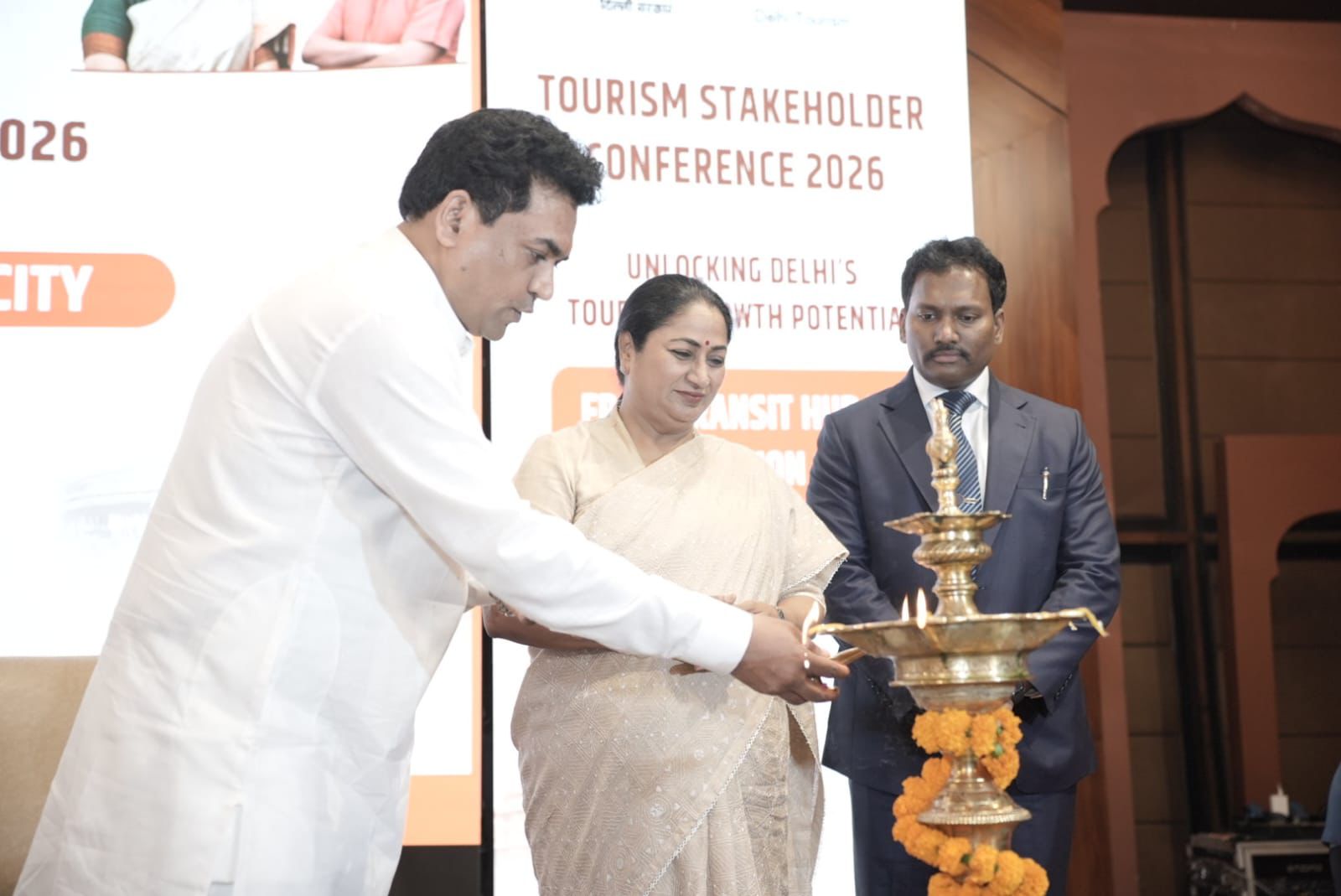
Six roundtables, over 200 leaders, four landmark MoUs and a strategic roadmap converge at The Ashok Hotel to shape the Delhi Master Tourism Policy 2026 to 2047
The Government of the National Capital Territory of Delhi convened the Tourism Stakeholders Conference, themed “Delhi: From Transit Hub to Destination,” at The Ashok Hotel. The day-long Conference, the most comprehensive Industry consultation yet on the future of the Capital’s visitor economy, brought together over 200 leaders from government, industry, heritage, hospitality, wellness, digital platforms and media. It produced the first set of formal stakeholder commitments and policy inputs that will shape the Delhi Master Tourism Policy 2026 to 2047, currently in preparation.
The Conference was held in the presence of the Hon’ble Chief Minister of Delhi, Smt. Rekha Gupta, and Hon’ble Minister for Tourism and Chairman, DTTDC, Shri Kapil Mishra. Managing Director, DTTDC, Shri Suneel Anchipaka, IAS, and senior representatives of the Government of India, the Government of Delhi, allied sectoral bodies, and partner organisations were also present.
Speaking on the occasion, Hon’ble Chief Minister Smt. Rekha Gupta said, “Delhi has always shaped culture, never followed it. Delhi is for all. Through this Conference, and through structured partnerships and forward-looking policy, we are bringing Delhi closer to the world. This is a city-level expression of Viksit Bharat, where public and private institutions move together toward a common goal.”
Hon’ble Minister Shri Kapil Mishra described the Conference as the foundational platform for repositioning the Capital. “Delhi has long welcomed the world without ever marketing itself to it. Today, with our partners and stakeholders in one room, we are correcting that. Tourism must serve the visitor and the citizen alike, and the platforms set in motion today are how we begin preparing Delhi for the visitor of 2047.”
Six Roundtables, One Vision
The analytical core of the day was a series of six roundtable sessions, each chaired by senior officials and led by the industry leaders who have shaped that domain in Delhi. The themes were MICE, Hospitality and Convention Infrastructure; Heritage, Spiritual and Experiential Tourism; Digital Platforms, Connectivity and Global Distribution; the Concert Economy and Night Tourism; Medical and Wellness Tourism; and the Brand Positioning of Delhi. Each was selected as a major economic driver, and together they constitute the levers that will move Delhi from a city of arrivals to a destination of substance. The recommendations from these sessions will feed directly into the Delhi Master Tourism Policy 2026 to 2047 and allied sectoral policies.
Participants included senior representatives of ITDC, IATO, FHRAI, ICPB, FICCI, PHDCCI, GMR, Airbnb, IRCTC, the Tourism and Hospitality Skill Council, FAITH and many more, alongside officials from the Government of India and the Government of Delhi.
A Strategic Roadmap for the Capital
Delhi Tourism also unveiled a wider strategic roadmap at the Conference. The Corporation will participate in national and international trade shows with dedicated space for Destination Management Companies and tour operators; appoint an Information, Education and Communication (IEC) agency to focus on key and emerging source markets; onboard a dedicated PR agency; and pursue formal industry status for tourism in recognition of its role in growth and employment generation. At the experience level, the Corporation is curating spiritual and heritage circuits and will deploy two branded electric buses to offer clean, accessible and curated visitor journeys across key routes.
Key Outcome: Four Landmark Partnerships Signed
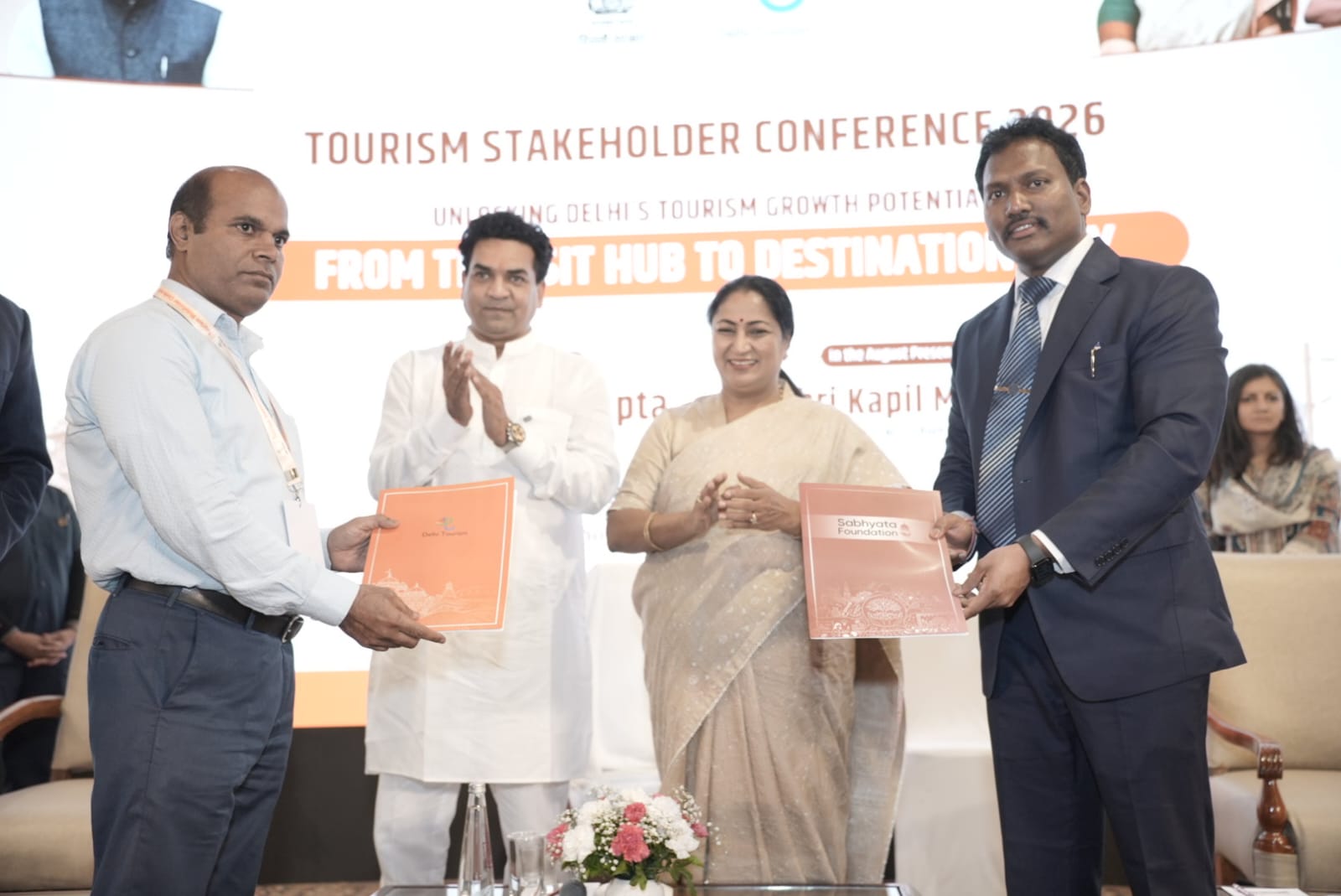
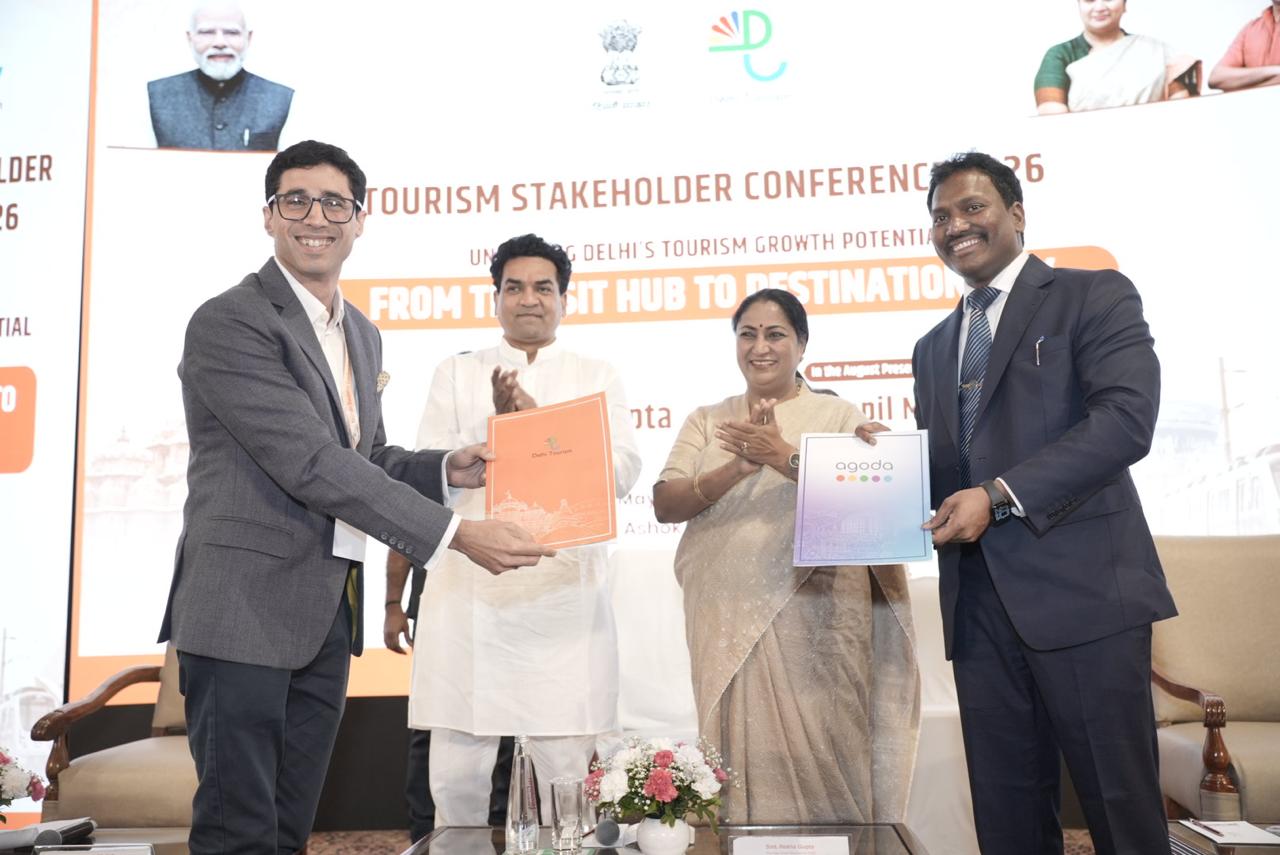
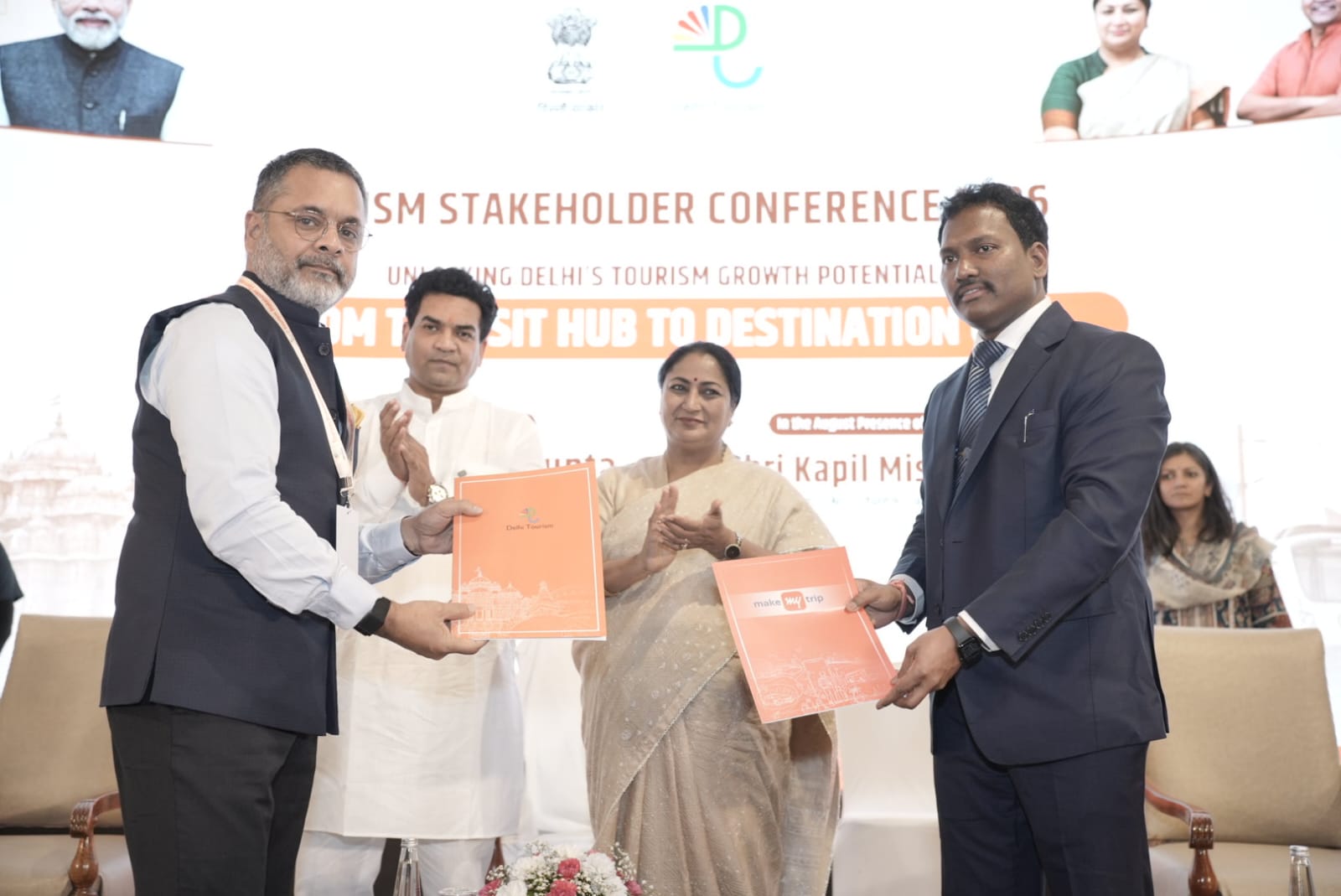
Among the most significant outcomes of the Conference was the signing of four Memoranda of Understanding by DTTDC with Agoda, MakeMyTrip (India) Private Limited, the MakeMyTrip Foundation and the Sabhyata Foundation. Together, the agreements operationalise the global digital distribution of Delhi as a destination, the deeper integration of the city’s heritage assets into the visitor economy, and targeted on-ground infrastructure upgradation.
Agoda: A three-year partnership through which Delhi will gain dedicated marketing across the Museum Trail, Monuments, Spiritual Circuits and MICE, through no-cost campaigns, digital guides and festival promotions calibrated for Southeast Asian travellers, with onboarding of Delhi homestays onto Agoda’s network and a “Global Guest Readiness” capacity-building programme.
MakeMyTrip: A three-year, non-financial partnership with India’s largest online travel company to jointly promote Delhi in the United States and European markets, with a focus on extending visitor stays through targeted digital campaigns, content for overseas audiences, homestay onboarding and capacity-building workshops.
MakeMyTrip Foundation: A one-year, no-cost partnership with the public charitable trust of the MakeMyTrip group to deliver landscaping, culturally aligned sandstone dustbin enclosures, lighting upgrades, and washroom upgrades at Dilli Haat, INA, with all assets handed over to DTTDC upon completion.
Sabhyata Foundation: A three-year, non-financial partnership to jointly develop curated heritage circuits, cultural programming, sound-and-light experiences, and signature events, including Navratri Utsav at Purana Quila, Sufi Nights, Diwali Mela, and Phoolon ki Holi, governed by a Joint Steering Committee with equal representation.
Managing Director, DTTDC, Shri Suneel Anchipaka, IAS, said the Conference and the agreements announced reflect the operating model the Corporation intends to follow. “These partnerships are outcome-oriented, with clearly defined deliverables, joint working groups and shared review frameworks rather than symbolic gestures. Equally important, the recommendations from the six roundtables will feed directly into the Delhi Master Tourism Policy 2026 to 2047.”
Today’s Conference marks a new chapter in how Delhi approaches its tourism future, with policy, partnerships and stakeholder consultation moving in unison. Delhi has set a new benchmark for collaborative, public-private destination development, and offered other States and Union Territories a working model for repositioning their cities through coordinated industry consultation. The message from the Capital is unambiguous. Delhi is no longer a city that travellers move through. It is a city they plan for, experience, and return to.
Read more at TravelMail | Follow us on Facebook | Twitter | and Instagram for on-the-go news