
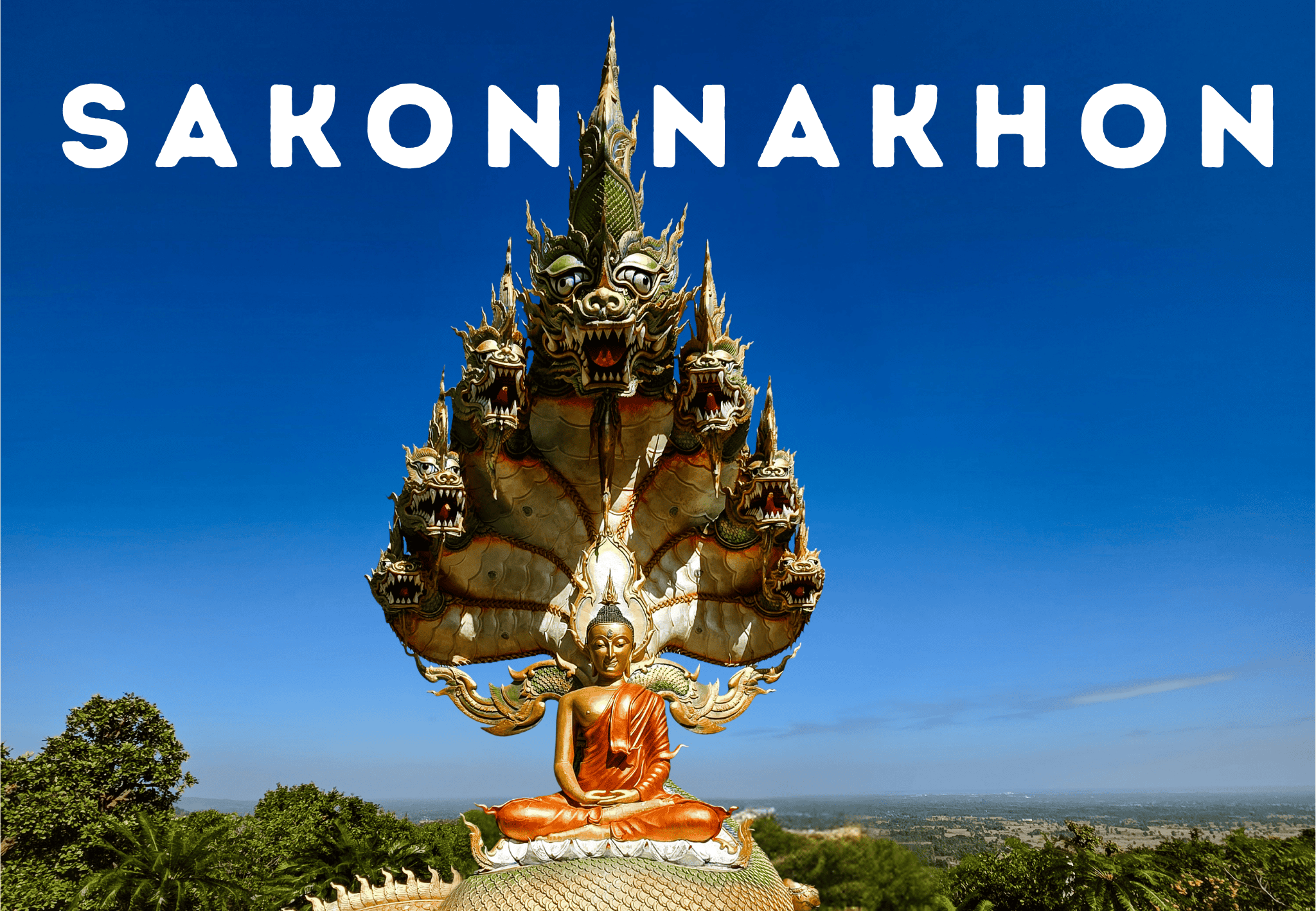
Thailand usually announces itself loudly. Neon-lit streets, island playlists on loop, traffic that never truly sleeps — a country that knows how to perform. My journey began exactly that way in Bangkok, where spectacle is not an exception but a nightly ritual.
On my first evening, after landing, we rushed through familiar Bangkok traffic to board the White Luxury Dinner Cruise on the Chao Phraya River. As the boat eased into the water, the city began to glow. Iconic landmarks slipped past in silence — Wat Arun shimmering against the dark, the Grand Palace standing luminous and still, and ICONSIAM reflecting the skyline at itself.
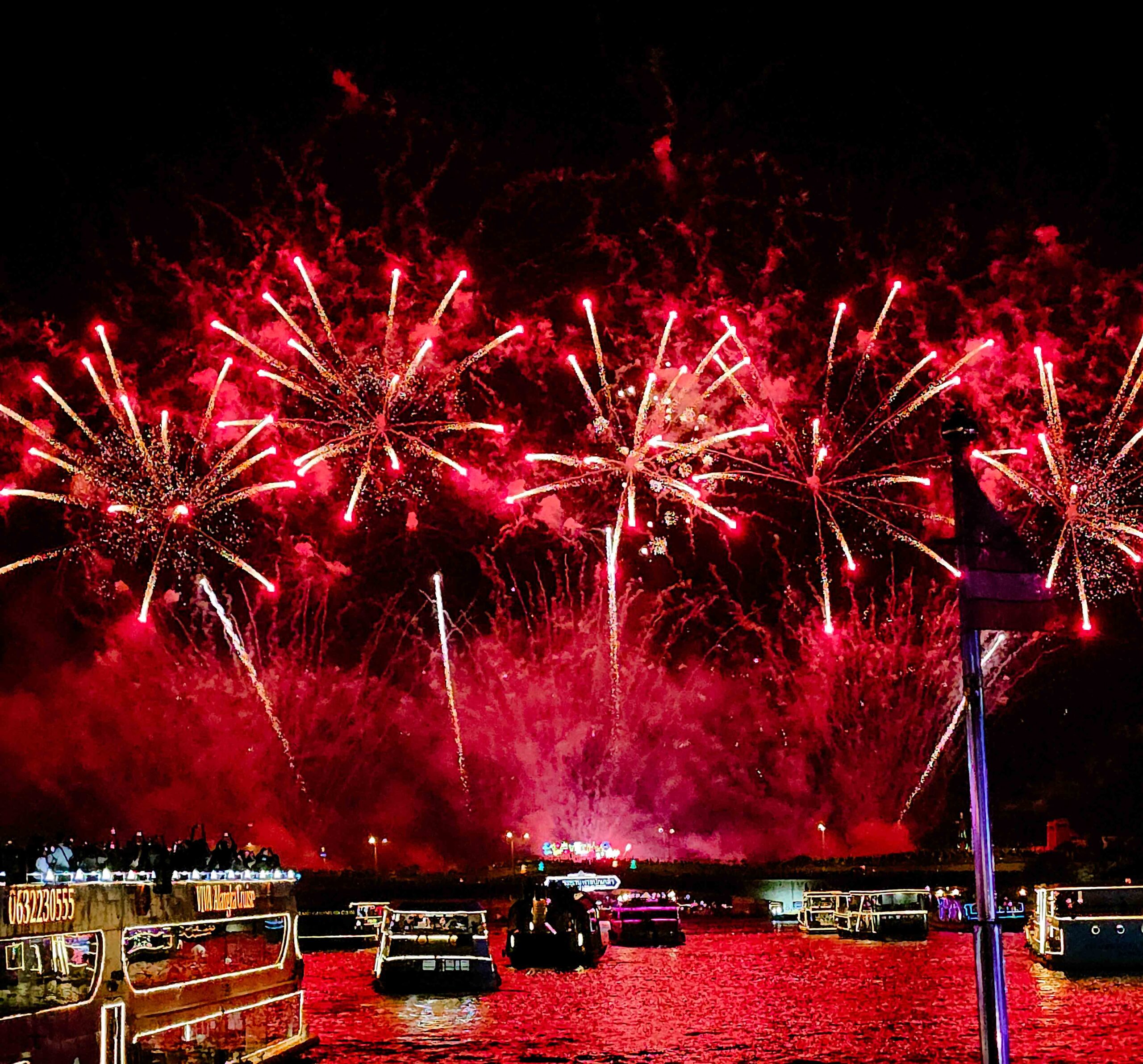
Dinner unfolded as a generous buffet accompanied by cultural performances and live music. And then, as if on cue, the sky exploded into colour. Fireworks lit up the riverbanks — a reminder that December in Thailand is a season of celebration, excess, and joy.
It was beautiful.
It was loud.
It was unmistakably Thailand.
The next morning, everything changed.
An hour’s flight from Bangkok’s Don Mueang Airport brought us northeast to Sakon Nakhon, a province in Thailand’s Isaan region. I had come to experience Sakon Nakhon as a potential new destination for Indian travellers. What I didn’t expect was how quickly the volume of the country would drop. Here, Thailand does not perform.
It waits.
Sakon Nakhon: Thailand’s hidden cultural destination
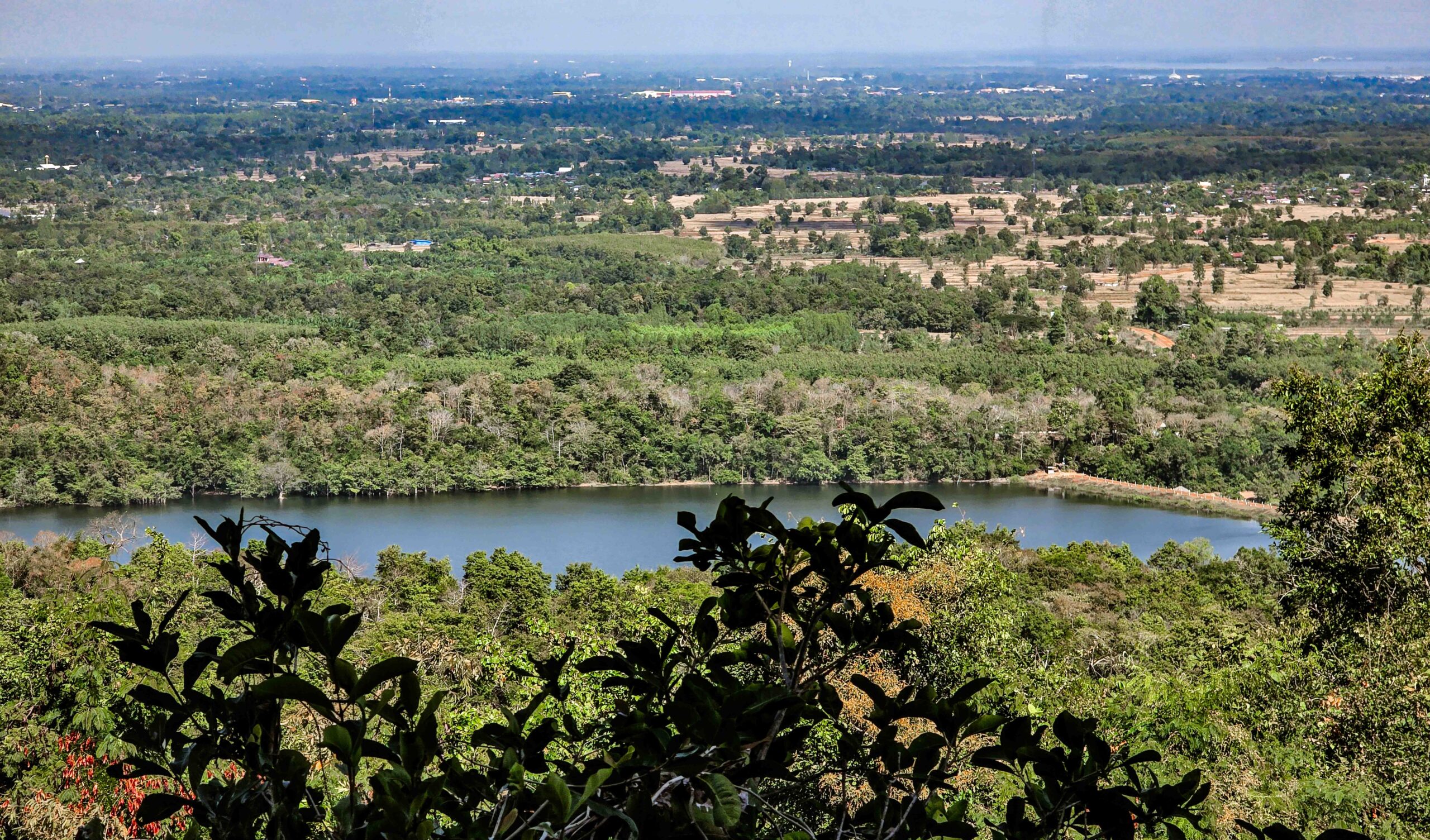
Sakon Nakhon sits on a broad plateau in northeastern Thailand, part of the Isaan basin shaped by ancient lakes, forested hills, and long agricultural cycles. Archaeological traces — pottery fragments, early settlement sites, and prehistoric remains — suggest that human communities have lived here for thousands of years. Some parts of the province are also associated with fossil discoveries, quietly reminding visitors that this land existed long before religion, borders, or tourism.
People came here for water, fertile soil, and trade. Over centuries, Sakon Nakhon absorbed influences from multiple directions: Khmer culture from present-day Cambodia, Lan Xang traditions from Laos, and, much earlier, spiritual and cultural ideas that travelled from India into Southeast Asia.
This region was never isolated.
It was always connected — by rivers, belief systems, and migration.
India, Cambodia, and the Roots of Faith
Long before Buddhism shaped Thailand as we know it today, Brahmanism and Hindu philosophy travelled from India into Southeast Asia through maritime trade routes. These ideas took root in regions like Cambodia, where early Indian priests and rulers introduced religious structures, rituals, and cosmology.
From Cambodia, those influences spread further east and north into what is now northeastern Thailand. This is why temples in Sakon Nakhon still carry unmistakable symbols from Hindu cosmology. Garuda, the mythical bird and sacred vehicle of Lord Vishnu, appears in temple carvings — a reminder of the Brahmanical influence that predates Buddhism. Nagas, serpent deities associated with water and protection, appear repeatedly along stairways and railings.
Buddhism did not replace these beliefs; it evolved from them. In Isaan, that evolution remains visible rather than hidden.
Isaan: Thailand’s Other Rhythm
It is important to understand that Isaan is not “Northern Thailand.”
It is its own cultural world.
People here speak a dialect closer to Lao than central Thai. Life moves at a gentler pace. There is less performance, less polish — but far more warmth. As our guide, Ms Nam, put it simply: “People here don’t rush. They talk to you, not at you.”
That temperament shapes everything — food, faith, festivals, and even silence. Sakon Nakhon feels peaceful, not because it is empty, but because it is comfortable with itself.
Food, Honesty, and Indian Expectations
For Indian travellers, honesty matters.
Sakon Nakhon does not have Indian restaurants, and vegetarian options are limited compared to Bangkok or tourist-heavy destinations. But what it does offer is sincerity. Salads are fresh and vibrant. Papaya salad can be customised without fish sauce. Noodles, rice dishes, mushrooms, greens, and café-style meals are easy to adapt.
Once expectations are set, food stops being a concern and becomes part of the rhythm of travel.
That philosophy comes alive most clearly at Mud Sakon Café.
Mud Sakon Café — From Farm to Table
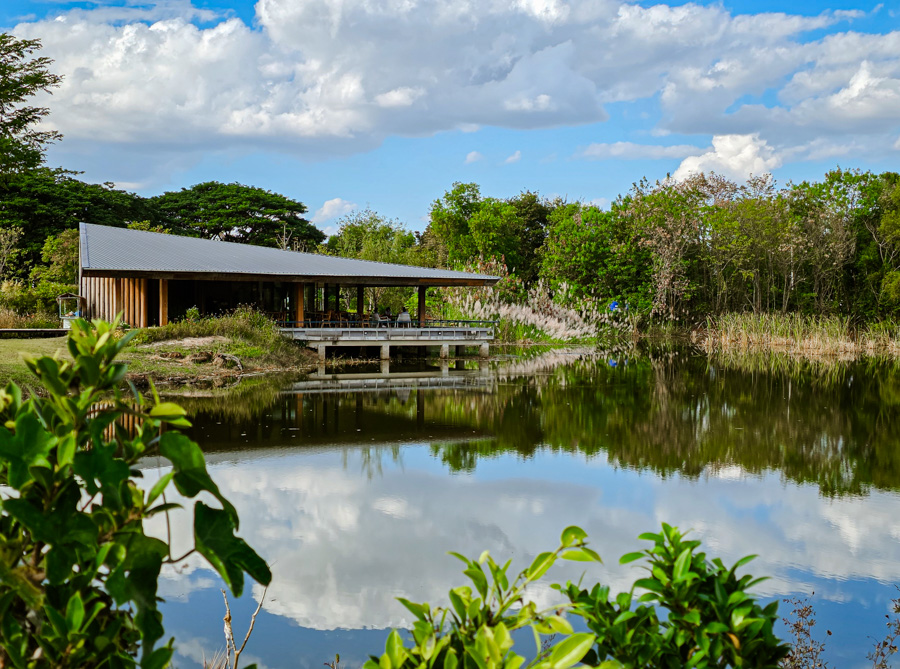
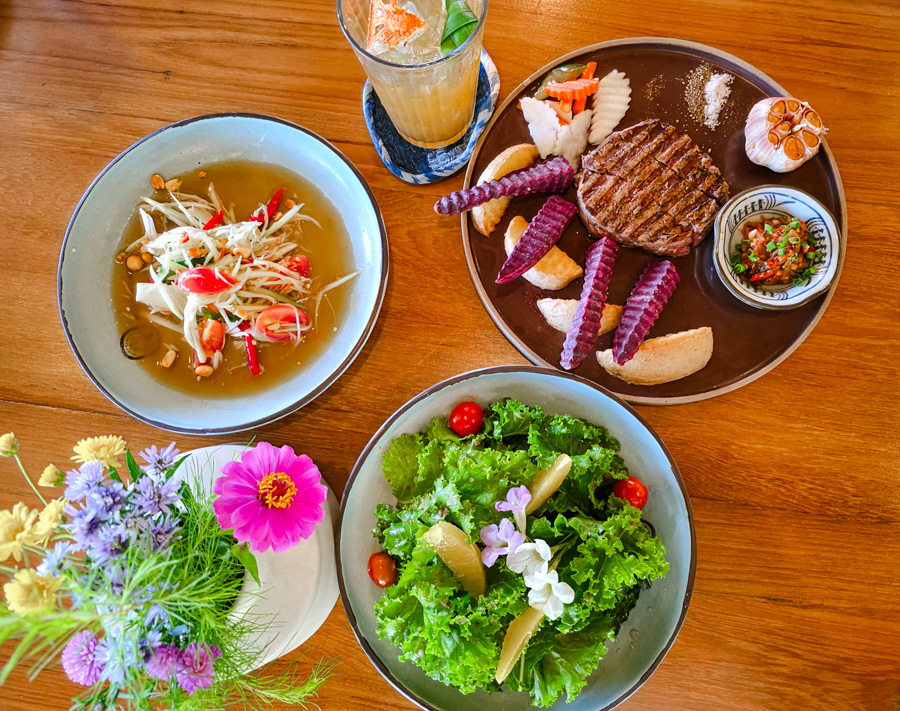
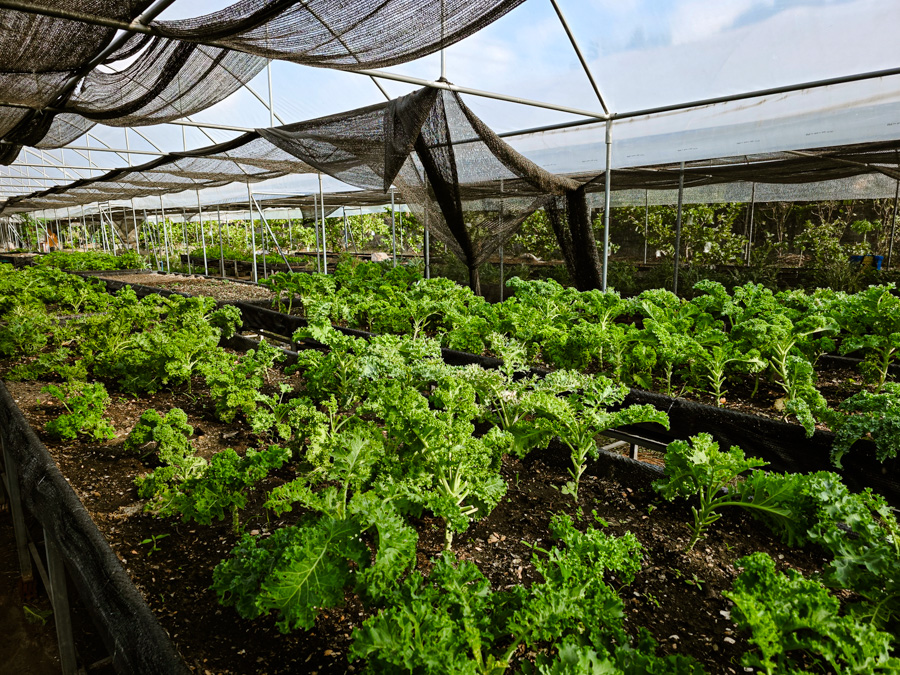
After the intensity of the midday sun and the steady flow of visitors at Wat Phra That Choeng Chum, lunch felt less like a break and more like a necessary pause. That pause came at Mud Sakon Café, a creative community space that quietly explains Sakon Nakhon better than any signboard could.
Built in the form of a traditional thieng-na (a Thai rural barn). The café is surrounded by what it serves. Vegetables grow just outside. Herbs, greens, and seasonal produce sit within arm’s reach, blurring the line between farm and kitchen.
The menu is rooted in Isaan ingredients, interpreted thoughtfully rather than heavily reworked. Fresh salads and light dishes arrive tasting clean and alive. For vegetarian travellers, especially Indians, Mud Sakon reassures you that while options in Sakon Nakhon may be limited, care and freshness are not.
Sitting there in the afternoon heat, the café felt exactly like what I later wrote in my notes — a warm delight.
Onson Distillery: Tiger and the Handcrafted Spirits
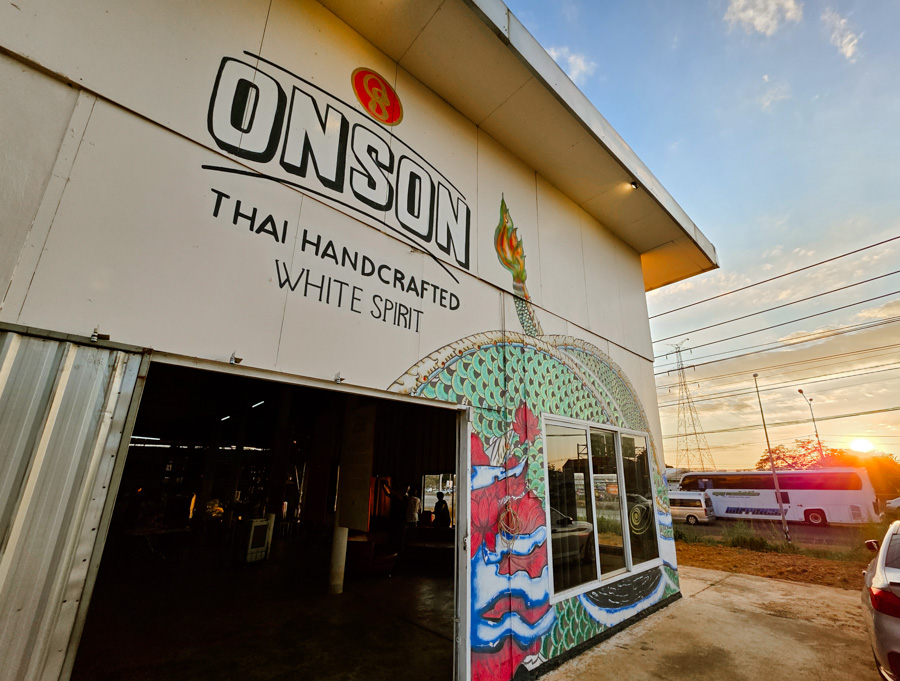
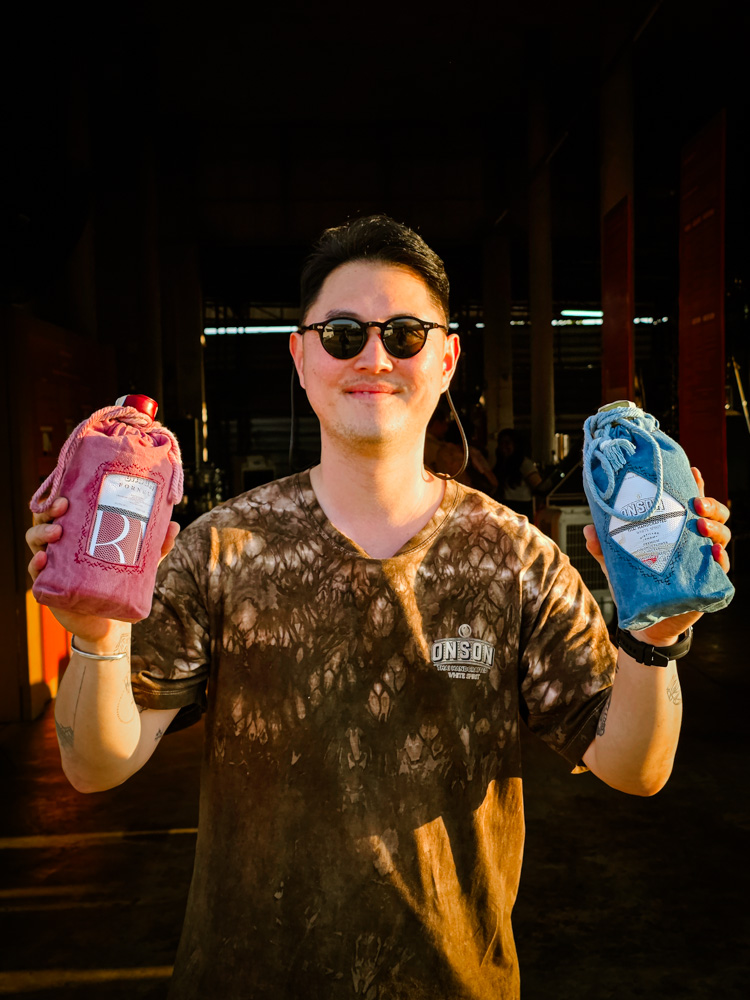
One of the most revealing experiences of the trip came not from a temple, but from a quiet distillery run by Tammawit “Tiger” Limlertcharoenwanich, founder of Onson Community Distillery.
Tiger represents a new generation that chose to stay in Isaan rather than leave for bigger cities. His distillery produces handcrafted spirits using coconut flower nectar as a base, combined with herbs inspired by traditional Ya Dong, a Thai herbal infusion historically consumed for health and digestion.
Everything here is slow. Fermentation takes months. Copper distillation chambers are handmade and fired using wood. Bottling is done by hand, sealed with wax, and wrapped in indigo-dyed cotton bags.
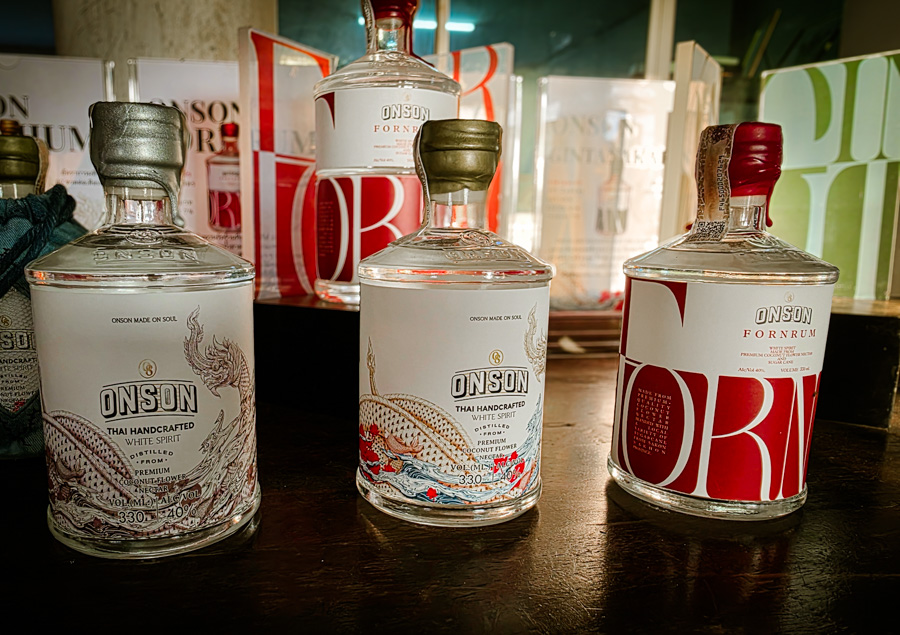
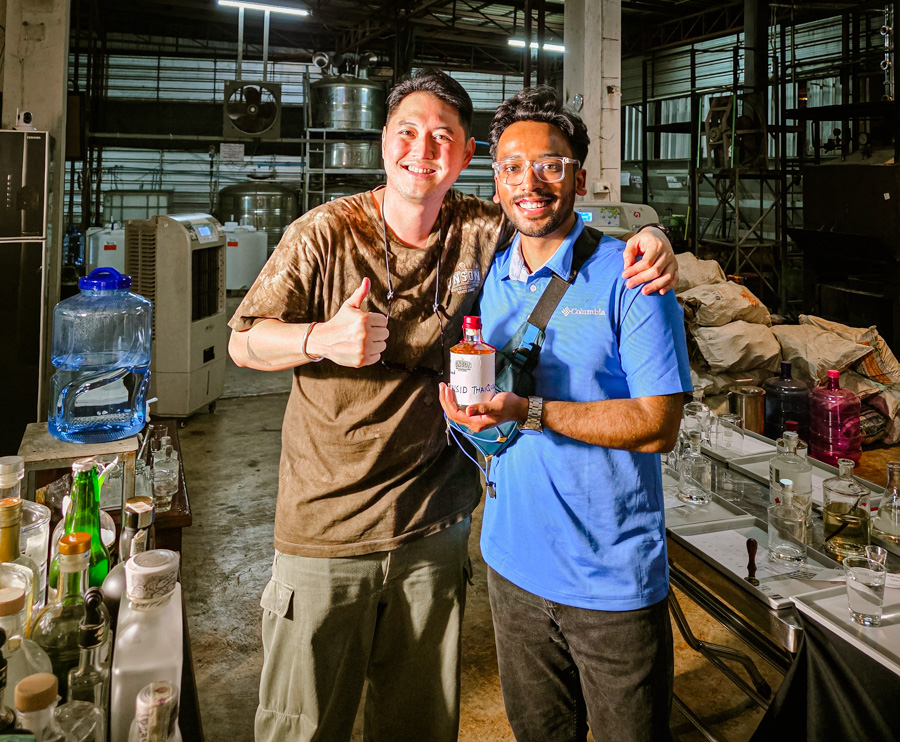
Visitors can join weekend workshops, learn the fermentation process, blend herbs, and create their own bottle to take home. It is less about alcohol and more about understanding transformation — of ingredients, patience, and place.
What became clear during our conversation was that Tiger never set out to become a distiller. His motivation was far more personal. Having watched many young people leave Sakon Nakhon in search of opportunity, he wanted to create something that could exist only here — rooted in Isaan ingredients, identity, and pride.
Onson was born not as a commercial experiment, but as a response to absence. There was no local spirit that represented the region he loved. Choosing coconut flower nectar, native herbs, and traditional techniques was as much about reclaiming narrative as it was about flavour.
In a region long defined by stereotypes and overlooked by travellers, Onson became Tiger’s quiet way of saying: this place matters.
Wat Tham Pha Daen — The Views and the Temple
The road to Wat Tham Pha Daen climbs gently through dense forest, mist hanging just long enough to soften the edges of the landscape. Perched roughly 600 metres above sea level, the temple complex unfolds slowly, shaped by the forest monk tradition that has long defined Isaan’s spiritual life.
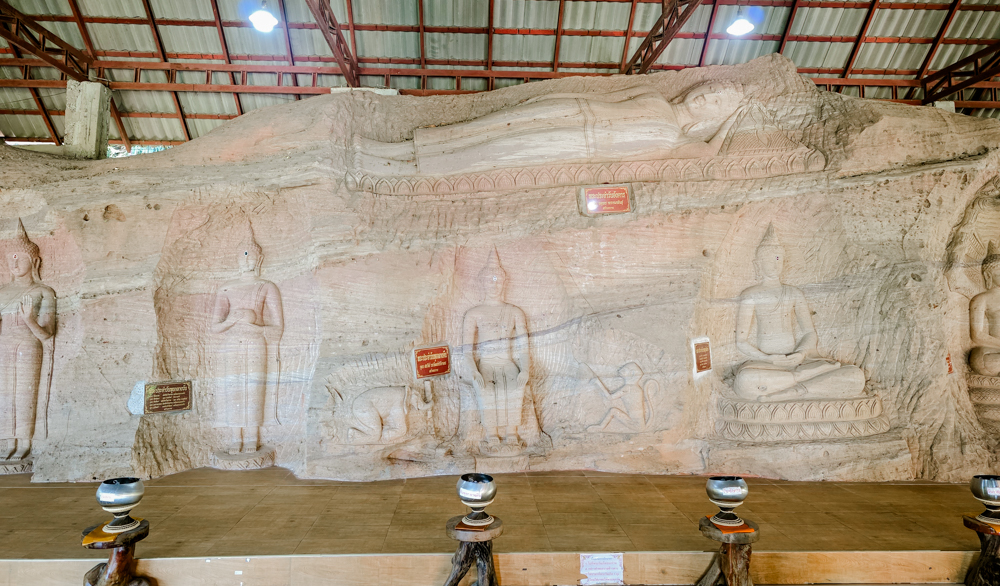
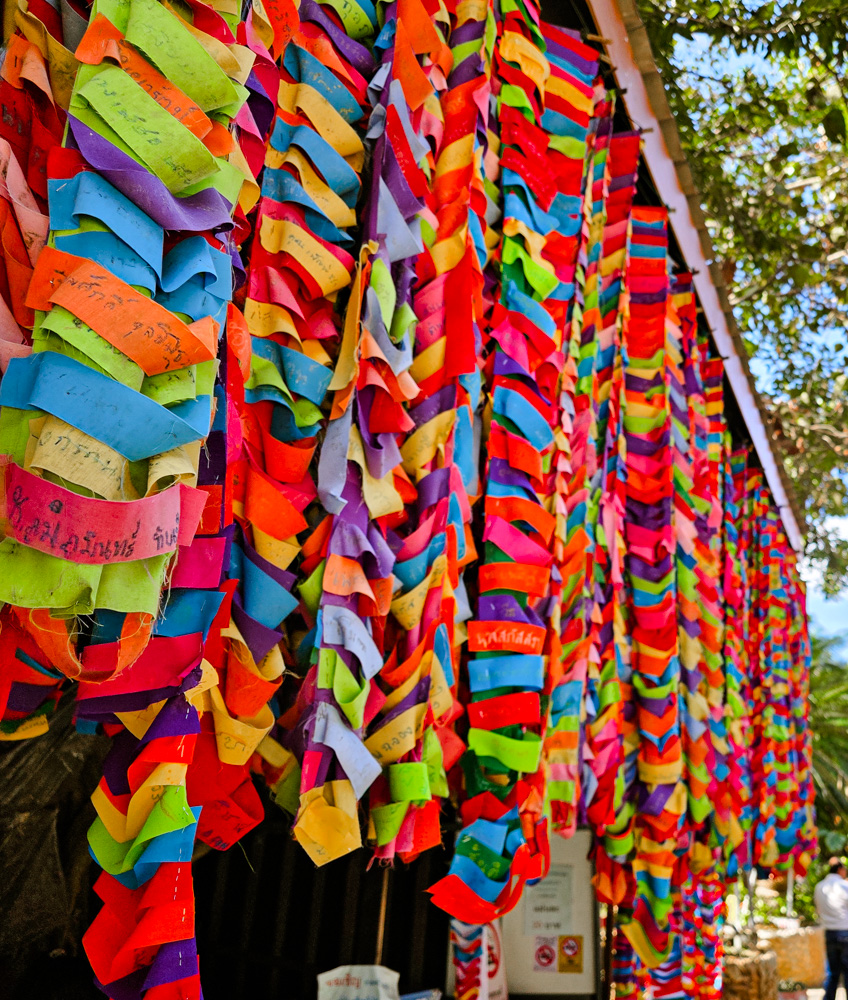
Unlike grand city temples built to be seen, Wat Tham Pha Daen belongs to a lineage of forest monasteries established by monks who sought isolation, discipline, and closeness to nature. In Isaan, mountains and caves were chosen not for their views, but for their silence — places where distraction fell away, and meditation became daily practice rather than ritual.
Seven Buddha statues stand quietly, each representing a day of the week, reminding visitors that time here is cyclical, not rushed. Stone pillars encircle sacred structures, marking boundaries where monks gather for prayer twice daily, at dawn and again in the afternoon. Garuda figures appear in carvings, linking the site back to older Hindu cosmology, while subtle symbols reference King Rama IX — gestures of continuity woven into stone rather than announced.
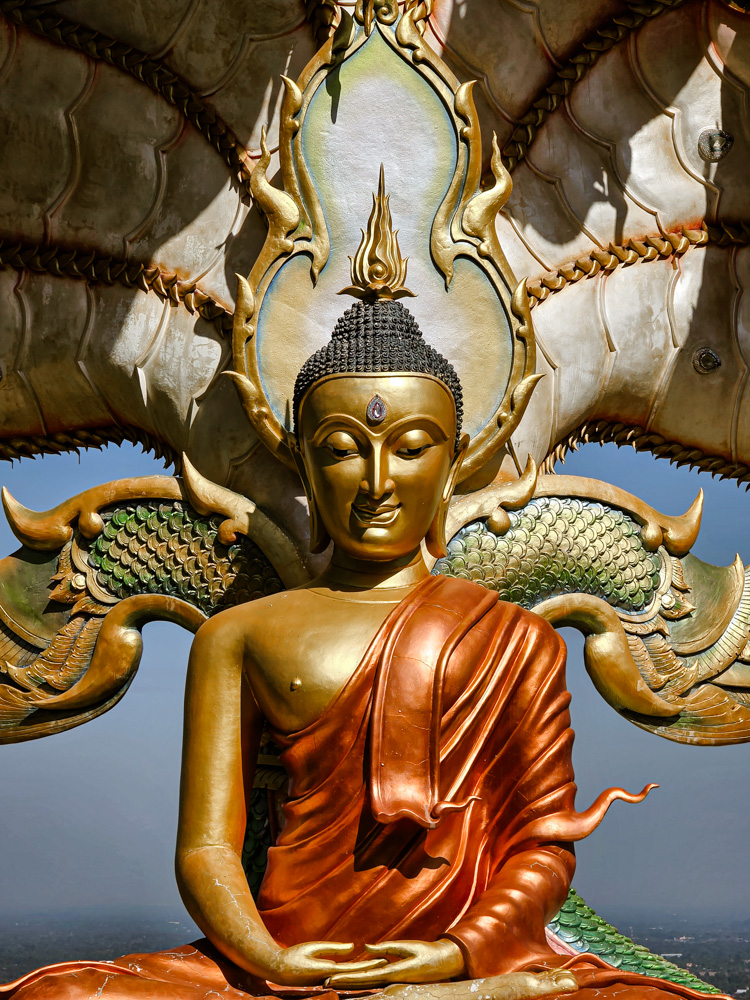
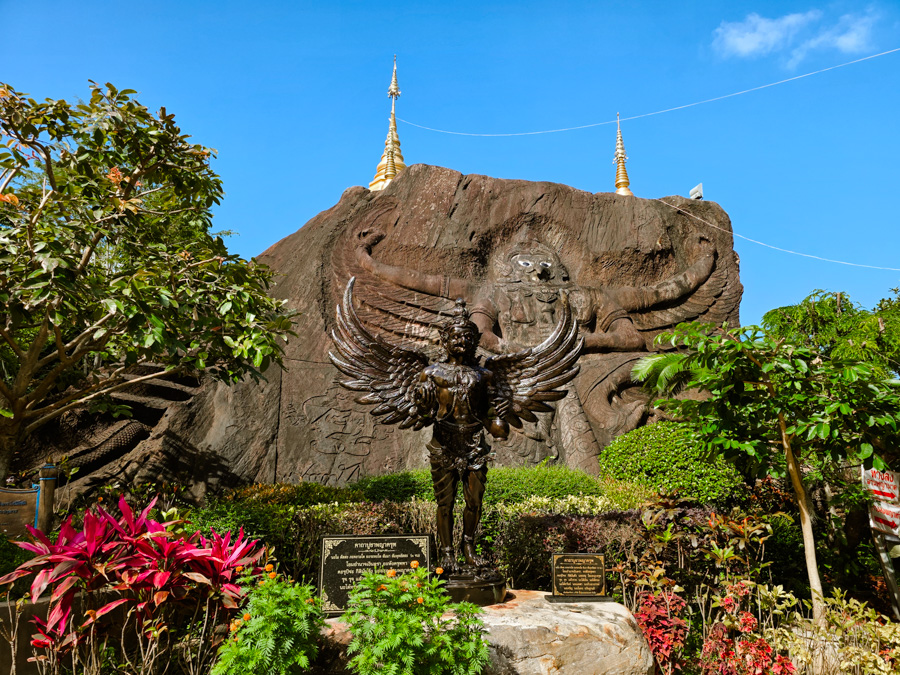
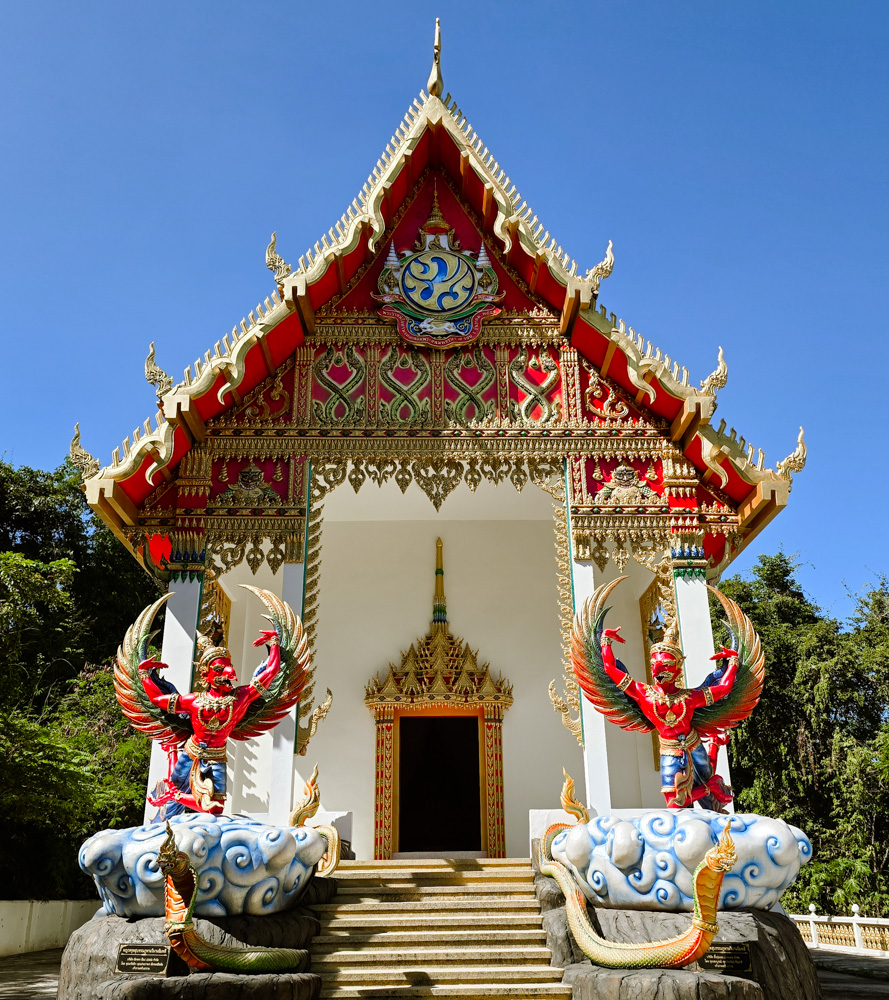
What stays with you, though, is not the symbolism but the silence.
From the cliff’s edge, Sakon Nakhon stretches out below, calm and expansive. Drinking fresh sugarcane juice at the summit felt grounding, almost meditative. This is not a place that asks for belief. It teaches you to breathe.
Wat Phra That Choeng Chum — Faith as Daily Life
Back in the heart of the city, Wat Phra That Choeng Chum tells a different story — one not of withdrawal, but of continuity. Shoes come off, feet meet warm tiles, and locals move through the temple with quiet purpose, pausing briefly before returning to the rhythms of the day.
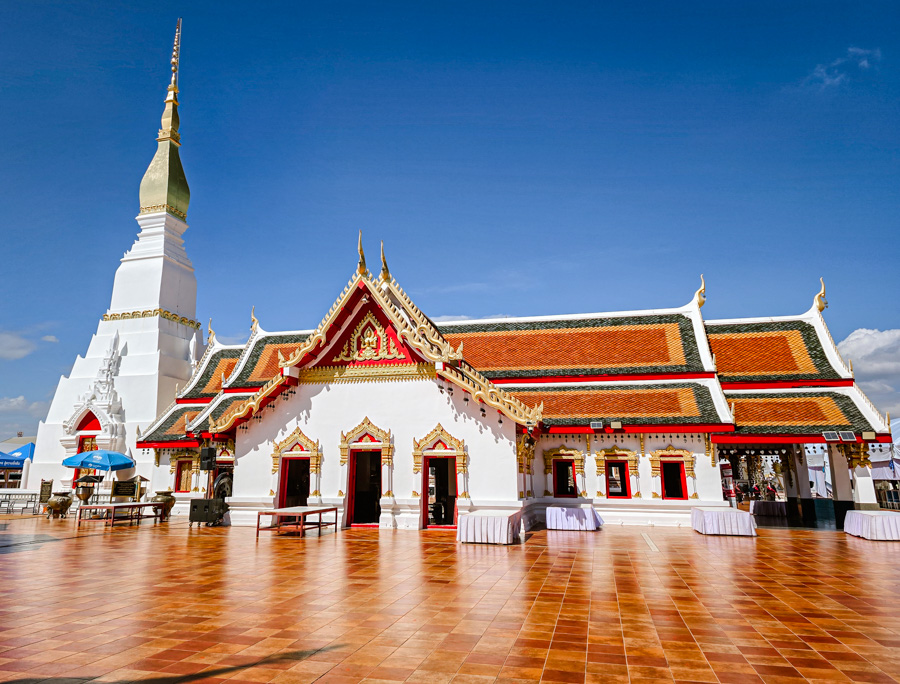
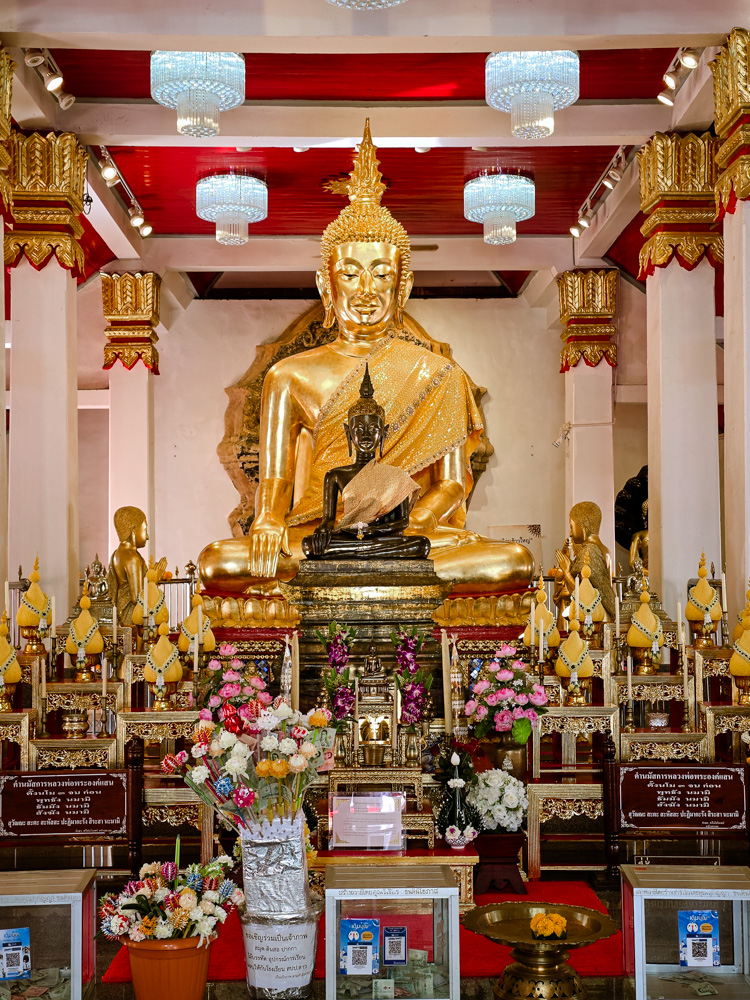
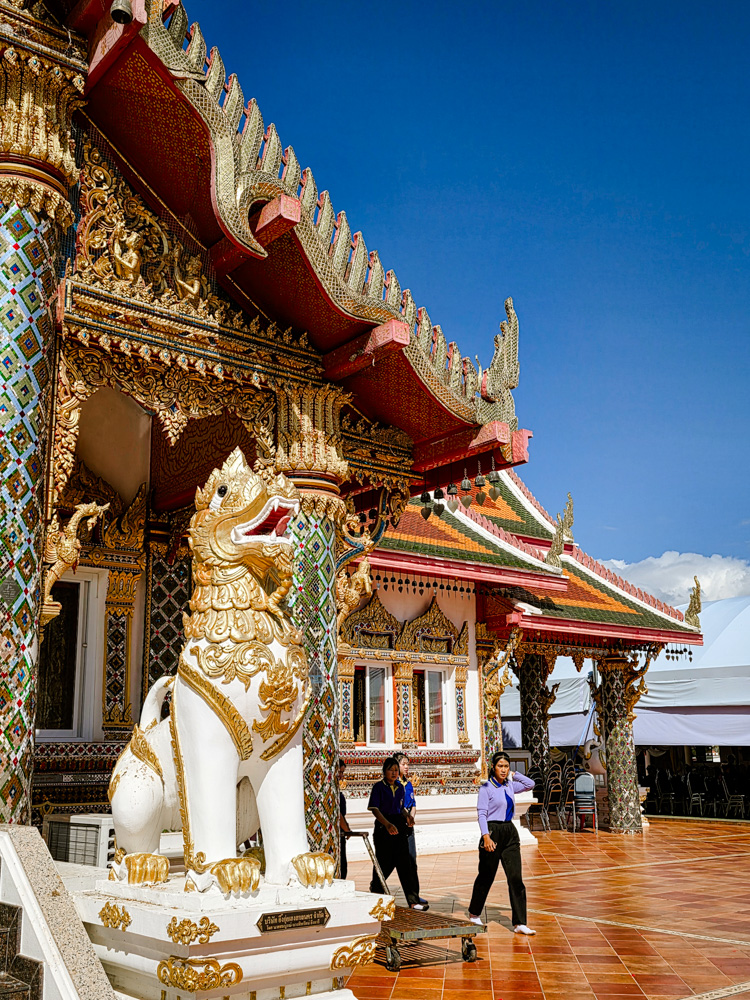
The temple is believed to date back over a millennium, evolving through successive periods of influence rather than being built all at once. Its architecture reflects this layered history. Khmer elements appear in the proportion of arches, while Lan Xang influences, brought during periods when the region fell under Lao rule in the 16th and 17th centuries, shaped the spires and decorative details.
The lotus-topped chedi symbolises purity, while guardian lion statues at the entrance represent protection and strength.
Local stories speak of an ancient golden Buddha once enshrined here, said to have been hidden beneath water during times of conflict to protect it from destruction. Centuries later, around the 13th century, a Cambodian king is believed to have ordered the casting of a new Buddha image in its likeness, restoring the temple’s spiritual centre.
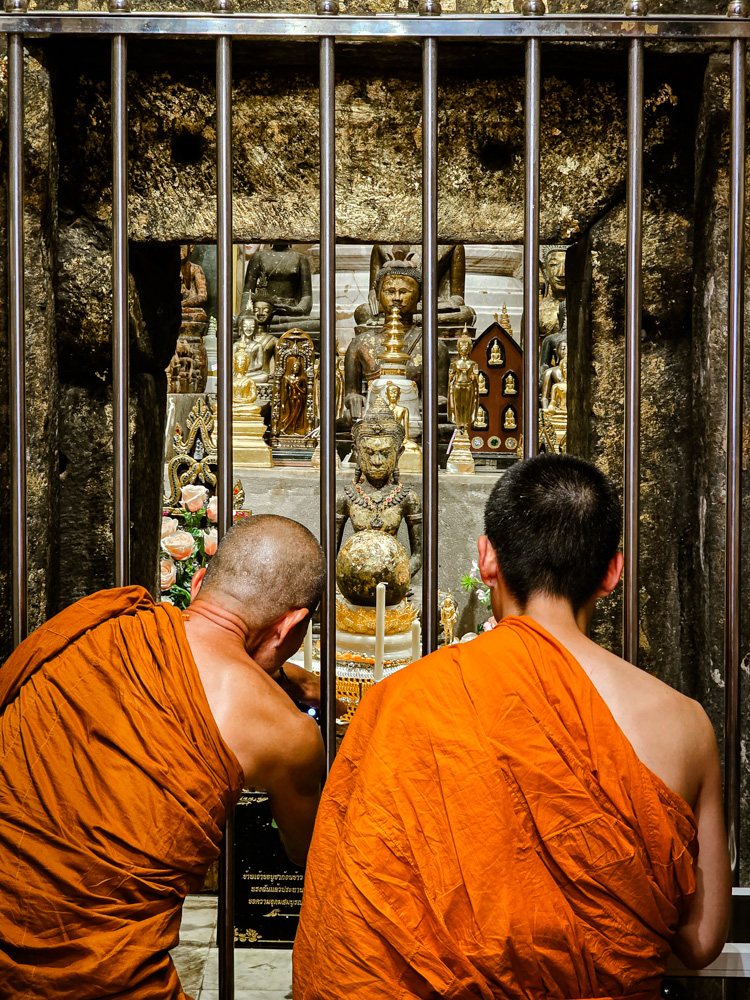
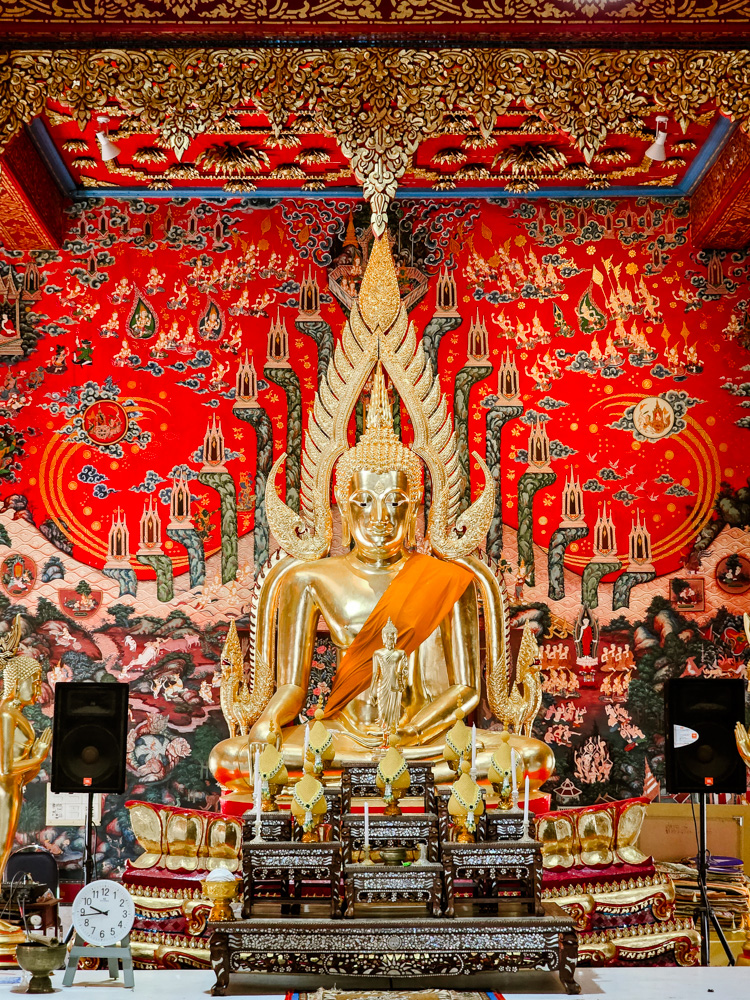
Behind the main Buddha lies an older Khmer-style gateway, traditionally accessible only to men — a reminder that many ritual practices here still follow ancient customs.
What makes Wat Phra That Choeng Chum distinct is not grandeur, but presence. Morning prayers, midday offerings, and evening visits after work blend seamlessly into daily life. Surrounding walking streets come alive with indigo products, handicrafts, and street art.
Here, spirituality does not pause daily life.
It moves alongside it.
Nong Han Lake — Learning to Pause
As the afternoon eased into evening, we made our way to Nong Han Lake, one of the largest natural lakes in northeastern Thailand. Known for its seasonal pink water lilies, the lake draws locals instinctively at sunset.
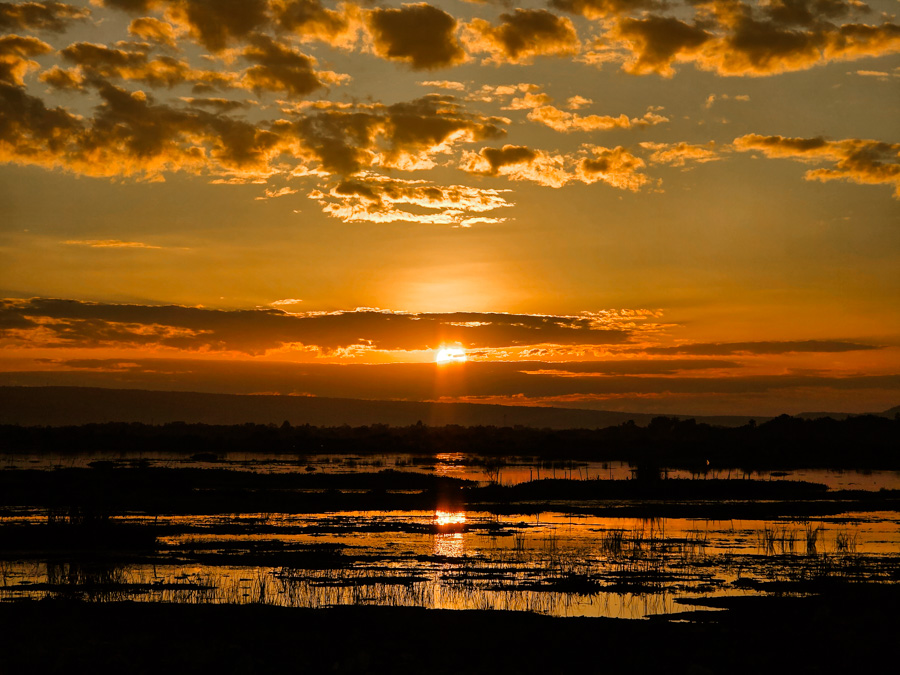
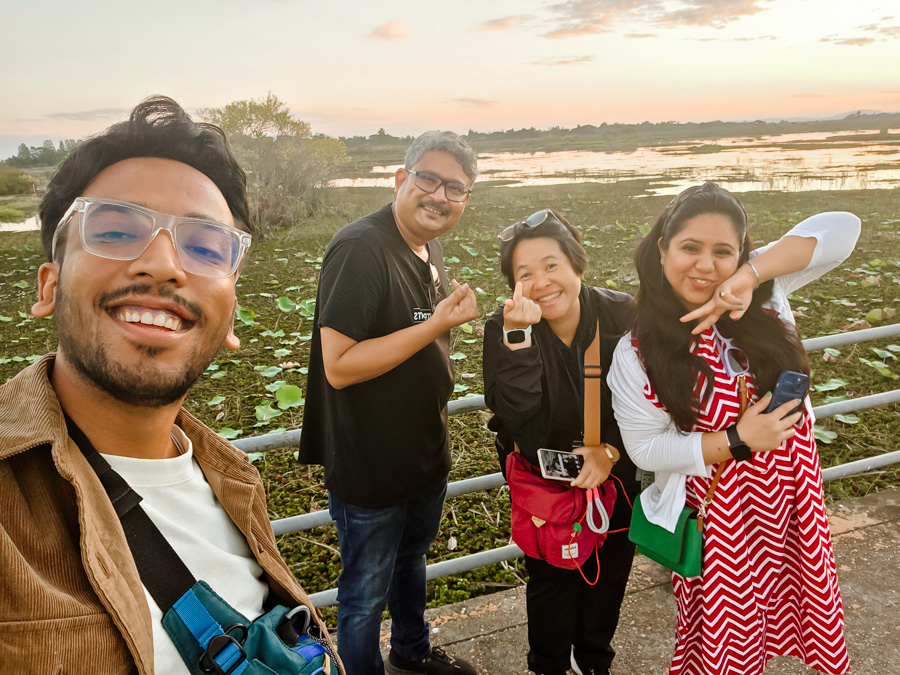
Photographers set up quietly. Families stroll. Couples sit facing the water without saying much at all.
For nearly twenty minutes, everyone simply paused.
The sky softened into amber and pink, reflecting gently on the lake’s surface. In a journey filled with temples, festivals, and layered histories, Nong Han Lake felt like a reminder of how Sakon Nakhon truly lives — unhurried, observant, and deeply comfortable with silence.
Following the Star — Christmas in Sakon Nakhon
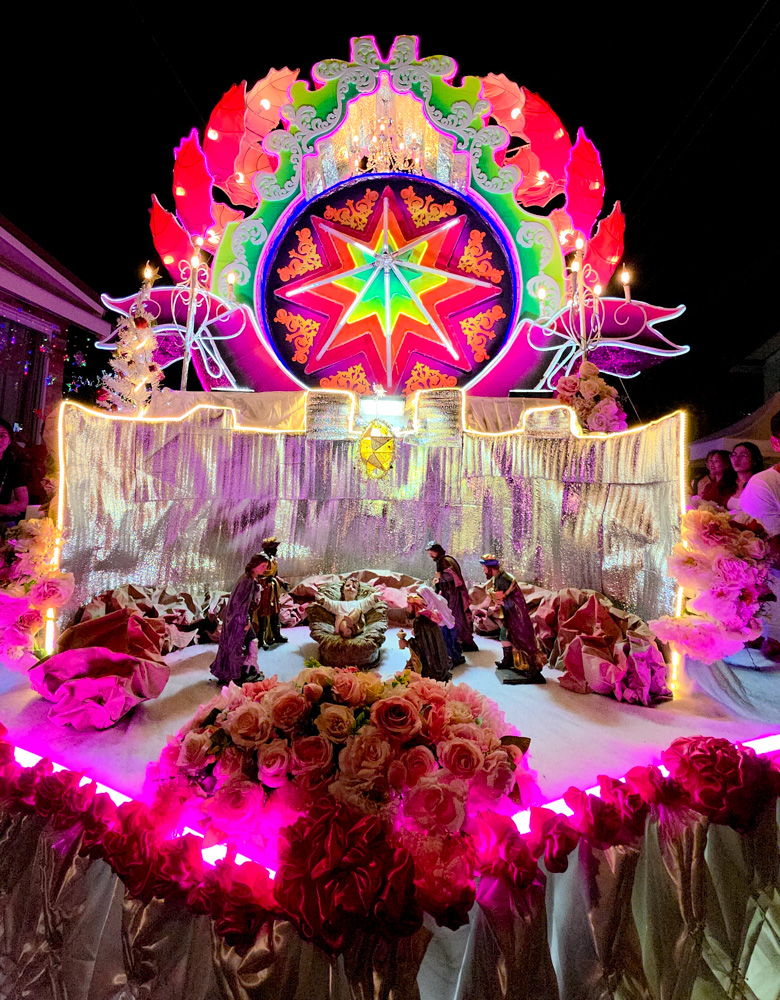
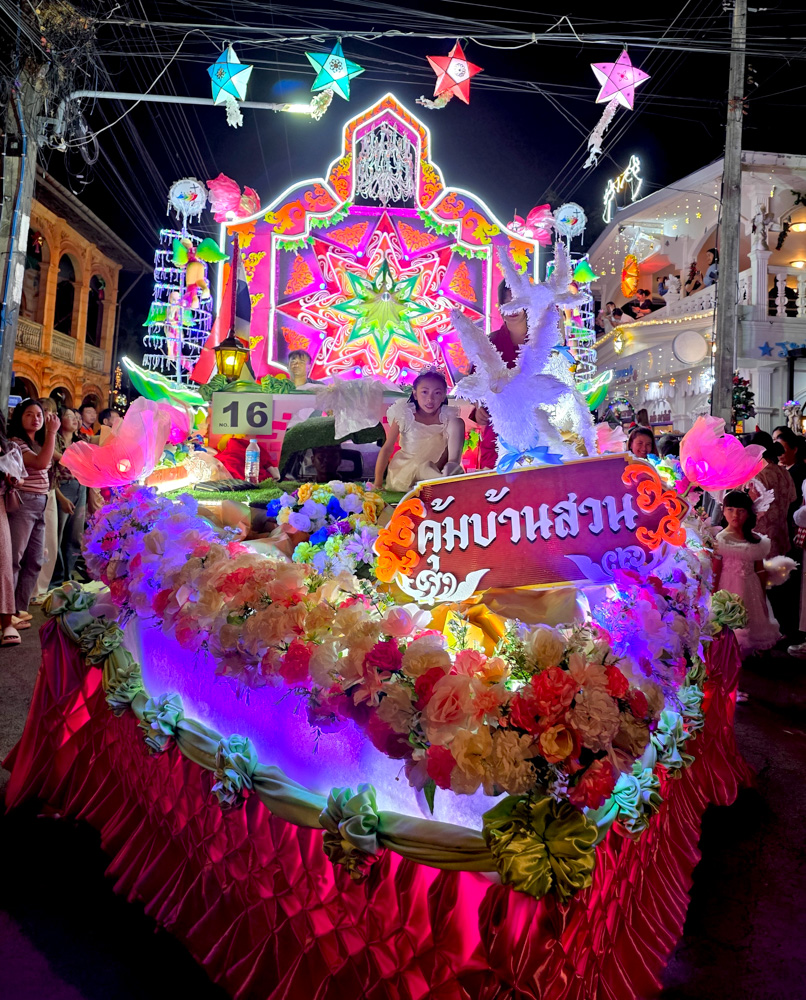
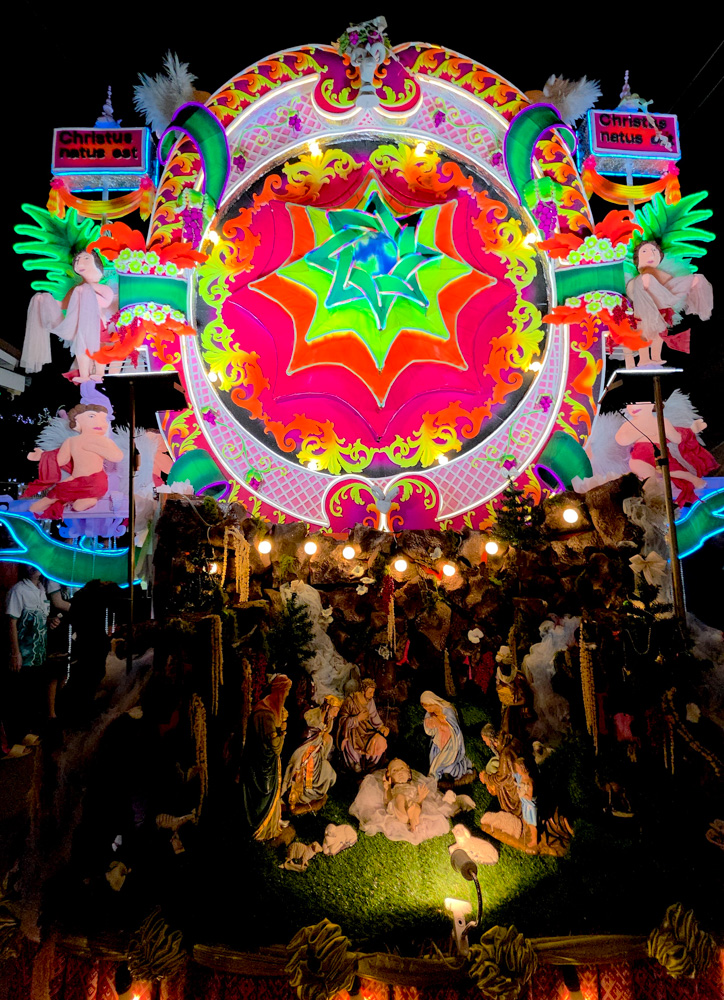
Sakon Nakhon’s most moving layer comes from its Vietnamese Catholic community, many of whom settled here in the early 20th century seeking refuge and stability. In Tha Rae, this history finds its brightest expression every December during the Christmas Star Festival, centred around the Cathedral of St Michael the Archangel.
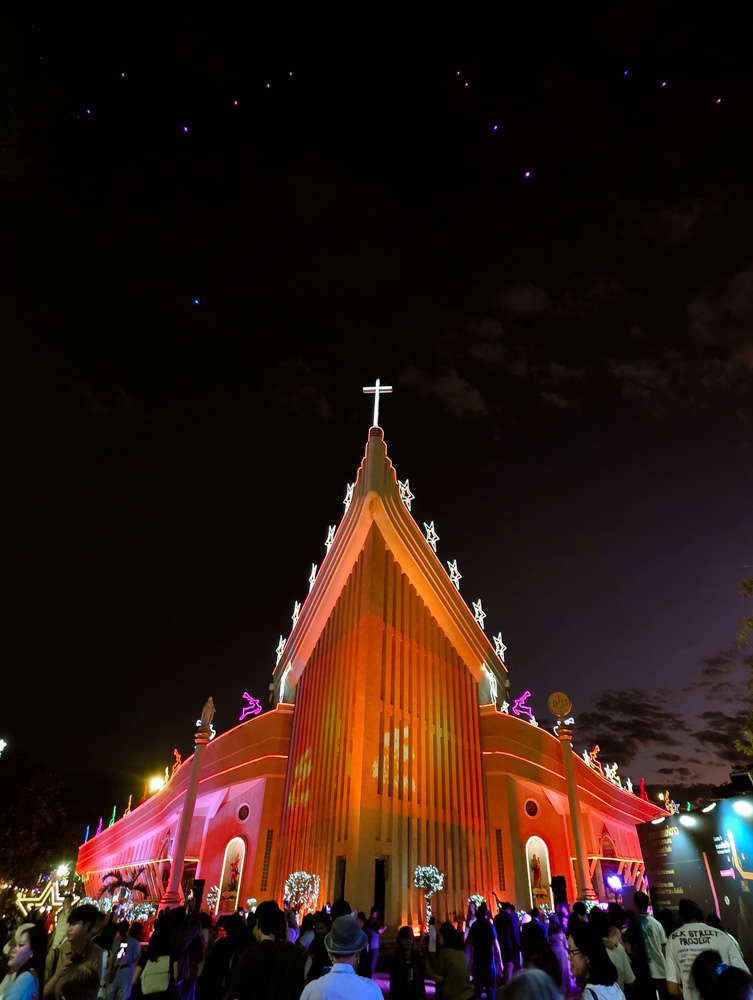
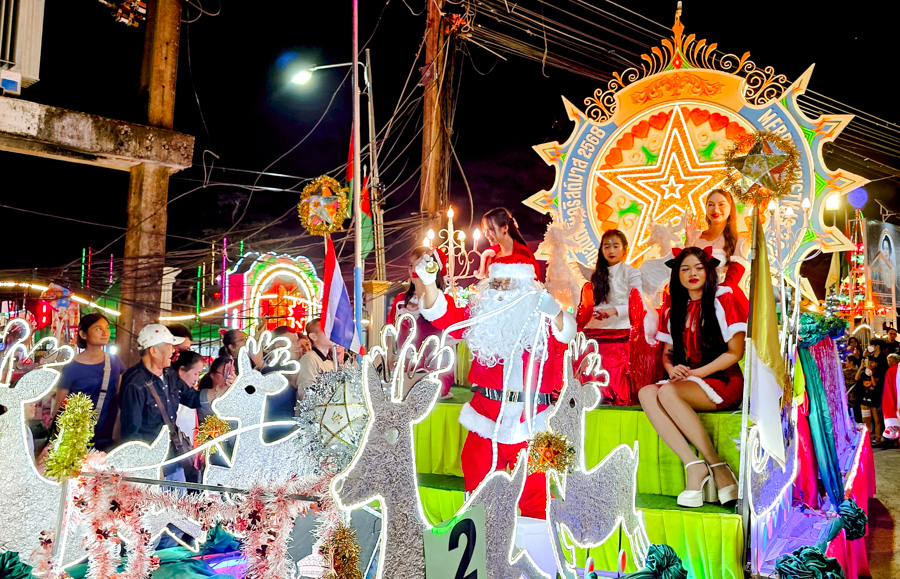
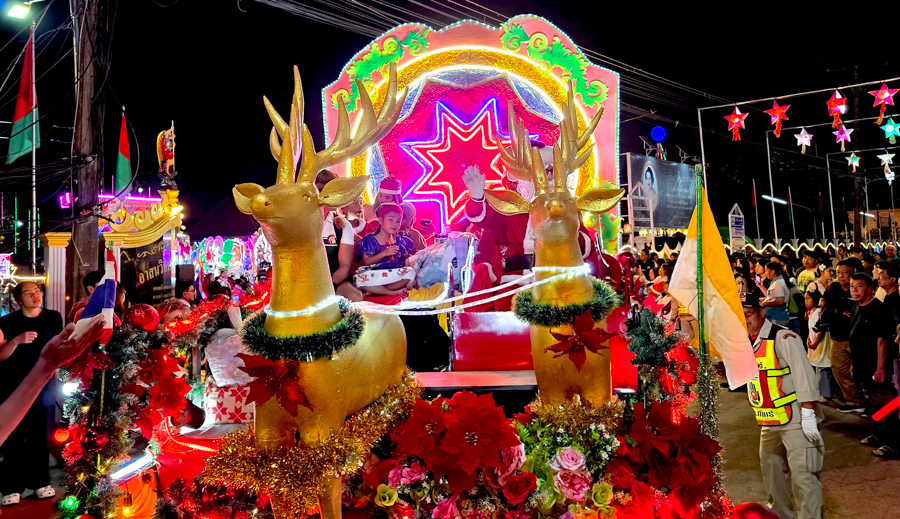
For nearly a week, the town transforms. Homes and streets glow with handcrafted star lanterns, and on the main parade night, dozens of illuminated floats, each crowned with towering stars, move slowly through the crowd. School bands lead the procession. Children in festive costumes wave from decorated trucks. Sweets and candies are tossed playfully into the crowd, sending kids scrambling with laughter.
Families line the streets shoulder to shoulder. Food stalls sizzle late into the evening. Local markets blend faith with festivity, and even those who are not Christian join in. The celebration feels less like a religious event and more like a shared inheritance.
As night deepens, a drone and light show takes over the sky, stars forming above the cathedral in luminous patterns. Old tradition meets modern spectacle, and for a few hours, Tha Rae feels like the centre of something quietly extraordinary.
It is joyful.
It is communal.
And it is deeply, unmistakably Sakon Nakhon.
Mann Craft Garden — Craft as Continuity
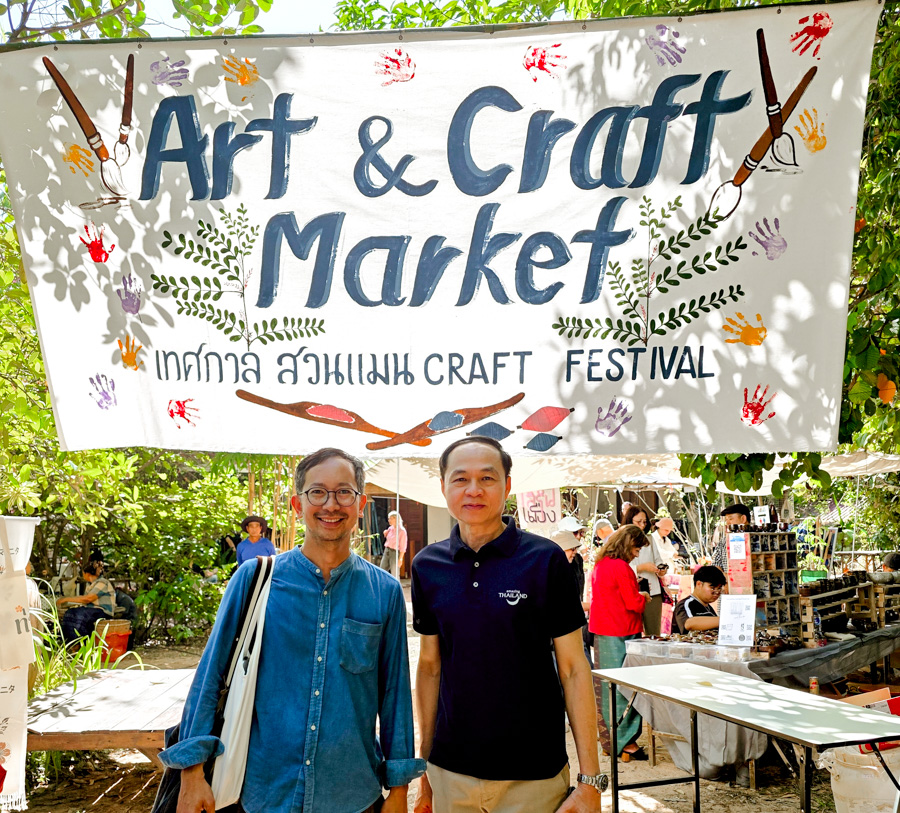
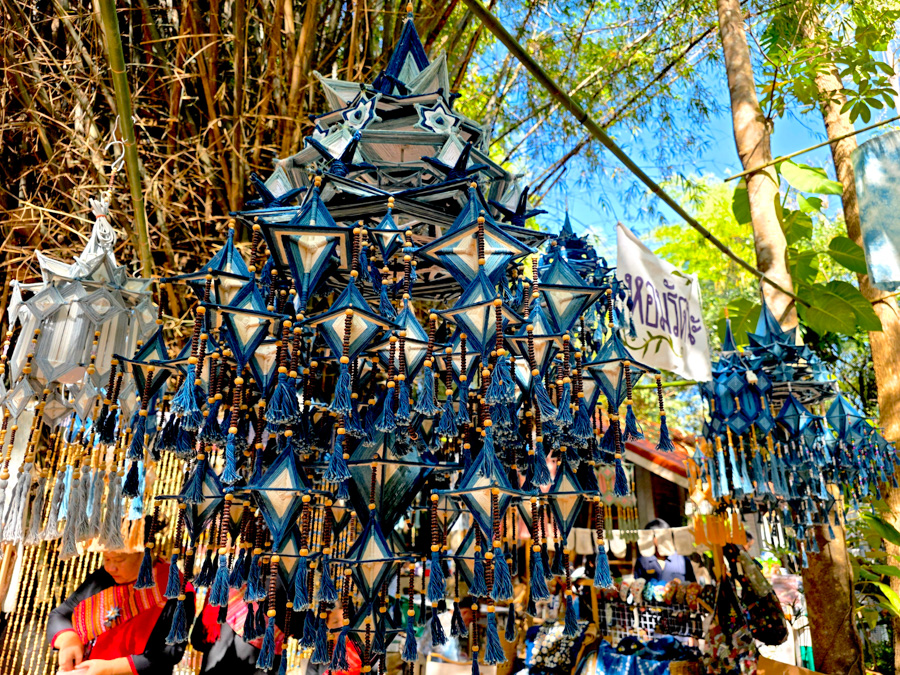
The journey ended at Mann Craft Garden, a creative crafts festival dedicated to indigo, textiles, organic food, and community knowledge. Now in its eighth edition, the gathering feels less like a market and more like an open-air classroom where tradition is practised rather than preserved behind glass.
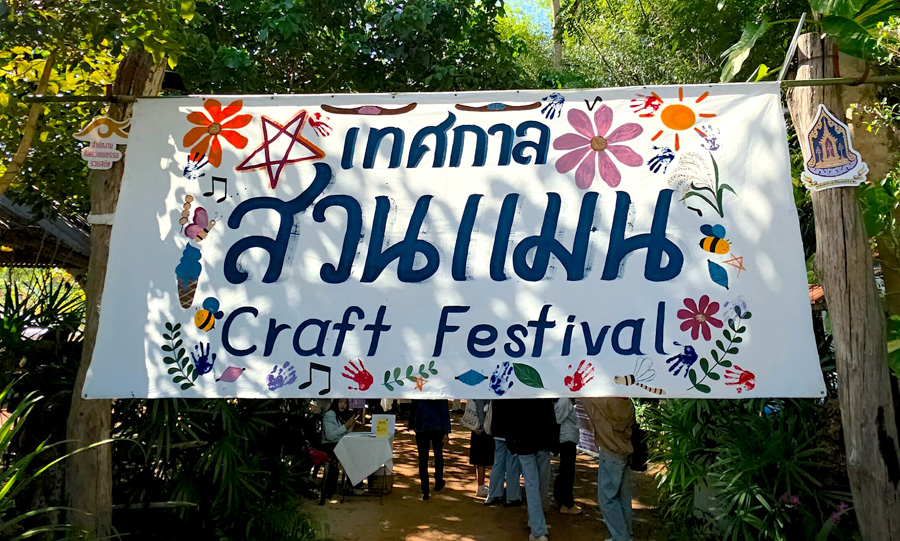
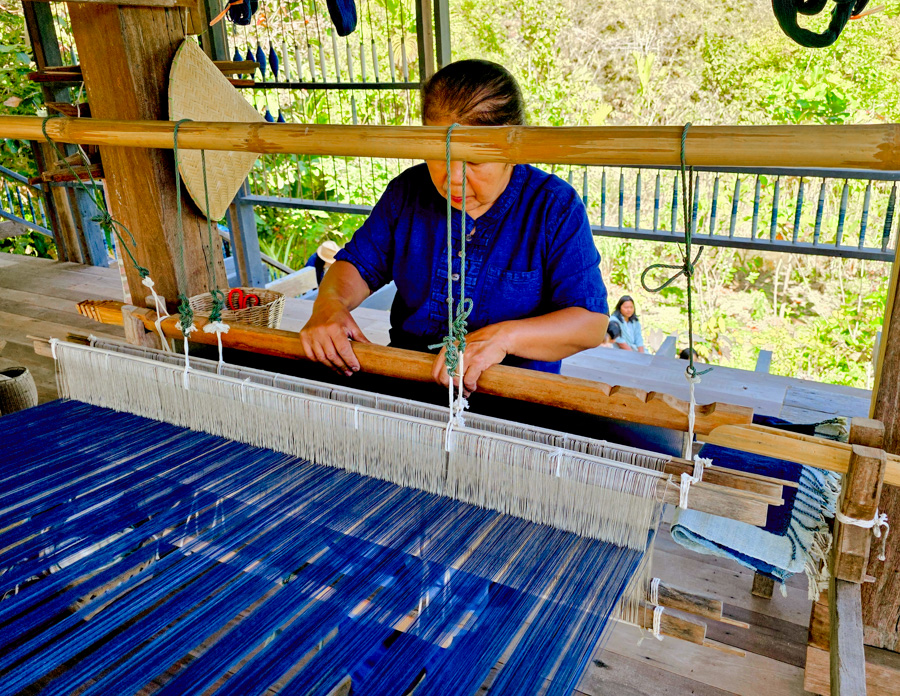
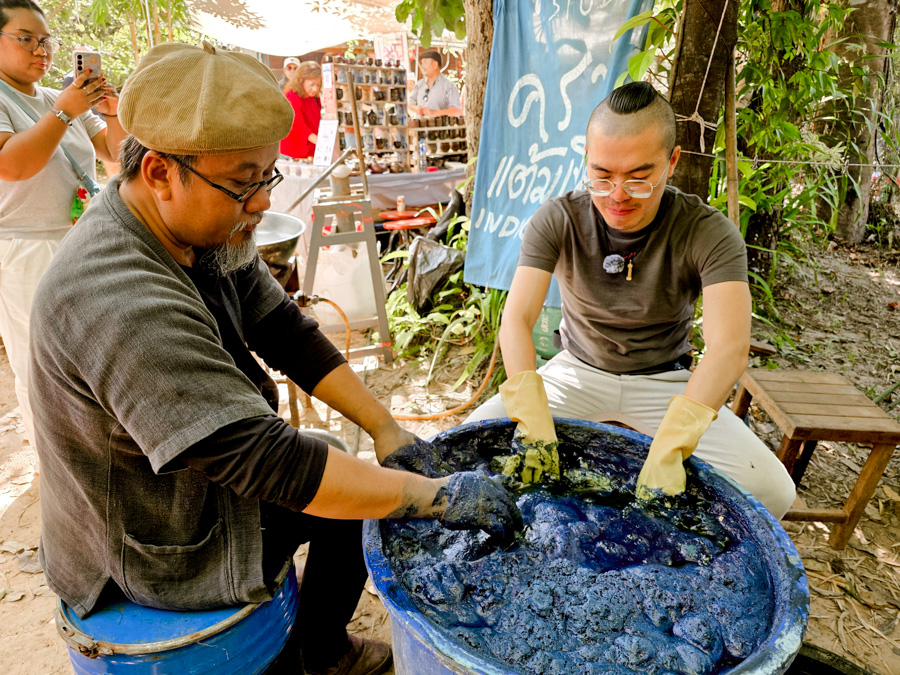
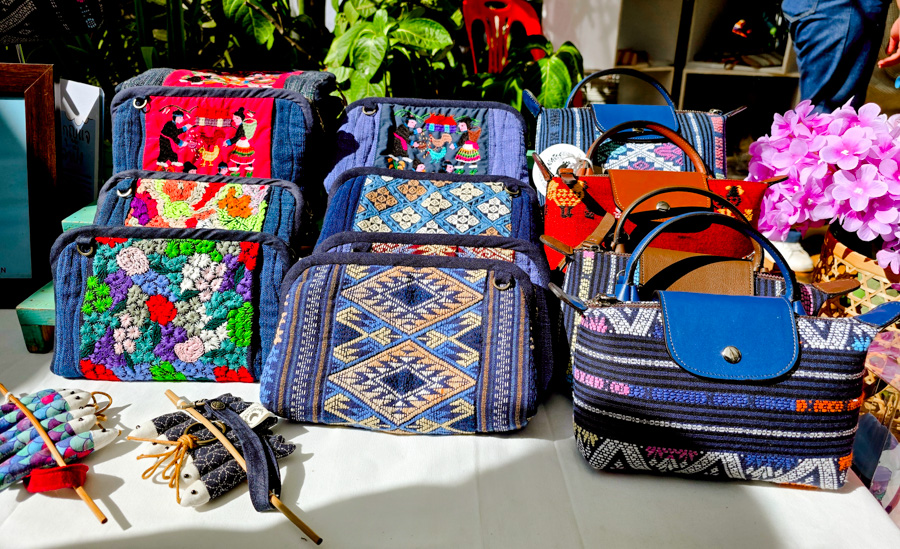
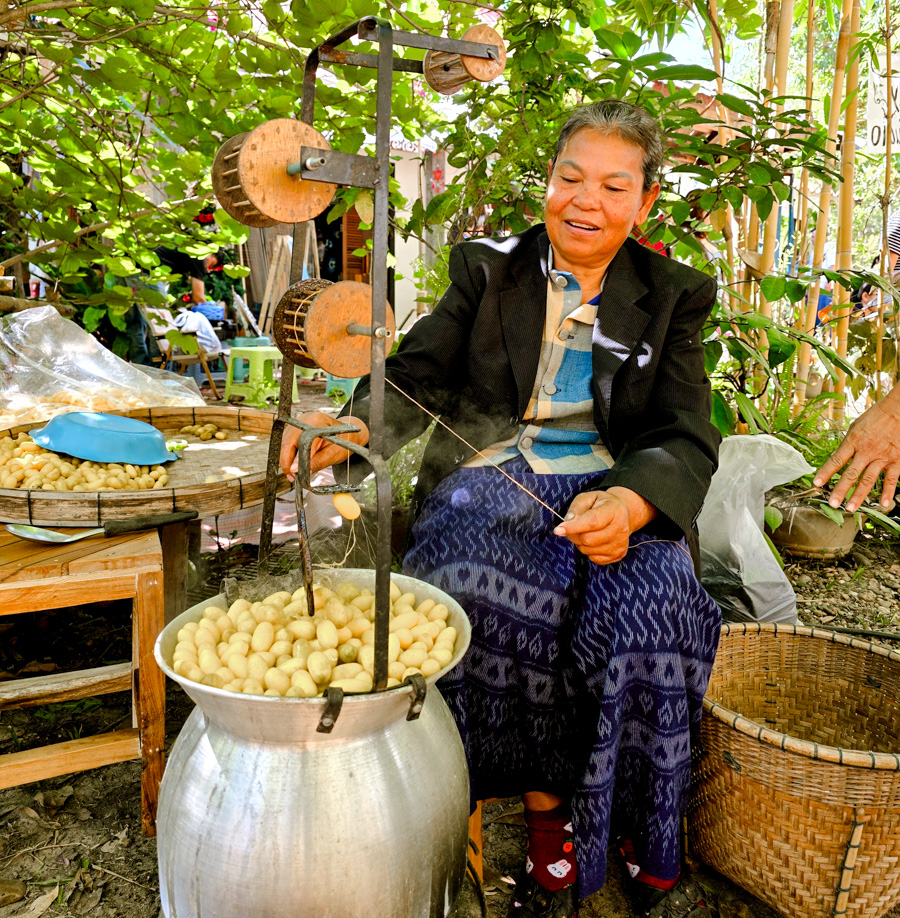
Silkworms rest in woven trays. Women patiently turn cocoons into silk thread. Indigo-stained hands move rhythmically, dipping fabric into deep blue vats the same way it has been done here for generations. Nearby, young musicians play under temporary bamboo structures while visitors sit cross-legged on mats, watching, learning, asking questions.
Nothing feels staged. Farmers, artisans, designers, and students share the same ground.
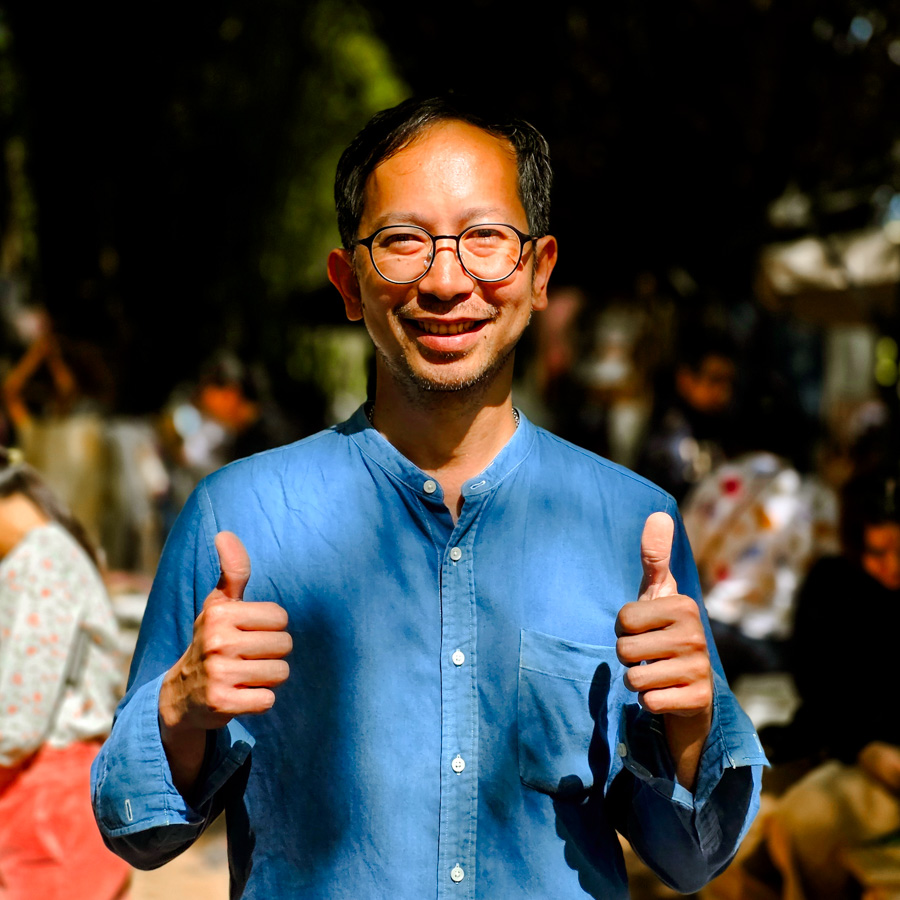
Founder Prach Niyomkar speaks of Mann Craft not as a platform, but as a network — distributing opportunity rather than centralising it. Indian craftspeople have participated in past editions, with future collaborations envisioned as exchanges of knowledge rather than cultural showcases.
What makes Mann Craft remarkable is not nostalgia, but evolution. Tradition here is not frozen in time; it is adjusted, adapted, and handed forward.
Here, sustainability is not branding.
It is continuity.
Why Sakon Nakhon Matters
Sakon Nakhon does not compete with Thailand’s famous destinations, and that is its strength.
December is when everything comes together: Mann Craft Garden, the Christmas Star Festival, cooler weather, and community energy. But it is also a year-round destination from forest temples for meditation, lakes for sunsets, national parks for treks, and everyday life that invites observation rather than consumption.
Four days felt short.
And maybe that is the point.
Some places do not want to impress you.
They want you to slow down enough to notice them.
Sakon Nakhon is one of them.
Follow Siddharth aka Bucketlistsid on his next adventure on his Instagram
©Images are the copyright of Travel Mail and Siddharth Gupta
Read more at TravelMail | Follow us on Facebook | Twitter | and Instagram for on-the-go news

