

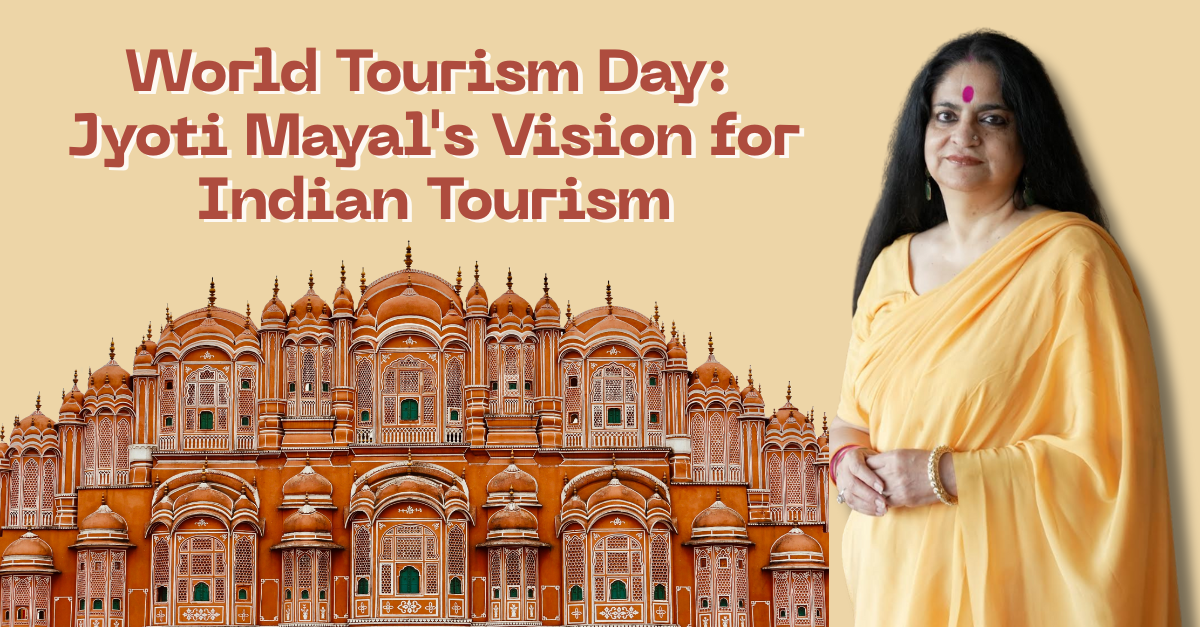
A World Tourism Day Exclusive: Jyoti Mayal on Sustainable and Skilled Future for Indian Tourism
As the world celebrates World Tourism Day, we sit down with Mrs. Jyoti Mayal, Chairperson of the Tourism and Hospitality Skill Council (THSC), a leading voice in India’s travel and tourism sector. With decades of experience, Mrs. Mayal offers profound insights into the delicate balance between preserving India’s rich heritage and driving economic growth through tourism. In this exclusive interview, she addresses critical industry challenges, identifies the game-changing trends shaping the future, and shares her greatest hopes and fears for Indian tourism in the decade ahead. Her vision underscores the urgent need for strategic skill development and sustainable practices to ensure India remains a truly unique and world-class destination.
1. How can India’s tourism industry grow without sacrificing its authentic soul?
India’s strength lies in its cultural richness and diversity. Progress should be led by sustainable tourism that places top priority on community participation, heritage protection, and telling the local story. Although infrastructure and internet connectivity are necessary, equal attention should be devoted to encouraging indigenous arts, customs, and eco-friendly practices. Digital connectivity and infrastructure aside, India can welcome international tourists while maintaining the authenticity that makes it a one-of-a-kind destination by involving local communities as stakeholders and capacity builders.
2. Which current travel ‘trend’ is a genuine game changer for India, and which is just a marketing fad?
The growth of sustainable and experiential tourism is a true game-changer for India. Travelers are increasingly seeking rich experiences such as farm stays, wellness retreats, and green tourism that uplift local communities and preserve the environment. At the same time, superficial trends like “Instagrammable travel” tend to compress destinations into backdrops with little interaction. India needs to emphasize trends that create lasting value, generate employment, and preserve the soul of its destinations.
3. What is the single most critical skill that new tourism professionals in India are currently lacking?
While technical knowledge is important, the most critical skill lacking today is customer-centric service orientation. Professionals need to develop empathy, global cultural awareness, and strong communication abilities to cater to diverse travelers. In an era where traveler expectations are rapidly evolving, building soft skills, adaptability, and digital proficiency is essential. The future of Indian tourism will depend on professionals who can combine traditional hospitality with world-class service delivery.
4. If you could instantly fix one systemic problem holding back Indian tourism, what would it be?
While technical skills are necessary, the most essential skill in demand today is customer-focused service orientation. The professionals should learn empathy, international cultural sensitivity, and effective communication skills to serve various travelers. As the expectations of travelers are changing at lightning speed in the current era, soft skills development, flexibility, and digital literacy are in demand. The Indian tourism industry of the future will rely on professionals who can blend the traditional hospitality style with world-class service delivery. Marketing our USP strongly, building more presence outside, and ensuring safety and cleanliness would further strengthen India’s global tourism positioning.
5. Looking at the next decade for Indian tourism, what is your greatest hope and your biggest fear?
My biggest aspiration is that Indian tourism becomes a world-acclaimed model that combines innovation, sustainability, and diversity, providing opportunities to the youth and communities while further enhancing India’s status as a destination of choice. My worst nightmare is rampant commercialization that might destroy our heritage, natural beauty, and cultural fabric. The decade ahead has to be about balance, wherein growth and protection go hand in hand to create a resilient and respected tourism sector.
Read more at TravelMail | Follow us on Facebook | Twitter | and Instagram for on-the-go news

