

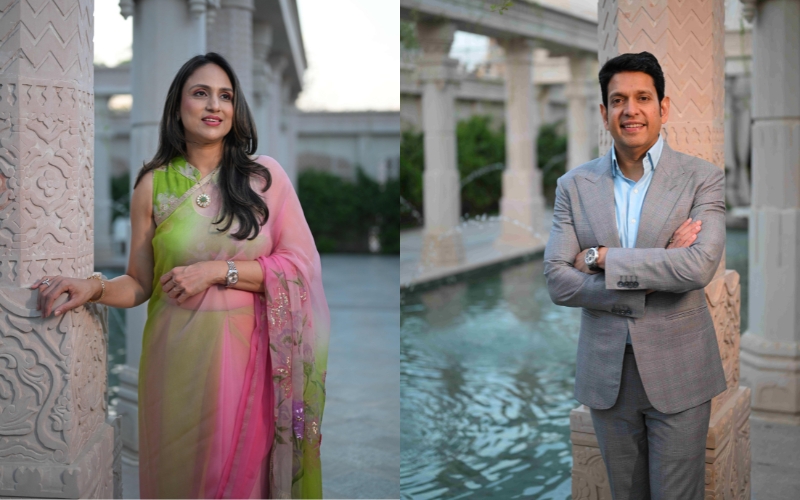
In a compelling conversation with Travel Mail, Mr. Ratan Kant Sharma and Ms. Jui Sharma, the visionary co-founders of Triton Hotels and Resorts Pvt. Ltd., share their journey of transforming India’s luxury hospitality landscape. From partnering with global icons like Raffles and Fairmont to curating deeply immersive, culturally rich experiences, the duo reflects on the evolving expectations of Indian and global travellers. As they blend architectural grandeur with emotional storytelling, sustainability, and smart innovation, the Sharmas offer a rare glimpse into the philosophy and future of a brand that’s not just building hotels—but crafting legacies.
Interview with Mr. Ratan Kant Sharma, Owner, Triton Hotels & Resorts Pvt. Ltd.
Triton Hotels has become a strong name in India’s luxury hospitality space. What inspired you to start the brand, and how has the journey evolved over the years?
The inspiration for Triton Hotels stemmed from a desire to reimagine Indian luxury hospitality, not just in terms of architecture or aesthetics, but through the emotions it evokes. We envisioned creating destinations that seamlessly blend timeless heritage with modern elegance, offering guests a deep sense of place. Over the years, our journey has evolved from managing standalone hotels to partnering with iconic global brands like Raffles and Fairmont. Each project has been an opportunity to refine our philosophy: design with intention, operate with integrity, and craft experiences that linger in memory.
As international interest in Indian travel continues to rise, how is Triton positioning itself to attract discerning global travellers?
India has always had a mystique that draws global travellers, but today’s luxury guest is seeking more than just opulence, they’re seeking depth, authenticity, and discovery. At Triton, we curate experiences that go beyond the expected. Whether it’s the quiet elegance of Raffles Udaipur or the culturally immersive offerings at Fairmont Jaipur, our properties are designed to be storytellers. We’re also deeply invested in sustainability, wellness, and culinary innovation, elements that resonate strongly with global audiences.
What are some of the biggest lessons you’ve learned about luxury consumer behaviour in India, and how have they influenced your strategy?
One of the most important lessons we have learned is that luxury in India is deeply emotional and highly personal. Indian luxury consumers are no longer seeking just opulence or global brand recognition-they’re looking for meaning, connection, and authenticity. They are well-travelled, culturally aware, and increasingly value experiences that reflect their identity, heritage, and aspirations.
Today’s Indian luxury guest expects more than just service-they want storytelling. They want to feel a sense of place, of history, of personal relevance. This has had a profound impact on how we design and deliver luxury experiences. At properties like Raffles Jaipur, we have moved away from standard templates and instead focus on creating immersive, individualised guest journeys that blend heritage with modern comfort.
We also see a strong appreciation for craftsmanship- luxury that is handmade, thoughtfully sourced, and rooted in tradition. This has led us to champion local artisans, preserve dying art forms, and use regional materials that carry both cultural and emotional weight.
Another significant shift is the increasing desire for privacy, sustainability, and purpose. Luxury is no longer about being seen-it’s about how it makes you feel. As a result, we have made design choices that prioritise serenity and seclusion, like private terraces with outdoor baths, garden-facing suites, and calming, sensorial interiors.
Ultimately, the Indian luxury consumer has taught us that true luxury lies in depth, not display-in offering something meaningful, memorable, and completely personal. This understanding has become the cornerstone of our strategy, and it continues to guide every creative and operational decision we make.
How do you cultivate a culture of excellence and innovation across your teams to deliver a consistently high-end guest experience?
Culture is everything. We place a strong emphasis on empowering our teams, not just through training, but by instilling a sense of ownership and pride in their roles. Innovation comes naturally when people are encouraged to think beyond SOPs and are given room to anticipate needs creatively. We also believe in collaboration, bringing in thought leaders, designers, chefs, and wellness experts to continually elevate what we offer. At the heart of it all is the guest, and every team member knows that excellence begins with empathy. A luxury palace experience wrapped with Love.
When partnering with international brands, what factors do you weigh more heavily—brand reputation, cultural synergy, or operational autonomy?
It’s a balance, but cultural synergy is the most critical starting point. We look for partners who understand and respect the Indian context, its traditions, its pace, its hospitality DNA. Of course, brand reputation matters, and operational autonomy is essential for responsiveness on the ground. But the most successful collaborations are those where there’s mutual trust and a shared commitment to innovation, sustainability, and storytelling. Our partnerships with brands like Raffles and Fairmont reflect this alignment beautifully.
What legacy do you hope to create through Triton Hotels, and what lasting impression should guests carry even years after their visit?
I hope the legacy of Triton is one of thoughtful transformation where heritage is preserved, communities are uplifted, and every guest experience feels deeply personal. Years after their stay, I want guests to remember not just the grandeur of our Palace properties, but the warmth of our people, the care in the smallest details, and the sense of having been truly seen and welcomed. Ultimately, luxury is about emotion and if we’ve left an emotional imprint, we’ve succeeded.
Interview with Ms. Jui Sharma, Owner, Triton Hotels & Resorts Pvt. Ltd.
As a woman leader in Indian hospitality, what have been some defining moments in your career journey, and how do you see the role of women evolving in this industry?
One of the defining moments in my journey was stepping into design leadership for our first major property, translating a vision into a livid experience for guests. It made me realize how hospitality is ultimately a very human-centred industry. Over the years, I’ve seen more women not just entering the field, but shaping its narrative, from operations and design to strategy and sustainability. The role of women is evolving from support to stewardship. We are no longer just part of the industry; we’re redefining its future.
Triton properties reflect a unique blend of Indian elegance and modern design. What is your approach to creating interiors that feel both luxurious and rooted in tradition?
My approach has always been about quiet storytelling. Indian elegance is timeless, it’s in the textures, the craftsmanship, the light. But to make that resonate with the modern traveller, I focus on restraint, balance, and sensorial details. Every space must feel curated, not just decorated. I look for ways to honour traditional materials while placing them in a contemporary context where they breathe and shine. True luxury lies in thoughtfulness and authenticity.
Where do you personally draw inspiration from—Indian heritage, global trends, or personal experiences—when conceptualising hotel spaces?
All three. Indian heritage grounds me, it gives the design soul. Global trends help me stay aware of what today’s traveller seeks. But personal experiences are where the magic happens. A childhood memory, a temple corridor, a fragrance from a spice market, these find their way into spaces, often unconsciously. I believe design must evoke emotion, and inspiration can come from the smallest, most personal moments, as long as it speaks universally.
How are you incorporating smart technology into the design and operations of Triton properties to enhance guest comfort and efficiency?
Technology, when used discreetly, can elevate hospitality. We focus on seamless integration, intuitive lighting, smart energy management systems that reduce consumption without compromising comfort. Even behind the scenes, automation helps streamline housekeeping, inventory, and guest feedback. The goal is to make luxury feel effortless, technology should fade into the background and support a more relaxed, responsive experience. After all we want our guests to relive the life of the erstwhile Royals.
How do you ensure that sustainable and eco-conscious practices are reflected not just in design, but also in daily hotel operations and guest services?
Sustainability begins at the drawing board from local sourcing, passive cooling techniques to long-lasting materials. But it must continue in everyday choices: reusable amenities, in-house water bottling, organic gardens, waste management systems. At Triton, we work closely with our teams to embed this thinking into culture, not just compliance. Guests today are mindful, and they appreciate when luxury doesn’t cost the planet. For us, elegance and responsibility go hand in hand.
How do you define luxury today, and has your understanding of it evolved while working on Triton’s growing portfolio?
Absolutely, it has evolved. Earlier, luxury was about grandeur. Today, it’s about intentionality. It’s the silence in a room, the view framed just right, the linen that feels like a second skin. Working on Triton’s diverse properties has deepened my belief that luxury is deeply personal, it’s a sense of being cared for in ways that are both seen and unseen. It’s also a commitment to integrity, of materials, of experiences, of values. That is the new luxury.
Joint Perspective: Ratan Kant Sharma & Jui Sharma
Building a luxury hospitality brand together as co-leaders and family—how has this journey shaped your personal definitions of success, and what vision do you share for Triton in the next decade?
Building Triton together has been as much a personal journey as a professional one. As co-leaders and family, we’ve come to define success not just by what we create, but by how it makes people feel, our guests, our teams, and even ourselves. For us, success is measured in quiet moments: a guest who returns year after year, a space that evokes emotion, a team that takes pride in what they do.
Working together has allowed us to bring two perspectives into harmony, strategic vision and design intuition, scale and soul. That balance shapes every Triton property. Looking ahead, our shared vision is to grow with intention. We want Triton to represent a new chapter in Indian luxury, one where authenticity, sustainability, and emotional resonance define every experience. In the next decade, our focus will be on crafting destinations that are timeless, deeply rooted in the local culture, and remembered long after the journey ends.
Read more at TravelMail | Follow us on Facebook | Twitter | and Instagram for on-the-go news