

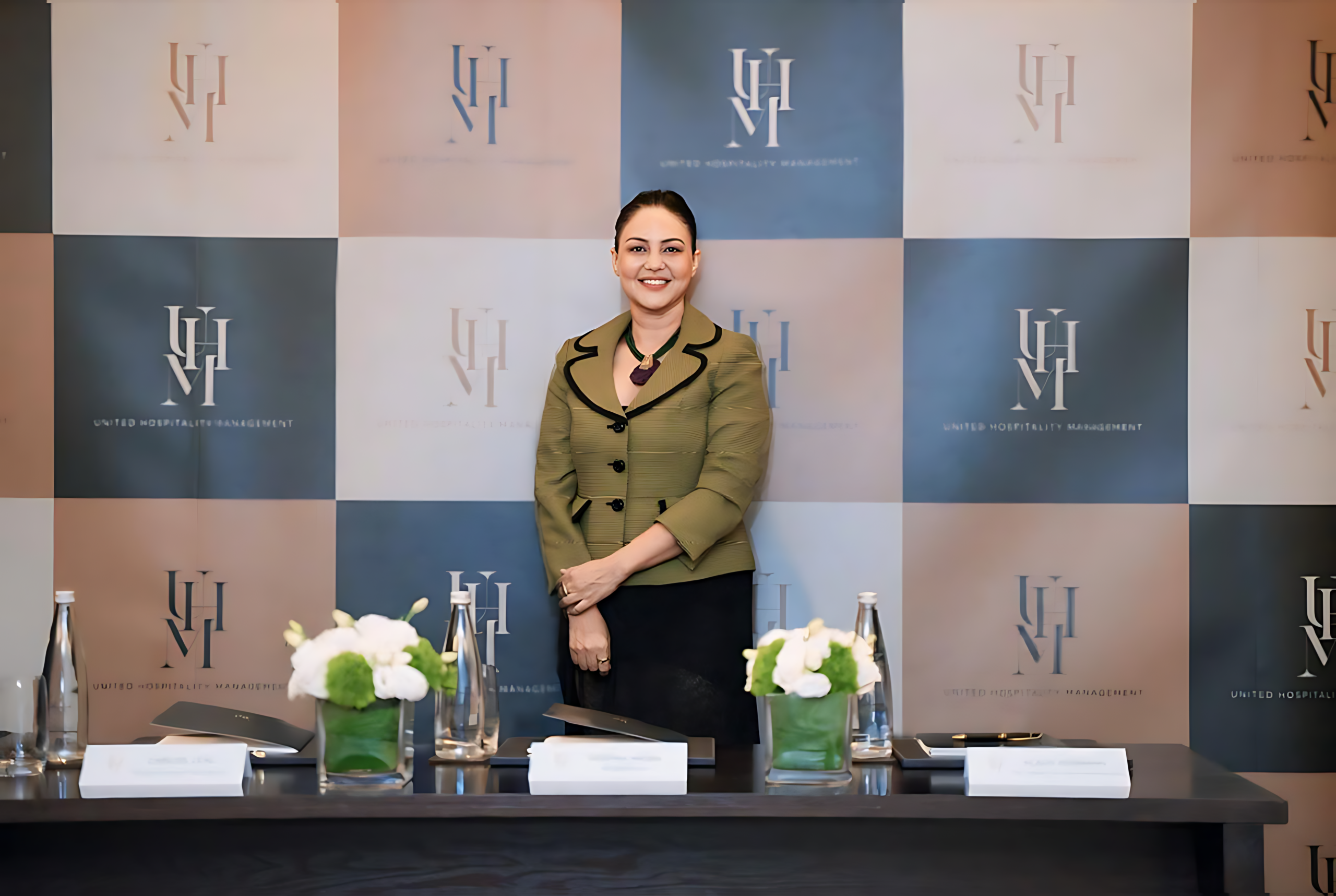
As travellers increasingly seek authentic and personalised experiences, boutique hospitality is emerging as a powerful force in India’s travel landscape. Deepika Arora, Managing Director of United Hospitality Management (UHM) India, has been instrumental in shaping this shift through Rosastays, a platform that brings structure and visibility to independent hotels and villas while preserving their individuality.
In this interview, Ms. Arora shares how her background in architecture influences hospitality design, the evolving expectations of modern travellers, and her vision for strengthening India’s independent hospitality ecosystem following UHM’s acquisition of Rosastays in December 2025.
Your journey from architecture to hospitality entrepreneurship is unique. How has your training as a designer influenced the way you curate experiences at Rosastays?
My journey into hospitality began through design and real estate, and that foundation continues to shape how I approach hospitality experiences today. Architecture trained me to think in systems. It helped me understand how structure, environment, functionality and human behaviour intersect within a space. More importantly, it instilled a deep respect for context — the idea that every property must respond to its surroundings rather than exist independently of them.
During my time at SPA Delhi and later while working in hospitality real estate at JLL, I learned to view hospitality projects as part of a larger ecosystem. Site potential, accessibility, infrastructure, community dynamics and long-term sustainability all influence how a property will ultimately function and be experienced. That perspective continues to guide how I evaluate destinations and properties.
When we curate experiences at United Hospitality Management (UHM) India, that design thinking becomes very relevant. Rather than approaching hospitality as a standardised service model, we focus on how a space can reflect its environment and encourage a more personal connection with the destination. Flow, scale, natural surroundings and local culture all influence how the guest experience is shaped.
Architecture also taught me patience. Buildings — and experiences — must be built with intent if they are to endure. At United Hospitality Management (UHM) India, that translates into creating stays that feel contextual, intimate and thoughtfully designed rather than formulaic. In many ways, I often say I entered hospitality through the blueprint rather than the lobby. That perspective continues to influence how I approach the business — by focusing on structure, authenticity and long-term relevance before anything else.
Rosastays is redefining India’s independent hotels and villas. What gaps in the boutique hospitality space did you identify that led to the creation of this brand?
The idea behind Rosastays emerged from observing two parallel shifts in the Indian hospitality landscape. On one hand, traveller preferences were evolving. Guests were increasingly looking for stays that felt more intimate, design-led and connected to the character of the destination.
There was a growing appetite for experiences that felt personal and contextual rather than standardised hotel environments.
At the same time, many independent hotel and villa owners across India possessed beautiful properties in compelling destinations but lacked access to structured hospitality systems. They understood their markets deeply, yet they often needed support in areas such as professional management, distribution, brand positioning and guest experience design.
That gap between distinctive properties and organised hospitality platforms became very evident. Rosastays was created to bridge that space. The intention was to build a platform that allowed independent hotels and villas to retain their individuality while benefiting from professional frameworks that could elevate performance and visibility.
Rather than applying a uniform template, we focused on celebrating the identity of each property, its architecture, surroundings and local culture. Design thinking, storytelling and a strong sense of place became central to how experiences were curated. The subsequent integration of Rosastays into United Hospitality Management (UHM) further strengthened that vision. It demonstrated that boutique hospitality can scale within a global ecosystem while still preserving its character and authenticity.
Travellers today are prioritising authenticity, emotion, and connection over traditional luxury. How is Rosastays responding to this evolving traveller mindset?
Traveller expectations have evolved significantly over the past few years. Luxury today is no longer defined only by scale or opulence. Increasingly, guests are seeking experiences that feel personal, rooted and emotionally engaging. At United Hospitality Management (UHM) India, we respond to this shift by focusing on the character of each destination rather than applying a uniform hospitality template. Many of our properties are located in leisure and nature-driven locations such as Goa, the Himalayan region and Rajasthan, where the surroundings themselves shape the experience. Design, local culture and the natural environment play an important role in how the stay is curated.
The emphasis is on creating environments that encourage connection either with the destination or local culture and often with oneself. Smaller, design-led properties naturally lend themselves to this kind of intimacy. Guests increasingly appreciate spaces that feel warm, contextual and reflective of the place they are visiting.
At the same time, authenticity must be supported by operational discipline. Travellers want meaningful experiences, but they also expect reliability in service, cleanliness and consistency. Our approach has therefore been to combine boutique individuality with professional hospitality systems so that guests experience both emotional connection and operational comfort.
Supported by the broader United Hospitality Management (UHM) ecosystem, we are able to strengthen that balance further while ensuring that each property continues to retain its individuality and sense of place. In many ways, the future of hospitality lies in this balance, experiences that feel authentic and personal, supported by systems that ensure quality and consistency.
Having worked with global hospitality brands such as Dusit International, what global learnings have you adapted to build a brand that remains rooted in Indian sensibilities?
Working with global hospitality brands provides a valuable perspective on structure and discipline. International hospitality groups operate with well-defined systems, whether in service standards, operational frameworks or distribution networks, and those systems are designed to deliver consistency across diverse markets.
One of the most important lessons I have carried forward is the importance of building strong operational foundations. A hospitality platform cannot rely on concept alone; it must be supported by clear processes, training, technology and commercial discipline. These elements create trust for both guests and owners and allow the business to scale responsibly.
At the same time, hospitality remains deeply cultural. What works in one geography cannot simply be replicated in another without sensitivity to local context. India’s hospitality landscape is shaped by diverse destinations and entrepreneurial owners who value flexibility and partnership as much as brand affiliation.
Within United Hospitality Management (UHM), we try to balance these two perspectives. The global framework provides operational rigour, distribution reach and technology platforms, while our on-ground understanding ensures that each property retains its individuality and connection to place. The approach is intentionally asset-led, focusing on performance, owner alignment and long-term value rather than imposing a rigid brand template.
For me, that balance remains central. Global hospitality brings discipline and systems, while local sensibilities bring authenticity and warmth. When the two work together thoughtfully, the result is a platform that performs commercially while still feeling rooted in its destination.
Design thinking and emotional intelligence are increasingly shaping guest expectations. How do these philosophies translate into measurable guest experience and brand loyalty at Rosastays?
Design thinking and emotional intelligence both begin with the same principle: understanding how people experience a space rather than simply how it functions operationally. For this reason, we do not approach design merely as an aesthetic element; we consider it a tool that shapes how guests interact with their surroundings. The layout of a property, its integration with nature, the use of local materials and the overall scale of the space all influence how comfortable and connected a guest feels during their stay.
Emotional intelligence plays an equally important role in service. Boutique hospitality allows teams to understand guest preferences more closely and respond with greater sensitivity. Personalised interactions, local storytelling and curated experiences help create an environment where guests feel recognised rather than processed through a system.
When these elements come together, the impact becomes measurable. Guests stay longer, return more frequently and recommend the property to others. In boutique hospitality, loyalty is often built less through formal programmes and more through memory – the feeling that a place offered something distinctive and personal.
At the same time, meaningful experiences must be supported by operational consistency. In many ways, the objective is simple: to create environments that feel thoughtful and personal while delivering the reliability that travellers expect. With the support of United Hospitality Management’s operational frameworks, we are able to combine boutique individuality with structured hospitality systems that ensure service consistency and long-term performance. When that balance is achieved, guest satisfaction naturally evolves into long-term loyalty.
As a woman entrepreneur leading a growing hospitality platform, how do you balance empathy-driven leadership with the demands of scale, growth, and commercial performance?
For me, empathy and performance are not opposing ideas. In hospitality, they are closely connected. Empathy-driven leadership begins with understanding the people who make the organisation function, namely teams, partners and owners. When people feel respected, heard and trusted, they tend to take greater ownership of outcomes. That sense of shared responsibility becomes particularly important as a platform grows.
My own entrepreneurial journey reinforced this perspective. Building and scaling a platform requires discipline, but it also requires an environment where people feel confident contributing ideas, taking responsibility and navigating challenges together.
At the same time, hospitality remains a commercially intensive industry. Growth must be supported by discipline in areas such as operational standards, financial performance and long-term asset value. Empathy, therefore, does not replace accountability; it strengthens it by creating an environment where teams understand both expectations and purpose.
As organisations expand, leadership naturally evolves from directing decisions to enabling capable teams. Trust, consistency and clear frameworks allow people to operate with confidence while maintaining high standards.
In my experience, the balance lies in maintaining perspective. Empathy keeps leadership grounded in people, while commercial discipline ensures that the business continues to grow sustainably.
When those elements work together, scale becomes more resilient, and teams remain deeply invested in the journey.
The independent hospitality sector in India is at an inflexion point. What opportunities and challenges do you foresee for boutique and experiential stays over the next 3–5 years?
India’s branded hotel segment continues to grow at a healthy pace, particularly in the mid-scale categories, supported by strong domestic demand, loyalty ecosystems and structured distribution. This segment will remain an important pillar of the country’s hospitality growth.
At the same time, a large proportion of India’s accommodation supply still lies within the independent and largely unorganised segment. Many of these properties are well-located and rich in character but lack professional management, brand visibility and access to wider distribution networks. This creates a significant opportunity for boutique and experiential platforms that can organise and elevate this supply while preserving its individuality.
The growing interest in destination-led travel is also strengthening this segment. Travellers are increasingly exploring smaller leisure markets, nature-driven destinations and culturally rooted experiences, where boutique properties naturally perform well. This shift is likely to continue over the next few years as domestic travel expands and travellers seek more personalised environments.
However, the sector will also need to address certain structural challenges. Operational consistency, service training and technology adoption remain uneven across many independent properties. Maintaining authenticity while introducing professional systems will be essential if the segment is to scale sustainably.
The integration of Rosastays into United Hospitality Management (UHM) reflects this broader industry transition. Boutique hospitality is no longer viewed as a niche offering but as an important complement to traditional branded hotels. Over the next three to five years, the most successful platforms will likely be those that combine experiential depth with strong operational frameworks, allowing independent properties to participate in a more organised and globally connected hospitality ecosystem.
Looking ahead, what is your long-term vision for Rosastays, and how do you hope to contribute to building more purpose-led, sustainable hospitality brands in India?
My long-term vision is to help build a hospitality platform that strengthens India’s independent travel ecosystem in a more organised and sustainable way. A large portion of India’s hospitality supply still sits within the independent segment. Many of these properties have strong location advantages and distinctive character, but they often lack the operational structure, technology platforms and distribution networks required to reach their full potential. One of the opportunities ahead lies in organising this space without diluting what makes these properties distinctive.
With Rosastays now integrated into the United Hospitality Management (UHM) platform, we have the ability to combine on-ground understanding with a global operating framework. This allows us to support property owners with stronger systems, commercial discipline and technology-driven management while still preserving the individuality of each asset.
At the same time, building hospitality brands today requires looking beyond the property itself. Sustainable platforms must create long-term value for owners, generate meaningful employment and contribute positively to the destinations in which they operate. If we can help professionalise the independent hospitality sector while building brands that respect both people and place, we will have contributed meaningfully to the next phase of India’s hospitality evolution.
Read more at TravelMail | Follow us on Facebook | Twitter | and Instagram for on-the-go news