

Georgia, a country rich in ancient history and cultural heritage, continues to captivate the world with its unique contributions to global civilization. From its millennia-old writing system to sacred architecture, lush natural sites and traditional winemaking practices, Georgia offers an unparalleled journey through the past and present.
Living legacy of Georgian writing system
While the language spoken by the earliest Europeans in Georgia remains unknown, scholars agree that by the 3rd century BCE, the Georgian writing system was firmly established as the state’s official script. A must-see for history enthusiasts is the grave inscription at the ancient city of Nekresi, believed to predate Christianity and possibly the oldest known example of Georgian writing.
Among the few dozen writing systems globally, Georgia is home to three distinct forms – Asomtavruli, Nuskhuri, and Mkhedruli. These scripts, renowned for their beauty and antiquity, are recognised by UNESCO as part of the “Living Culture of Three Writing Systems of the Georgian Alphabet”.
Monuments of global significance
Georgia’s legacy extends beyond writing. With a continuous human presence for over a million years, the country boasts a wealth of culturally and architecturally significant sites. Five Georgian landmarks have earned a place on the UNESCO World Cultural Heritage Monuments List:
● The Historical Churches of Mtskheta – including the 11th-century Svetitskhoveli Cathedral, the 6th-century Jvari Monastery and the 11th-century Samtavro Monastery.
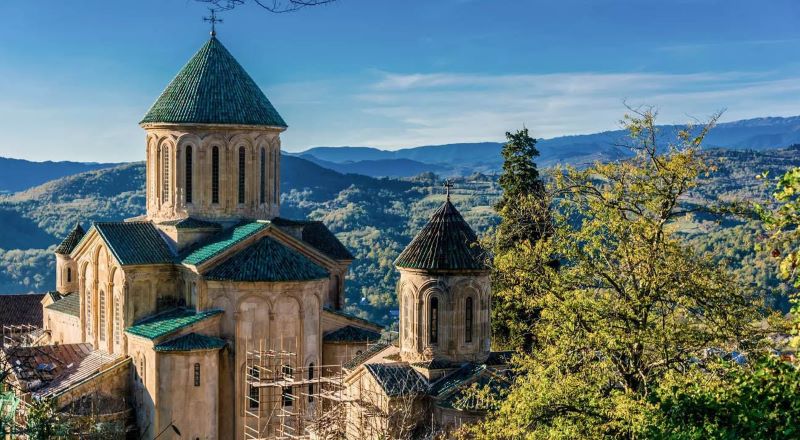
● The 12th-13th century Gelati Monastery in the Imereti Region.
● The medieval villages of the Ushguli Community – Lamjurishi, Murqmeli, Zhibiani, Chazhashi, and Chvibiani – are known for their iconic Svan towers.Each monument offers a window into Georgia’s ancient soul, featuring diverse architectural styles, intricate frescoes and inscriptions that chronicle its spiritual and historical evolution.
Natural wonders: Rainforests and Wetlands
Equally compelling are Georgia’s natural wonders. The Colchic Rainforests and Wetlands, stretching over 80 kilometers along the Black Sea coast, offer a lush escape into a humid and biodiverse paradise. Now inscribed on the UNESCO World Heritage List, these areas are ideal for adventure tourism and nature exploration.
Qvevri wine: Tradition in a clay vessel
No visit to Georgia is complete without experiencing Qvevri winemaking – a method so ancient and distinctive that it has been inscribed on the UNESCO Intangible Cultural Heritage List. Visitors can witness the ceremonial opening of a Qvevri in a traditional wine cellar and join a spontaneous supra (Georgian feast), complete with shoti bread, guda cheese, and the harmonious strains of polyphonic song “Mravalzhamieri” – another UNESCO-recognized treasure.
To round up, despite its modest size, Georgia stands as a profound testament to human creativity, resilience and cultural continuity. Here, travellers can simultaneously engage with multiple UNESCO-listed wonders – tangible and intangible – in a setting that seamlessly blends the ancient with the contemporary.
Read more at TravelMail | Follow us on Facebook | Twitter | and Instagram for on-the-go news