
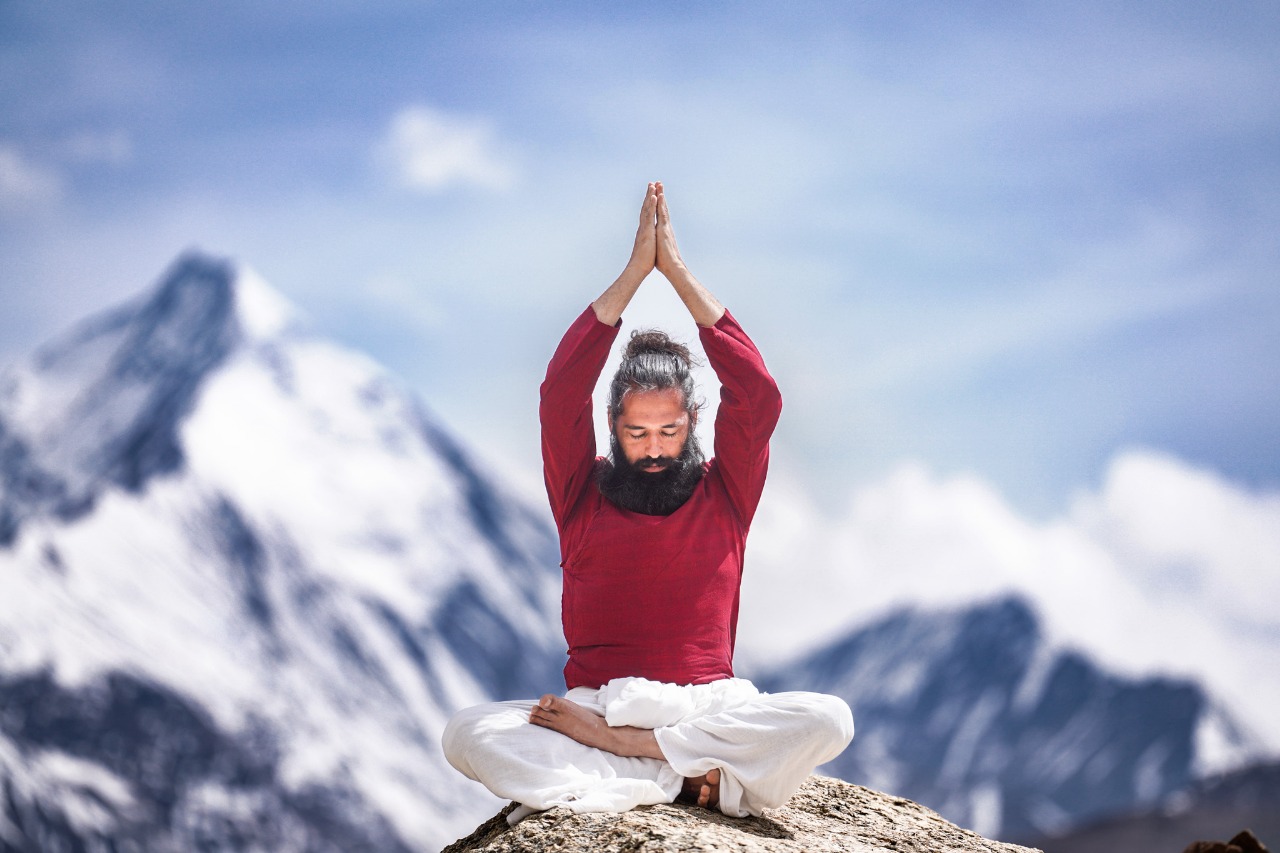
Written By: Himalayan Siddhaa Akshar, Author, Columnist & Founder of Akshar Yoga Kendraa
Something about mountains is eternal. They stand tall over the world with serene pride, their summits reaching toward heaven, their flanks containing tales older than empires. Humans have travelled to the highlands for centuries, not just for adventure or sustenance but for something greater—a quest for significance, serenity, and wholeness.
From Tibetan monks in the Himalayas to Native American tribes in the Rockies, mountains have been sanctified throughout cultures as sites where the body is rejuvenated, the mind is cleansed, and the spirit hears its song. Scientists may attribute some of this to the fresh air, the lower oxygen, or the removal from urban mayhem. But to adventurers who have actually felt the stillness of a mountain morning, there is no question: high elevation contains a healing force.
It is an exploration of how the mountains lead us into mindfulness—how every breath, every step, and every moment in the presence of these giants is a lesson in living deeply and wisely.
Rising Above: Letting Go of Everyday Concerns
The mountains’ first gift is freedom. As you climb higher, the din of everyday life—the deadlines, the cacophony, the cyber din—falls away. There is no hurried stream of traffic, no constant barrage of notifications. There is quiet, a sort of silence that is not vacant but full. Wherever you climb higher, the clearer the air, the more paradoxical the clearer mind. Mountain air whispers a reminder: clarity leads to calm, and peace is not something to pursue but rather something to find once the noise is gone.
Altitude and Solitude – The Gift of Being Alone
In the valleys’ folds or on a ridge where summits arch endlessly, solitude presents itself not as loneliness but as a friend. The mountains encourage us to hear within, to listen for the voice we tend to silence under the din of the world. In silence here, silence is not fearful. It is earthy. It teaches us that mindfulness expands as we sit in quiet reflection with ourselves.
Freedom from Care and Anxiety
Standing in front of a wall of snow-covered mountains, it’s hard to hold onto little cares. Bills, fights, worries—they become small against the limitless proportion of stone and air. In the presence of all this magnificence, proportions change: the weight of life lightens. The mountains show us how to live so in the moment that worries fade, and happiness reappears in our lives.
Distance from Distractions: Learning Stillness
Free of networks, schedules, and expectations, the mind is allowed to breathe. The mountains are quiet, solid, unhurried. Their survival through centuries of storms is a silent lesson in patience. Observing them, we realize that resilience is not about resistance but standing calmly amidst change. That lesson permeates us, allowing us to develop a stillness of our own.
Breath as a Bridge: Mountain Air and Pranayama
The air itself in the mountains appears charged with energy. Taking a deep breath here is not a habit—it is a ritual of union with nature. Traditional yogic breathing, such as Kapalbhati, a purifying breath, is intensified, as if the thin, dry air cleans both lungs and brain. Even Dwikhand Pranayam (Two-Part Breathing) becomes a means of survival and endurance at higher elevations, where each breath is precious. Mountain breathing, travellers say, is both a test and a blessing—a reminder of the vulnerability and strength of life all at once, in one breath.
Meditation Among the Peaks
There is a reason why sages and seekers have always preferred to meditate in caves, plateaus, and snowy slopes. In the mountains, the chattering of thought quiets. The mind, shaped by the open landscape, expands into higher states of consciousness. To meditate here is not merely to gaze inward, but to feel profoundly connected to something boundless, a consciousness as big as the open sky.
Survival as Spirituality
Higher up, survival itself turns into mindfulness. Each swallow of water, each step on a high-angle path, each ration of food requires attention. The mere act of saving energy, taking slow steps, or staying warm turns into reminders to live deliberately. Mountains turn survival into spiritual practice: life stripped to its basics, savoured breath by breath.
The High-Altitude Workout for Body and Mind
Altitude climbing tests the body, but it is not just a physical change. Muscles can become stronger, lungs can become capable of more, yet it is the mind that becomes hardened, soothed, more concentrated. Thin air wears down patience and perseverance, creating an endurance that carries over into emotional strength and mental acuity.
Breath of Life: Pure Mountain Air
Few things are comparable to breathing the fresh, clean air of the mountains. Each inhalation lightens one’s body, as though one is filled with energy. All ancient cultures talk of prana, the force of life contained in breath. In the mountains, prana is tangible, activating all cells. The mere breathing becomes a process of renewal, aligning body with spirit.
Letting Go of Material Attachments
Mountains take away from life the excess. With fewer extravagances—no velvet sofas, fewer meals, less comfort—life pushes us toward simplicity. Lack becomes richness when we learn how little we really need. This untying of material expectations opens a portal to greater fulfillment, refocusing energy from things to presence.
Nature as a Mirror
Gazing out upon towering peaks and boundless skies, we see that nature is not outside of us but an extension of our own great inner world. The stillness of a glacier, the sweep of a valley, the solidity of granite cliffs—they rouse a recognition that the same patience, depth, and grandeur reside within us. The mountains do not merely reveal beauty; they reveal us.
The Climb Teaches Patience
No mountain may be climbed in a hurry. Climbs are incremental, requiring patience, humility, and deference to the timing of nature. Every step is an exercise in patience. With time, this climb rhythm—slow, careful, mindful—becomes a metaphor for life itself: advancement comes not from hurrying but from steady, mindful effort.
The Mute Influence of Loneliness
In the highlands, solitude often deepens into reflection. Those quiet hours, alone on a ridge or in a tent under the stars, provide fertile ground for wisdom. Here, mindfulness is no longer a practice but a way of being, woven seamlessly into thought, breath, and life.
A Natural Detox
Somewhere far away from city pollution, cyberspace noise, and emotional disarray, mountains purge us. The air is cleaner, the water cleaner, the silence profounder. As the body becomes light and the mind clears, emotions level. It’s a detox of the most natural form—an immersion in serenity.
Sky Connection: Expanding Consciousness
At altitude, the heavens seem closer, the stars sharper, and the moon brighter. Looking up at the vastness, we sense our own smallness—and paradoxically, our connection to something greater. The sky becomes more than scenery; it becomes an invitation to dissolve ego and expand awareness.
Mindfulness in Every Step
In the mountains, nothing is done casually. Every rest, every meal, every drink of water is done on purpose. Conserving energy itself becomes an act of mindfulness. Being here teaches us to cherish every action, no matter how small, as part of the art of being present.
Strength in Solitude
Living without constant companionship or amenities can build inner strength in ways we are often surprised to discover. When adversity comes—weather changes, trails get steeper, energy dips—it is the inner self that rises to meet the challenge with courage. This aloneness over time builds self-confidence, quiet confidence in our ability to meet life’s challenges with toughness.
The Mountain Mentality: Power, Calm, and Letting Go
Mountains hold paradoxes within them: they are strong but peaceful, vast but humbling, long-lasting but in flux. There is a “mountain mentality” which imparts equilibrium—a mix of resolve and resignation, drive and acquiescence. From gazing up at them, we become capable of grasping our lives similarly: tight but yielding, tranquil but vibrant.
The Ultimate Reflections: The Healing Power of Heights
They stand different from the temples constructed by human hands, for mountains spring up out of the ground as a sanctum sanctorum of nature, reaching sky and soul. They heal not by medicines or ceremonies but by being present—by the quiet air, the waiting silence, and the call to awareness.
Those who have stood atop high passes, hiked across glacial lakes, or meditated in alpine meadows have this memory with them forever. For in those moments, the mountains impart their ultimate lesson: simplicity, strength, and serenity are always at hand, awaiting each of us to rediscover them with every breath, climb, and glance upward.
Read more at TravelMail | Follow us on Facebook | Twitter | and Instagram for on-the-go news